Clear Sky Science · en
Characterisation of Salmonella Typhimurium from a fatal equine nosocomial outbreak and retrospective analysis of equine clinic salmonellosis cases (2010–2025)
Deadly Stable Infection
In 2024, a Hungarian horse hospital faced every owner’s nightmare: a sudden, devastating outbreak of gut infection that killed most of the horses it touched. The culprit was Salmonella, a bacterium that can quietly hitchhike into clinics on seemingly healthy animals and then race through crowded stables. This study unpacks how one infected horse likely sparked a lethal chain of infections, why some Salmonella strains are especially dangerous, and what it takes to keep modern equine hospitals safe for both horses and people.
How a Hidden Passenger Sparked an Outbreak
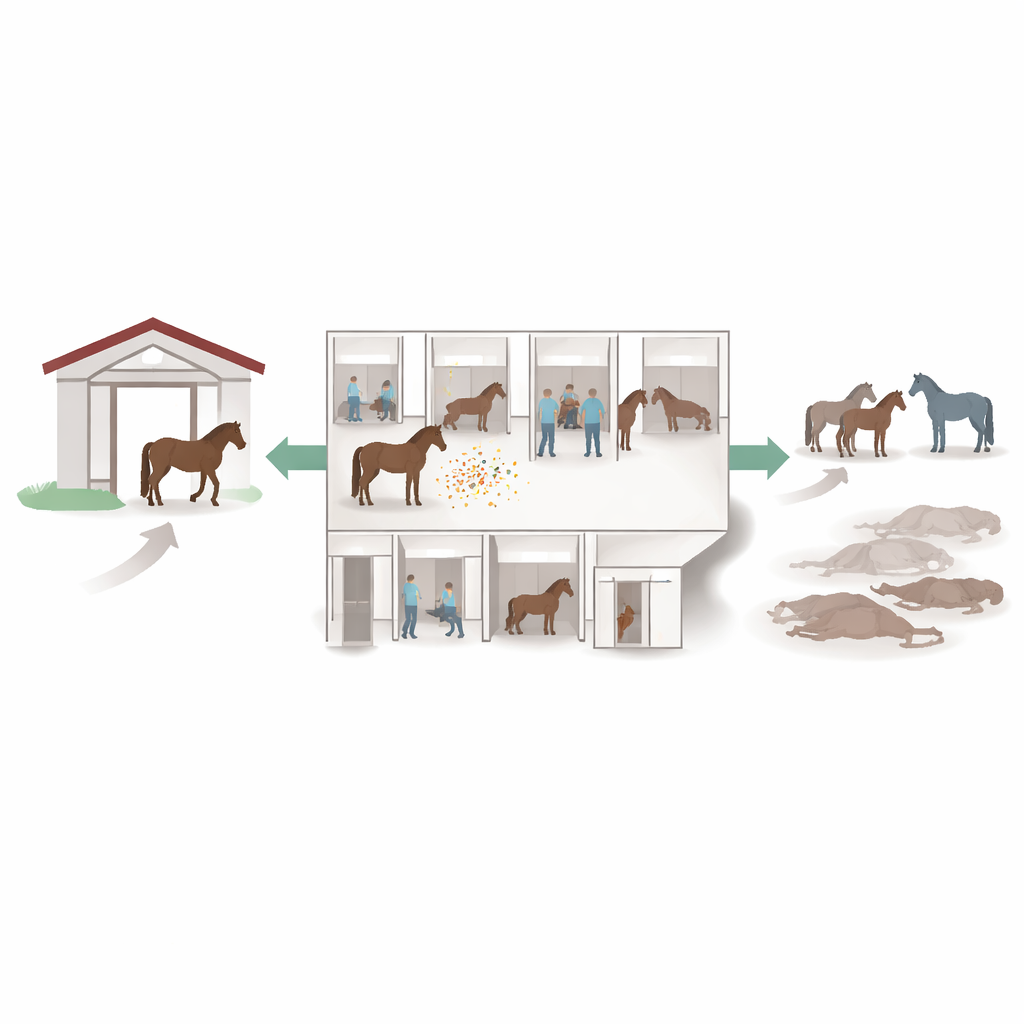
The story begins with a young gelding recently transported to the equine clinic. He was admitted for breathing problems and kept in isolation, but soon developed severe colic and died. Routine tests at the time did not detect Salmonella in his intestines. Only later, after a cluster of new, very sick horses appeared, did frozen gut samples from this first horse reveal the same Salmonella strain, showing he was almost certainly the original source. Within days of his death, five other horses admitted for colic and abdominal surgery developed violent diarrhea, fever, and blood changes typical of severe intestinal infection; four of them did not survive.
Tracking the Bacteria Through the Hospital
To find out whether the hospital itself had become a hub of infection, the team tested horses, manure, and hundreds of swabs from the environment. They found Salmonella on multiple surfaces around the clinic, including stalls and equipment. Most of these samples carried the same variety of Salmonella Typhimurium that had killed the horses, strongly suggesting that the bacterium had spread within the building rather than arriving separately in each patient. Using whole-genome sequencing—essentially a genetic fingerprinting method—the researchers showed that the horse and environmental strains formed a tight-knit group, supporting the idea of a single outbreak strain circulating in the clinic.
Why This Strain Was So Hard to Stop
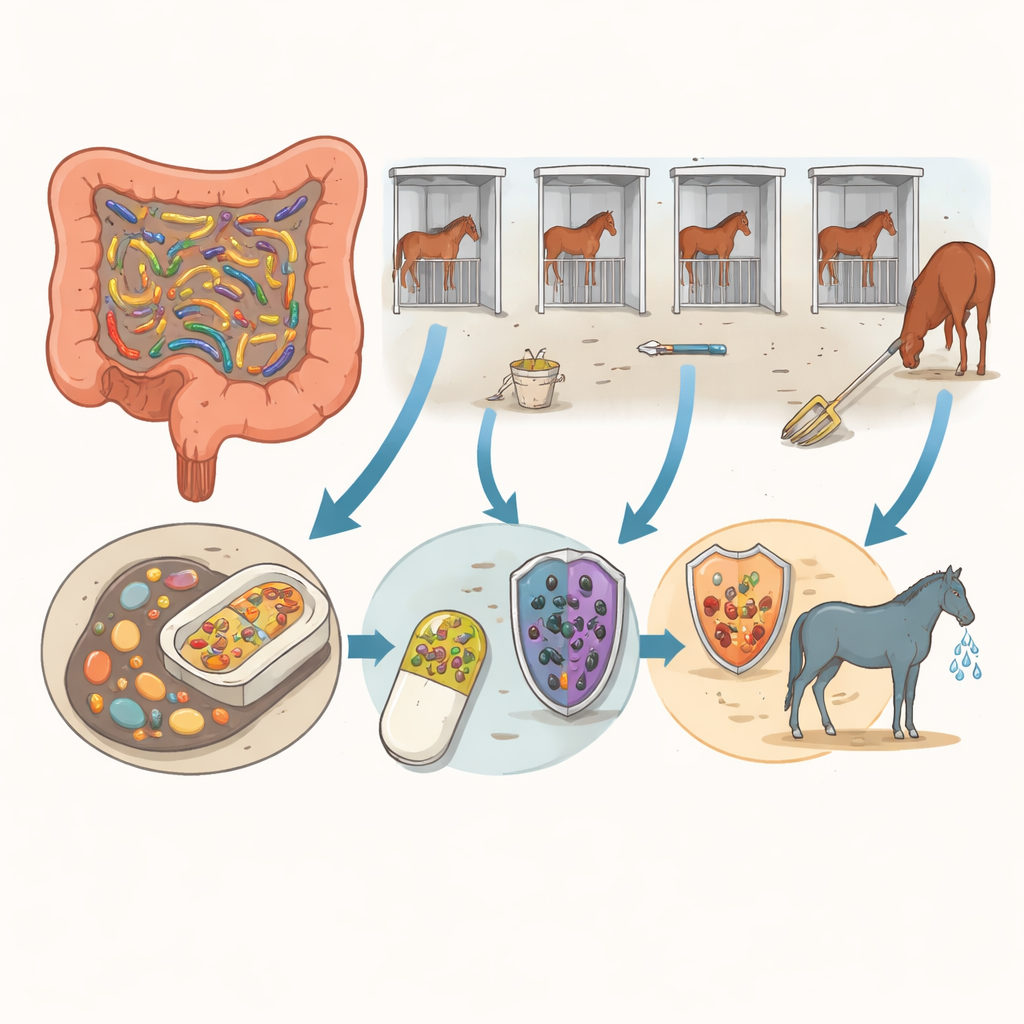
The investigators then dug into what made this particular Salmonella so formidable. Its genome carried multiple "toolkits" for invading the intestine, surviving inside host cells, and persisting in the gut, including several known pathogenicity islands and an extra genetic island linked to long-term shedding. Even more worrying, the strain was resistant to many commonly used antibiotics. It harbored genes that break down extended-spectrum beta-lactam antibiotics—drugs that doctors and veterinarians usually reserve for serious infections—as well as genes protecting it from fluoroquinolones and several older medicines. Some of these resistance genes sat on mobile genetic elements, DNA segments that can hop between bacteria, hinting at the potential for further spread of resistance.
Fifteen Years of Hidden Risk
To see whether this event was a one-off disaster or part of a longer pattern, the researchers reviewed 15 years of laboratory records from the same clinic, and then ran nearly a year of focused surveillance after the outbreak. Between 2010 and mid‑2024, they found 23 Salmonella-positive horse cases, involving eight different varieties, including Kentucky, Abony, Enteritidis, and Typhimurium. At least three earlier clusters fit the profile of hospital-acquired infection. After the 2024 crisis, the clinic began systematically testing horses at higher risk. Among 56 such animals, more than one in five carried Salmonella, again spanning eight varieties; more than half of these infected horses died. Together, these findings show that Salmonella is repeatedly reintroduced into the hospital environment and can linger there, even when cleaning protocols are in place.
Lessons for Safer Horse Hospitals
The unusually high death rate during the 2024 outbreak—four deaths out of five affected horses—likely reflects a dangerous mix of factors: a particularly aggressive, drug-resistant strain; stressed and vulnerable patients recovering from major surgery; and contamination of the stable environment that allowed the bacteria to keep circulating. From a practical standpoint, the study makes a strong case for continuous, integrated surveillance in equine clinics. That means combining traditional culture, rapid genetic tests, and genome sequencing with strict hygiene, early isolation of suspect cases, and careful use of antibiotics. For horse owners and veterinarians alike, the message is clear: serious gut infections in hospitals are not rare accidents but predictable threats that demand constant vigilance.
Citation: K-Jánosi, K., Sztojka, A., Kis, I.E. et al. Characterisation of Salmonella Typhimurium from a fatal equine nosocomial outbreak and retrospective analysis of equine clinic salmonellosis cases (2010–2025). Sci Rep 16, 9787 (2026). https://doi.org/10.1038/s41598-026-40617-0
Keywords: equine salmonellosis, hospital-acquired infection, multidrug-resistant bacteria, Salmonella Typhimurium, veterinary infection control