Clear Sky Science · en
Optimal capacity configuration of wind-photovoltaic-storage hybrid systems based on improved chaotic evolution optimization algorithm
Keeping the Lights On with Clean Energy
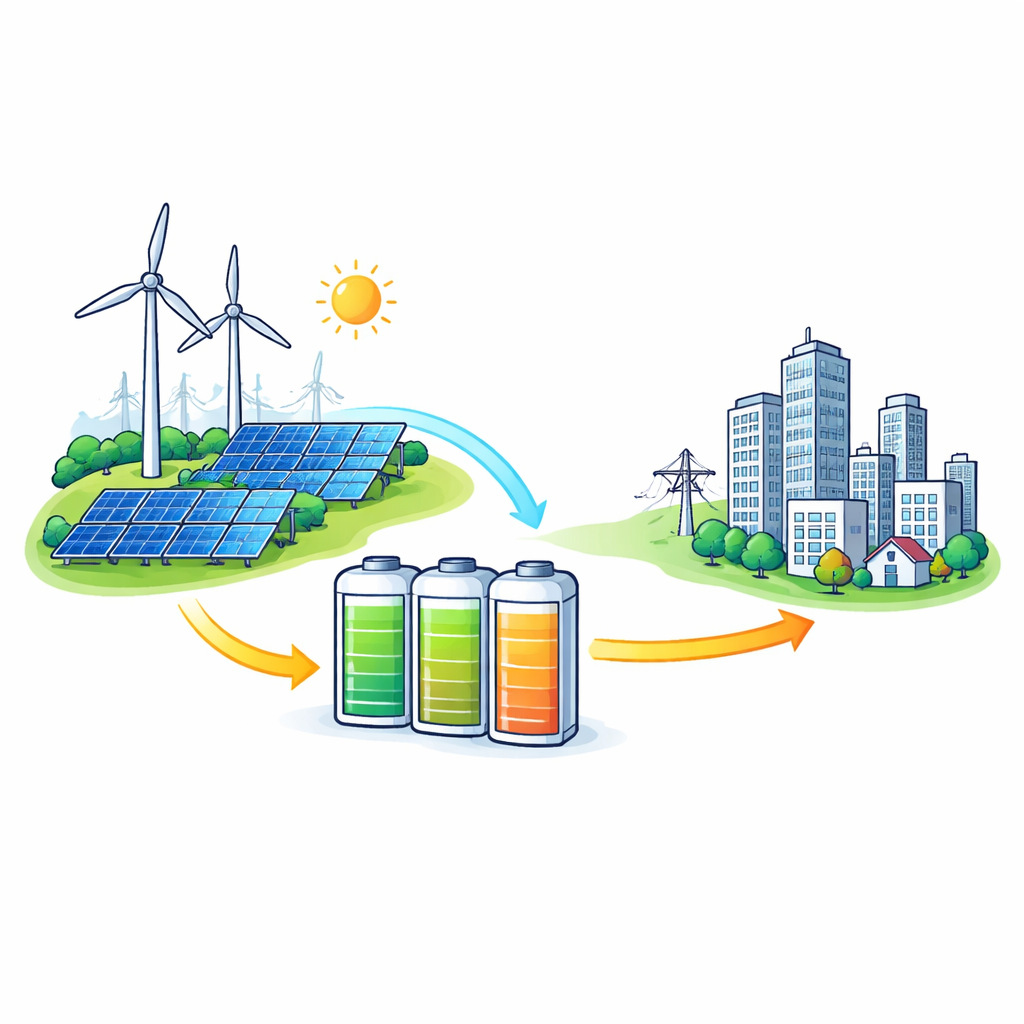
As more electricity comes from wind turbines and solar panels, keeping the power system both reliable and affordable becomes a delicate balancing act. Because the wind does not always blow and the sun does not always shine, grid operators must decide how much wind, solar, and battery storage to build so that lights stay on without driving costs through the roof. This study explores a smarter way to choose those capacities, using an advanced search algorithm that combs through many possible designs to find combinations that deliver clean power at lower overall cost.
Why Balancing Wind, Sun, and Batteries Is Hard
Designing a hybrid power system that mixes wind farms, solar arrays, and energy storage is not as simple as adding up average outputs. Wind speeds, sunshine, and electricity demand all rise and fall hour by hour, and storage devices have strict limits on how quickly and how deeply they can charge and discharge. The authors build a mathematical model that describes how much power turbines and panels can produce under changing weather, how batteries store and release energy, and how all of this must match the needs of homes and businesses. Their goal is to minimize the total yearly cost of building and operating the equipment, while still meeting demand and respecting technical limits on the grid and the batteries.
A New Way to Search for the Best Mix
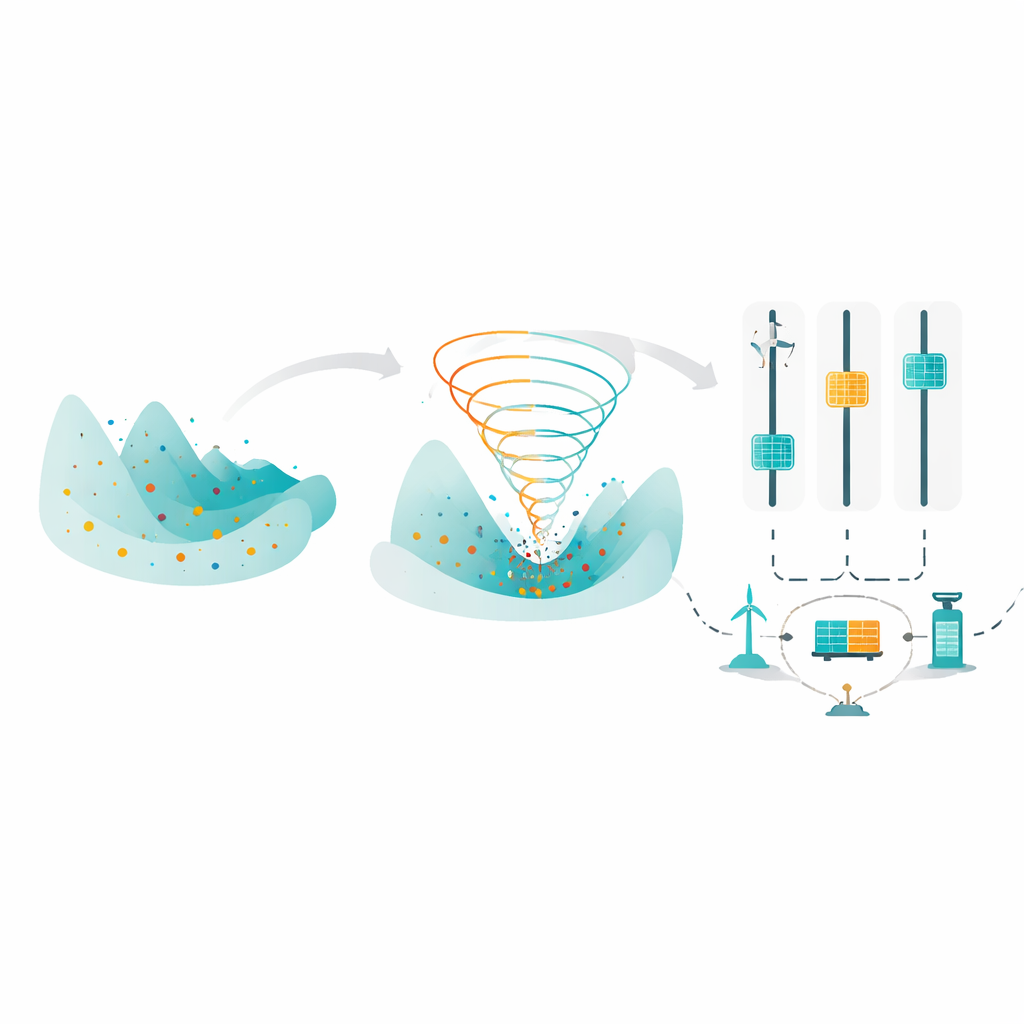
Because the relationships among wind, solar, storage, and the grid are highly tangled, traditional planning methods can easily miss good solutions. The team therefore turns to a class of computer tools known as meta-heuristic algorithms, which mimic natural processes such as evolution or animal swarms to search complex landscapes. Building on an earlier method called chaotic evolution optimization, they introduce an improved version (ICEO) that blends three ideas: a chaotic pattern to explore many directions at once, a self-learning step that gently adjusts promising solutions using random "nudges," and occasional long jumps that help the search escape poor local choices. When progress slows, a focused local search is triggered to finely polish the current best design.
Putting the Algorithm to the Test
Before trusting ICEO on a real power system, the researchers pit it against other well-known optimization methods on a set of standard test problems used in the field. These problems have known answers and range from smooth, bowl-shaped landscapes to rugged terrains with many false peaks and valleys. Across eight such tests, ICEO repeatedly finds solutions that are as good as or better than those found by nine competing algorithms, and does so reliably from one run to the next. Although the method spends slightly more computing time than some simpler rivals, the extra effort pays off in higher accuracy and greater resistance to getting stuck in subpar regions of the search space.
Designing a Real Hybrid Power System
The authors then apply their method to a practical case in which a wind farm, a solar plant, and a battery system must serve a local electricity demand under realistic weather patterns. Using measured daily profiles of wind, sunshine, temperature, and consumption, ICEO decides how large each component should be. The result is a design with about 48.6 megawatts of wind capacity, 50 megawatts of solar capacity, and 65 megawatt-hours of battery storage. In simulated operation, solar panels handle much of the daytime demand, excess power charges the batteries, and stronger nighttime winds help meet the load while letting the batteries rest. When renewable output dips, stored energy is released to cover the gap, all while keeping battery limits and grid exchange constraints within safe bounds.
What This Means for Future Grids
For non-specialists, the key message is that sophisticated search techniques like ICEO can make clean power systems both cheaper and more reliable. By more carefully choosing how much wind, solar, and storage to install, planners can reduce investment and running costs while still ensuring that electricity supply tracks demand through cloudy, calm, or peak-use periods. Although the underlying mathematics are complex, the outcome is straightforward: better computer-guided planning can help integrate larger shares of renewable energy into the grid without sacrificing stability or affordability.
Citation: Dong, Y., Zhou, X., Cao, X. et al. Optimal capacity configuration of wind-photovoltaic-storage hybrid systems based on improved chaotic evolution optimization algorithm. Sci Rep 16, 9990 (2026). https://doi.org/10.1038/s41598-026-40610-7
Keywords: renewable energy planning, wind-solar-storage systems, energy storage, optimization algorithms, power system reliability