Clear Sky Science · en
Sustainable enhancement of chemical durability and microstructural stability in cement mortar incorporating sodium silicate–silica fume treated recycled fine aggregate
Why turning old concrete into new matters
Across the world, demolished buildings generate mountains of broken concrete. Much of this material ends up in landfills, even though it contains sand and stone that could be reused in new construction. The catch is that fine particles recycled from old concrete often make new mortar weaker and more vulnerable to harsh environments, especially where sewers, industry, or salty soils attack structures. This study explores a simple treatment that can turn these problematic recycled particles into reliable building ingredients, helping cities build more sustainably without sacrificing durability.
From demolition waste to fine building sand
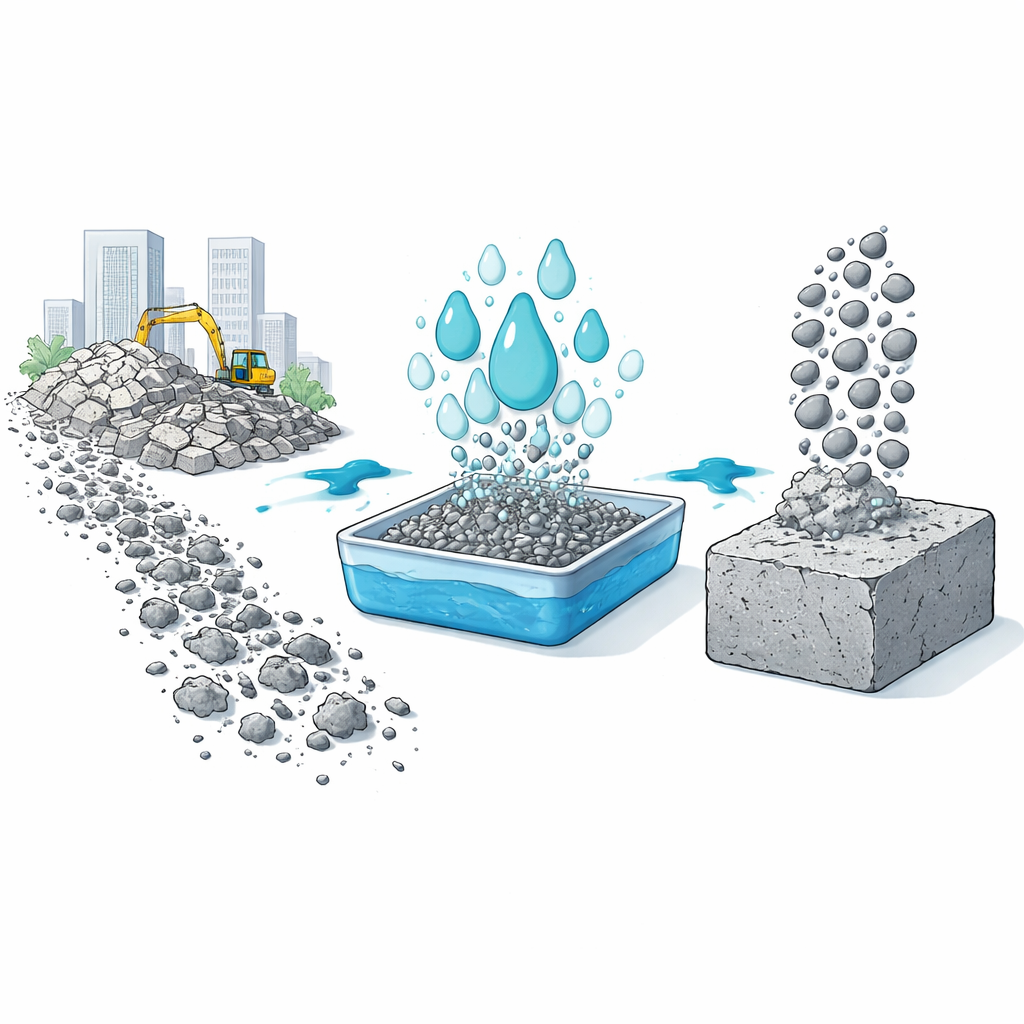
When old concrete is crushed, it produces recycled fine aggregate—sand-sized grains still coated with remnants of aged cement paste. These grains absorb more water and contain many tiny pores and cracks. As a result, mortar made from them tends to be more permeable and less resistant to damage from acids and salts than mortar made from natural river sand. The authors set out to see whether a quick pre-soaking step using two widely available materials—sodium silicate (a liquid “waterglass”) and silica fume (an ultrafine mineral powder)—could strengthen this attached mortar layer and improve the performance of recycled aggregate in new mixes.
A simple bath that seals the pores
The researchers collected construction and demolition waste, crushed it, and separated the fine fraction. They then soaked these recycled fines for 24 hours in water-based solutions containing different doses of sodium silicate and silica fume. After drying, the treated particles replaced all the sand in standard cement mortars, which were then cast into small cubes. Five mixtures were compared: one with natural sand, one with untreated recycled fines, and three with treated recycled fines at increasing chemical dosages. After the mortar had hardened, the cubes were immersed for months in strong sulfuric acid and magnesium sulfate solutions—conditions designed to mimic severe sewer and sulfate-rich soil environments. At intervals, the team measured weight loss, strength, water uptake, and internal soundness using ultrasonic pulses, and they examined the internal structure with advanced imaging and spectroscopy.
Standing up to acid and salts
Untreated recycled fines performed worst under both acid and sulfate exposure. Their mortars lost the most mass, suffered the sharpest drops in strength, absorbed the most water, and showed the greatest decline in ultrasonic pulse velocity—signs of extensive cracking and internal damage. Mortars made with natural sand fared better, but still showed visible surface erosion and gradual weakening over time. In contrast, mortars made with treated recycled fines consistently resisted damage more effectively. The mixture soaked in a medium-strength bath, containing 20% sodium silicate and 2% silica fume, stood out: in acid it lost roughly 40% less mass and retained about 30% more strength than the untreated recycled mix, and in sulfate solution it similarly limited weight loss and strength decline while maintaining higher ultrasonic velocities.
What changes inside the material
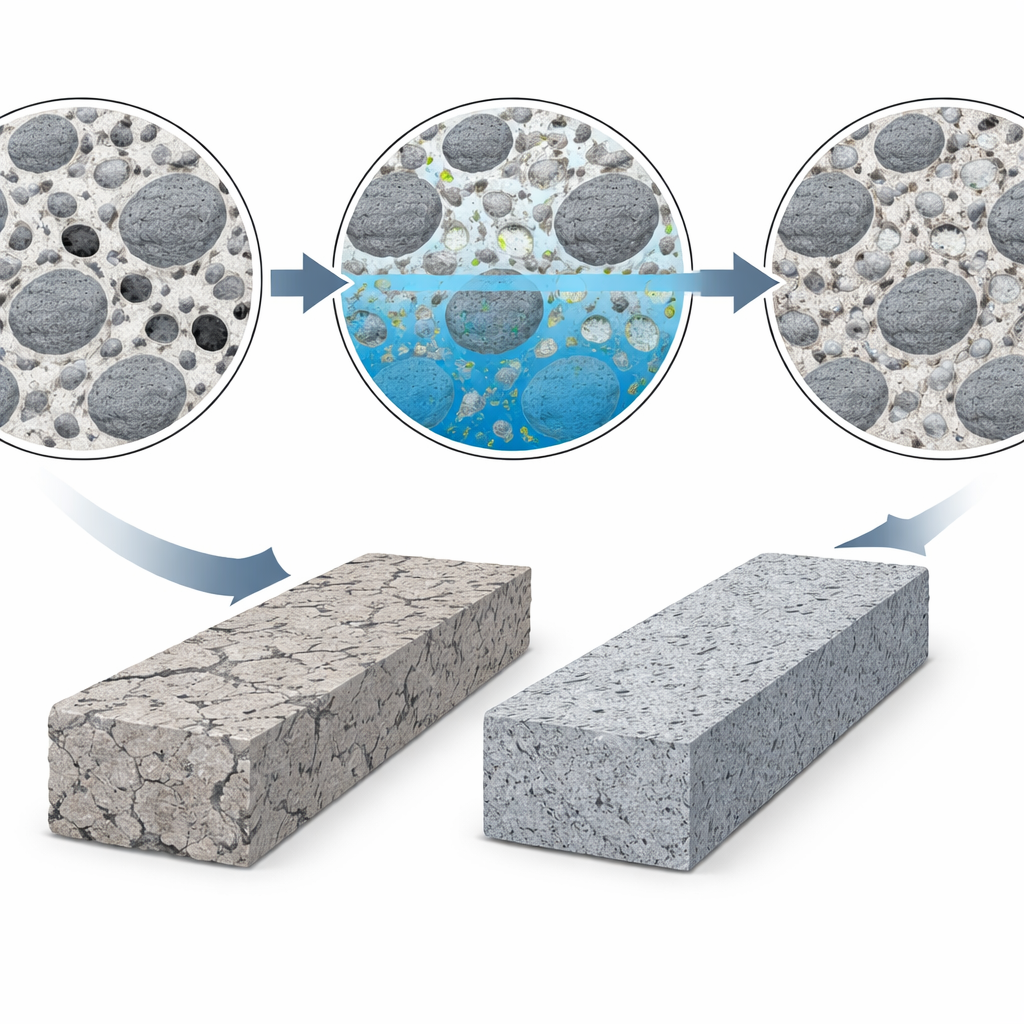
Microscopic and chemical tests revealed why the treatment worked. In untreated recycled mortars, aggressive solutions penetrated easily, dissolving calcium-rich compounds and forming expansive crystals of gypsum and ettringite that pried the microstructure apart. Images showed porous contact zones around the recycled grains and widespread cracking. After treatment, the attached mortar around each grain was noticeably denser and more tightly bonded to the new paste. The sodium silicate solution had infiltrated the pores and reacted with calcium to form extra binding gel, while the silica fume had further consumed loose calcium to build a more silica-rich, stable network. X-ray and infrared analyses confirmed that harmful by-products were strongly reduced and that the main binding phase remained more intact, even after long exposure.
A practical route to greener, tougher mortar
For a non-specialist, the key takeaway is that a relatively simple, low-energy soaking step can turn problematic recycled concrete fines into a high-performance ingredient for new mortar. By sealing pores and reshaping the chemistry of the old cement coating, the combined sodium silicate–silica fume bath allows 100% recycled fine aggregate to compete with, and in some respects surpass, natural sand under very harsh chemical conditions. This approach offers a realistic way to recycle more demolition waste into durable building materials, reducing the pressure on river sand resources while extending the life of concrete structures in aggressive environments.
Citation: Shaju, A.C., Nagarajan, P., Sudhakumar, J. et al. Sustainable enhancement of chemical durability and microstructural stability in cement mortar incorporating sodium silicate–silica fume treated recycled fine aggregate. Sci Rep 16, 9380 (2026). https://doi.org/10.1038/s41598-026-40549-9
Keywords: recycled concrete, cement durability, sustainable construction, aggregate treatment, acid and sulfate attack