Clear Sky Science · en
Foliar application of zinc-glycine and zinc-sulfate differentially affects leaf biochemical attributes and fruit quality in Newhall orange trees
Why Better Oranges Start With Tiny Nutrients
Oranges are prized not just for their taste, but also for vitamins and natural antioxidants that support human health. Yet the trees that bear them often struggle in soils short of key micronutrients. This study asks a practical question with big implications for farmers and consumers: can carefully spraying zinc onto leaves, especially in a gentler amino-acid form, make orange trees healthier, their fruit more colorful and tasty, and even more nutritious for people—while fitting into more sustainable farming practices? 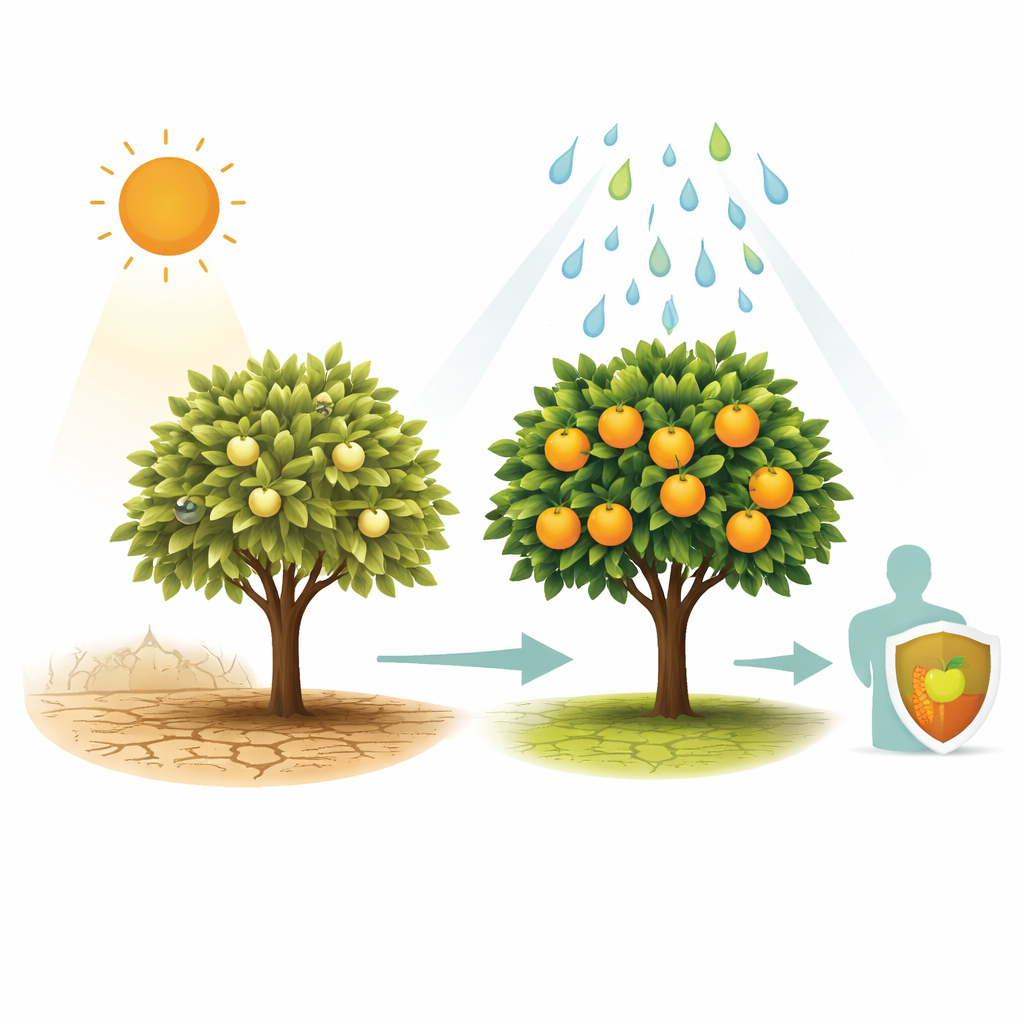
Two Ways to Feed a Hungry Tree
The researchers worked in a commercial orchard of Newhall navel orange trees in northern Iran, a region where soils are notably low in zinc. Over two growing seasons, they compared foliar sprays made from two different zinc sources: a conventional zinc sulfate salt and a newer zinc-glycine "biochelate," in which zinc is loosely bound to the simple amino acid glycine. Trees received one of three zinc doses, or just water, at two key stages early in fruit development. By treating real, mature orchard trees, the team could track how each spray changed leaf chemistry and fruit traits that matter to growers and consumers alike.
Healthier Leaves as Tiny Solar Panels
Leaves act like solar panels that turn light into sugars and other building blocks. In zinc-poor trees, these panels underperform. Spraying zinc, from either source, sharply raised zinc levels in the leaves without signs of toxicity. This, in turn, boosted chlorophyll—the green pigment that captures light—especially when the source was zinc-glycine at the highest dose. Leaves on those trees contained more chlorophyll a and b, more soluble proteins, and more starch and soluble carbohydrates, indicating stronger photosynthesis and better energy storage. They also showed higher activity of superoxide dismutase and other antioxidant defenses, which help leaves cope with environmental stress. Overall, zinc-glycine was particularly effective at enhancing these internal leaf safeguards and energy systems.
From Leaf Chemistry to Brighter, Tastier Fruit
The benefits did not stop at the leaves. Oranges from zinc-treated trees developed thicker peels, richer color, and improved internal quality. Zinc-glycine, especially at moderate and high doses, greatly accelerated the deep orange coloration of the peel, a sign of increased natural pigments that appeal to buyers and may fetch higher market prices. Inside the fruit, both zinc sources raised total phenolic compounds and antioxidant capacity, with zinc-glycine again giving the largest gains. These compounds are part of the fruit’s natural defense system and are also valued for their potential health benefits in the human diet. Meanwhile, zinc sulfate had a stronger influence on the balance between sweetness and acidity: it nudged total soluble solids slightly upward and titratable acidity downward, yielding a higher sweetness-to-acidity ratio that sensory testers preferred.
Balancing Yield, Flavor, and Sustainability
To see whether the chemistry translated into real-world appeal, a trained tasting panel compared the fruit. Oranges from zinc-sprayed trees scored higher for peel and flesh color, aroma, juiciness, sweetness, acidity balance, and overall liking, with the zinc-glycine high-dose treatment standing out. Beyond flavor, the study fits into a larger push toward “biofortification,” where farm practices are used to raise the levels of key micronutrients and health-promoting compounds in crops. Because amino acid–based fertilizers like zinc-glycine are biodegradable and contain fewer unwanted heavy metals than some conventional salts, they may offer a more environmentally friendly option for sustaining production under climate stress. 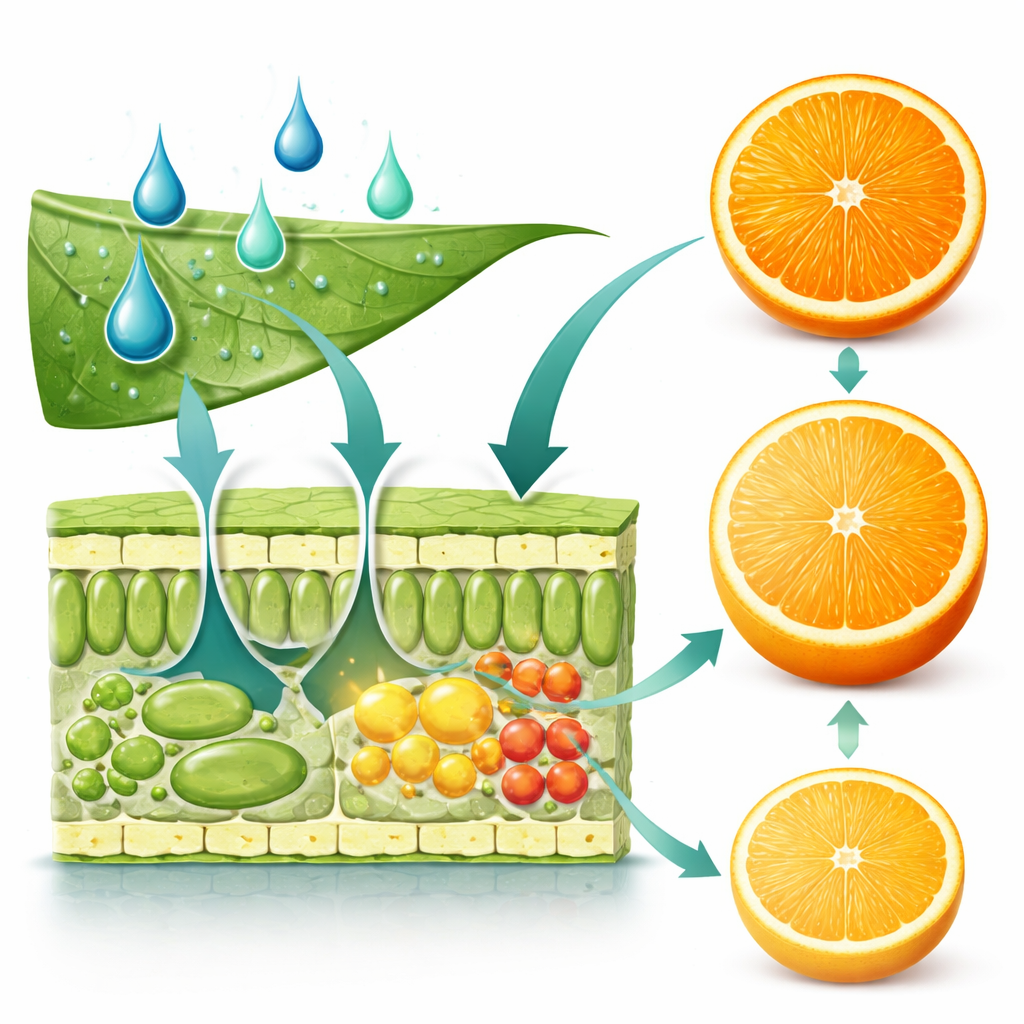
What It Means for Farmers and Consumers
In simple terms, the study shows that giving zinc-starved orange trees a foliar "spritz" of zinc can turn their leaves into more efficient energy factories and their fruit into brighter, tastier, and more antioxidant-rich food. Traditional zinc sulfate is better at loading zinc into the leaves and fine-tuning sweetness and acidity, while zinc-glycine excels at boosting leaf health, peel color, and antioxidant content. The authors suggest that spraying zinc-glycine at about 300 mg of zinc per liter is a promising strategy for orchards on zinc-poor soils, helping trees cope with climate-related stress and providing more appealing, potentially more nutritious oranges for people. They also call for future work to examine how repeated use of such biochelates affects soil life and the deeper biological pathways by which different forms of zinc support plant resilience.
Citation: Raiesi, T., Shiri, M.A. & Raeisi, H. Foliar application of zinc-glycine and zinc-sulfate differentially affects leaf biochemical attributes and fruit quality in Newhall orange trees. Sci Rep 16, 9410 (2026). https://doi.org/10.1038/s41598-026-40539-x
Keywords: zinc fertilization, citrus fruit quality, foliar spraying, biofortification, amino acid chelates