Clear Sky Science · en
Shared white matter connectome-based correlates of self-reproach, response failure, spatial planning, and resilience in patients with subthreshold depression: a graph theory approach
Why feeling "too hard on yourself" matters
Many people live with low-grade depression that doesn’t quite meet the threshold for a formal diagnosis, yet still colors daily life with self-criticism, low mood, and fatigue. This study asks a simple but powerful question: what is happening in the brain wiring of young adults who constantly blame themselves, struggle with quick decisions, or find it harder to bounce back from stress? By mapping the brain’s communication highways, the researchers look for shared pathways that might link self-reproach, thinking skills, and resilience—and point toward future treatments.
The brain’s hidden highway map
Instead of focusing on single brain regions, the team treated the brain as a vast road network. They used a type of MRI scan that tracks how water moves along nerve fibers to reconstruct major “white matter” pathways—the long-range cables that connect deep structures and outer thinking areas. Seventy-seven university students took part: some were healthy, some had subthreshold depression (lingering symptoms that fall short of full major depression), and some had diagnosed major depression. Using mathematical tools from network science, the researchers measured how central each region and pathway was within this wiring diagram, much like identifying main hubs and shortcut routes in a city’s transit map.
Linking self-blame, resilience, and thinking skills
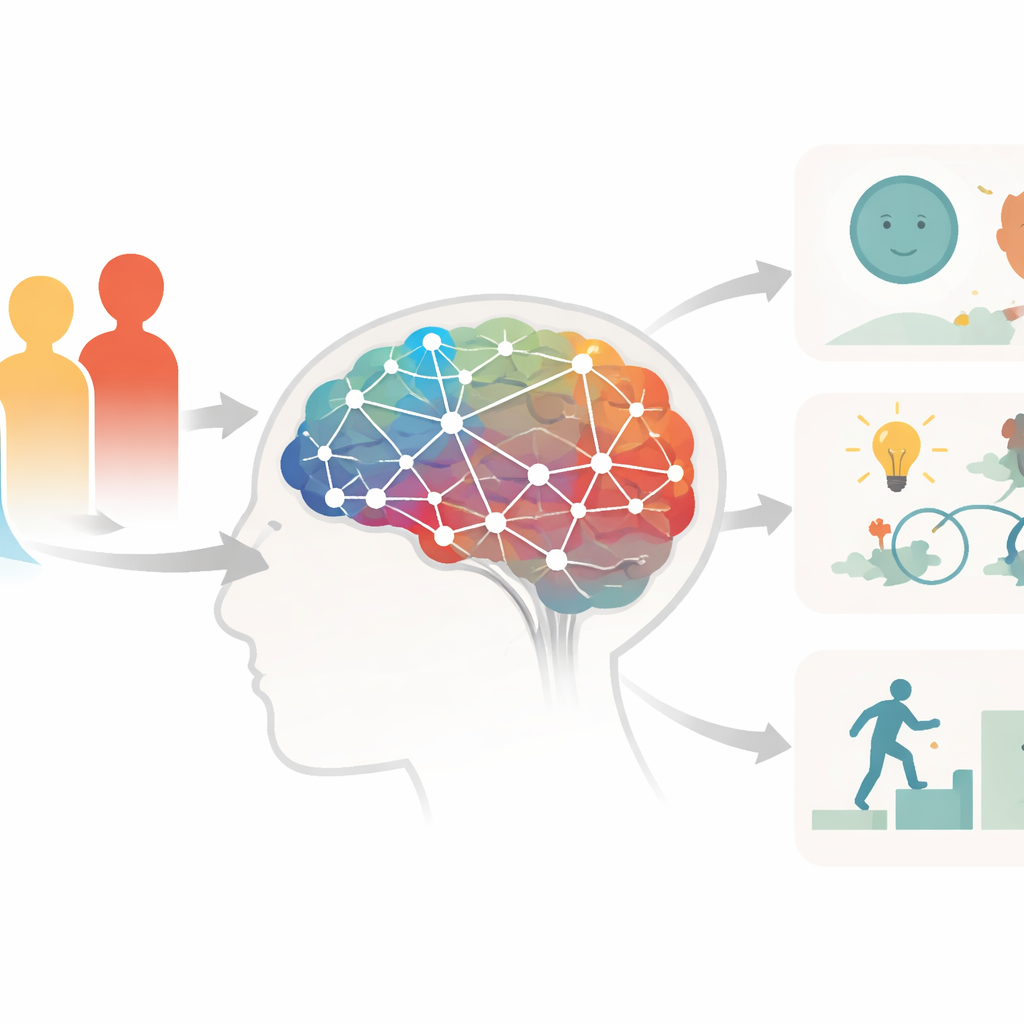
Participants also completed questionnaires and computer tasks. One question captured how often they blamed or criticized themselves. Another scale measured resilience—the belief that they could cope emotionally, problem-solve, and seek support when stressed. A rapid visual task tested how often they failed to respond in time, and a puzzle-like task assessed spatial planning and problem-solving. Rather than simply comparing averages between groups, the researchers asked: in this detailed brain network, which hubs and shortcut routes change together with self-reproach, resilience, or performance on these tasks, once overall depression and anxiety levels are taken into account?
Key hubs in deep and outer brain regions
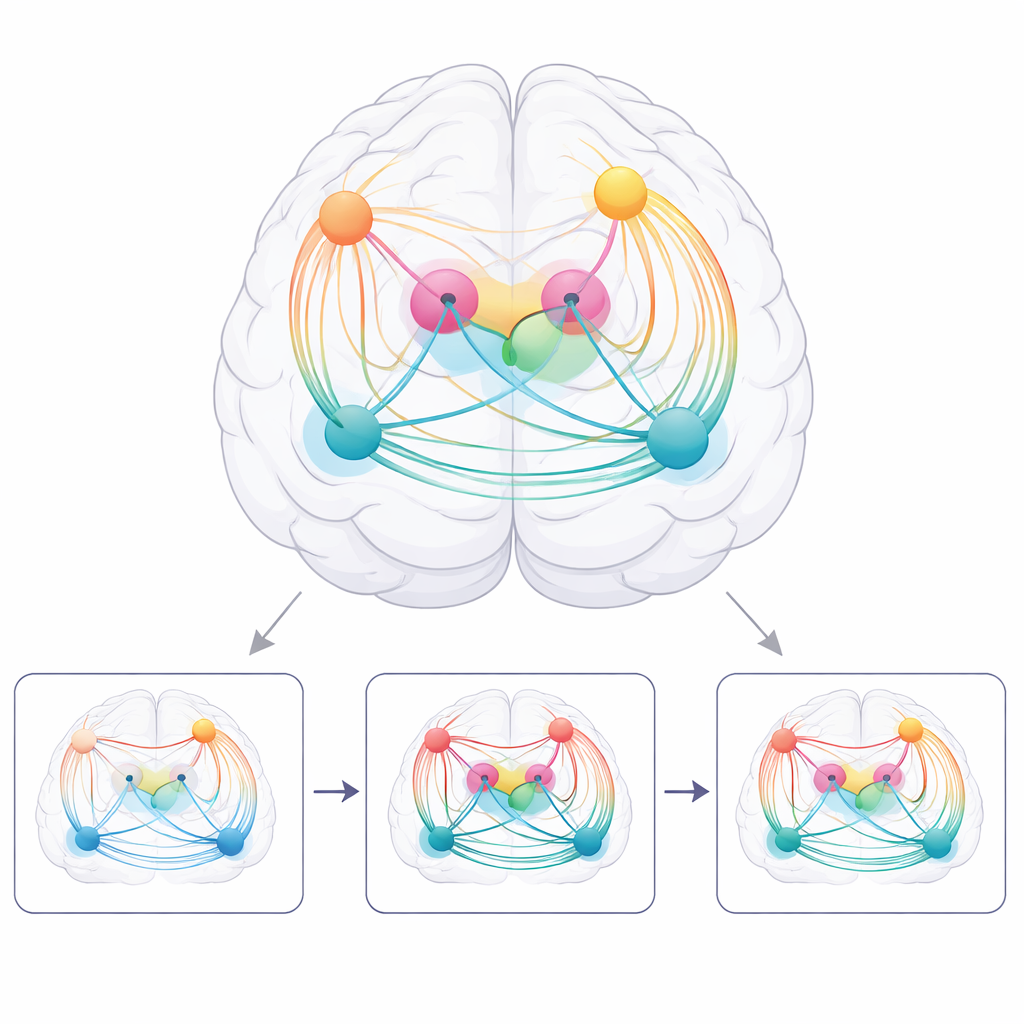
At the broad, whole-brain level, the wiring looked surprisingly similar between healthy volunteers, people with subthreshold depression, and those with major depression. The real differences appeared in specific hubs and connecting routes. Lower self-reproach was linked to stronger involvement of two areas: a deep structure called the pallidum and a region near the side of the brain involved in attention and body awareness. Greater resilience was tied to the front tip of the temporal lobe—a region involved in personal meaning and social understanding—and to well-used shortcut pathways between the thalamus (a central relay hub), the putamen (part of the brain’s motivation and habit system), and the insula (a region crucial for sensing internal bodily and emotional states).
Brain shortcuts and everyday thinking
Quick, accurate responses in the visual task were associated with stronger roles for areas in the front of the brain that support planning and control, and with more balanced participation of shortcut routes linking the thalamus, insula, and nearby frontal regions. When these routes were overly dominant—especially connections between left and right insula and between the insula and thalamus—participants tended to miss more responses, suggesting a less efficient network for rapid action. For the spatial planning puzzle, better performance aligned with greater centrality of regions in the right temporal and visual areas, and with a specific shortcut between the superior frontal region and the thalamus. In contrast, heavier reliance on certain midline and visual regions and their shortcuts to the insula and deep nuclei was tied to poorer planning.
What this means for people living with low-grade depression
Taken together, the findings suggest that self-reproach, resilience, and executive skills like quick responding and planning share a common backbone in the brain: a set of hubs and shortcuts connecting the thalamus and insula with deep reward and habit structures and with frontal regions that guide control and decision-making. In subthreshold depression, overall wiring is largely intact, but subtle imbalances in how these routes are used may tilt a person toward harsher self-judgment, slower responses, or weaker resilience. The authors propose that future treatments, including targeted brain stimulation, might one day focus on these specific frontal and insula regions and the white-matter tracts linking them, with the goal of easing self-blame and strengthening coping skills before symptoms progress to full major depression.
Citation: Yun, JY., Yoo, S.Y., Choi, JS. et al. Shared white matter connectome-based correlates of self-reproach, response failure, spatial planning, and resilience in patients with subthreshold depression: a graph theory approach. Sci Rep 16, 9394 (2026). https://doi.org/10.1038/s41598-026-40535-1
Keywords: subthreshold depression, self-reproach, white matter connectome, stress resilience, executive function