Clear Sky Science · en
Development and validation of a tool for detecting misinformation risk in diet, nutrition, and health content (Diet-MisRAT)
Why Food Advice Online Can Be Risky
From viral detox drinks to all-meat meal plans, nutrition tips flood our screens every day. Some are harmless, some are helpful, and some can quietly put our health at risk. This article describes a new way to spot diet and nutrition content that may mislead people, not just when it is plainly false, but also when it hides important dangers. The authors introduce a tool called Diet-MisRAT that grades how risky a piece of diet or health information is, helping professionals, regulators, and even artificial intelligence systems to react before bad advice turns into real harm.

Real-World Harm Behind Popular Diet Myths
The authors begin by showing that diet misinformation is not a minor nuisance: it can send people to emergency rooms or even cost lives. They cite examples such as unsafe supplements linked to liver damage, bleach-based “remedies” promoted during the COVID-19 pandemic, extreme fasting discovered online, and rigid meat-only diets popular in certain online communities. In many of these cases, the information people saw seemed convincing, sometimes because it contained a grain of truth. Yet important warnings, side effects, or medical caveats were missing, encouraging people to try dangerous practices instead of proven treatments or balanced eating patterns.
Seeing Misinformation as a Sliding Scale
Most current efforts to tackle false health claims work in black and white: something is labeled true or false, real or fake. The authors argue that this view misses much of the problem. Nutrition content can be technically accurate in parts and still mislead by what it leaves out, how it is framed, or how it plays on emotions and trust. They propose treating misinformation more like exposure to a toxic chemical: risk depends on the “dose,” the way it is delivered, and how vulnerable the person is. In this view, misleading traits in an article act like harmful agents. The more severe and convincing these traits are, and the more vulnerable the reader, the higher the risk of harmful choices.
A New Tool for Grading Risky Nutrition Messages
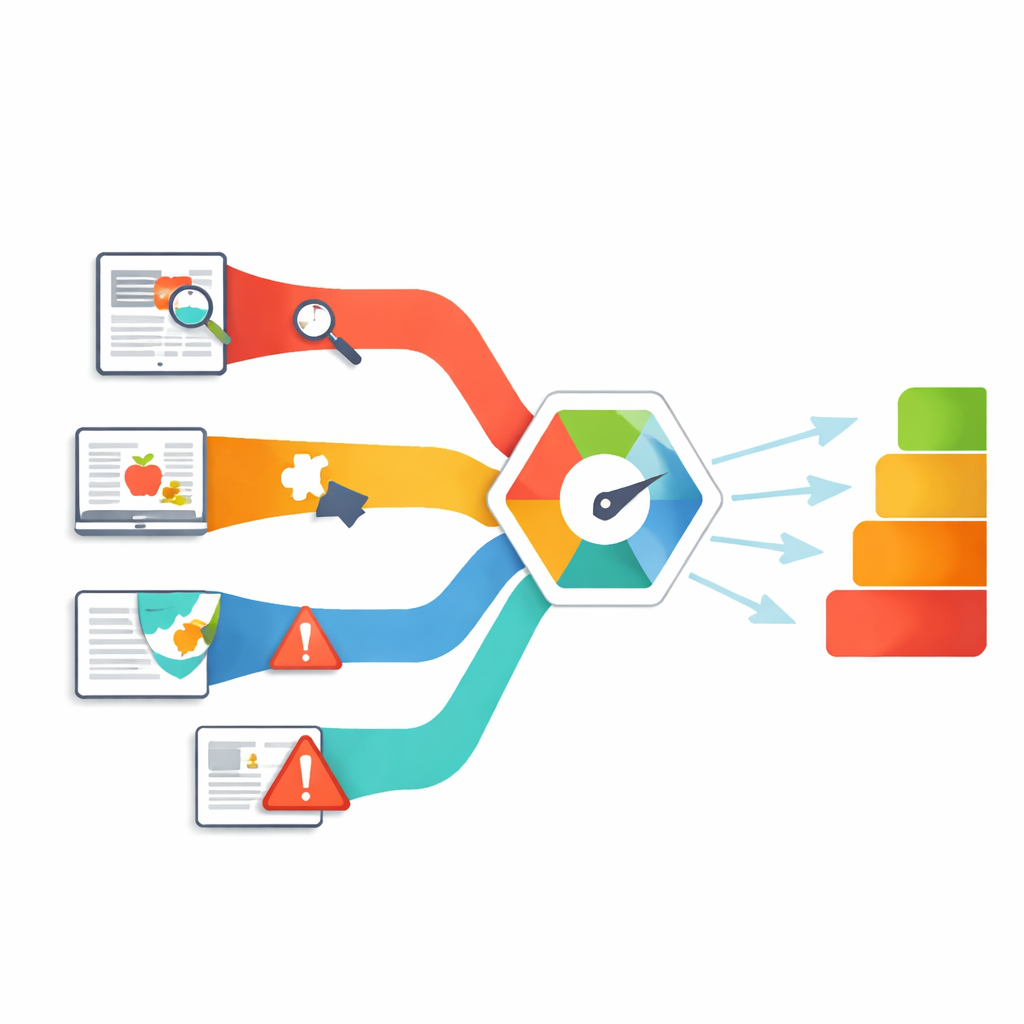
Building on this risk-based idea, the team created Diet-MisRAT, a structured checklist for medium- to long-form nutrition content such as blogs, articles, or detailed social media posts. Instead of a simple yes/no verdict, the tool looks at four dimensions: how inaccurate the content is, how much it leaves out, how deceptive it is in its tone or presentation, and how likely it is to lead to health harm. Each question in the tool has weighted answer options, so content that combines several severe problems is scored more heavily. In the end, the piece is placed into one of five bands, from very low to very high misinformation risk, giving a more nuanced picture that can guide how strongly platforms, educators, or regulators should respond.
Testing the Tool with Experts, Students, and AI
To see whether Diet-MisRAT works as intended, the authors ran five rounds of testing. First, two senior experts in nutrition and education reviewed and refined the items and agreed on benchmark answers for a sample article. Then trainee dietitians, postgraduate nutrition students, and highly experienced nutrition professionals each used the tool on the same content. Their scores showed strong to very strong agreement with the expert benchmark, suggesting that the questions were understandable and could be applied consistently by trained users. Finally, the researchers asked two versions of ChatGPT to apply the tool under strict, untuned conditions. Surprisingly, the AI models matched the expert answers even more closely than most humans, with high accuracy and stability across repeated runs.
What This Means for Readers and Regulators
For everyday readers, the study’s message is not to fear all online nutrition advice, but to recognize that risk is rarely all-or-nothing. An article can sound sensible while quietly skipping over side effects, conflicts of interest, or medical nuances that matter. For professionals and platforms, Diet-MisRAT offers a way to prioritize which pieces of content deserve closer scrutiny, gentle correction, or strong warnings. Because the tool is built on clear, expert-designed questions, it can also be handed to AI systems to help screen large volumes of material more transparently than many black-box algorithms. In short, the work points toward a future where misleading diet information is managed with the same graded, preventive mindset that public health already applies to chemical and biological hazards.
Citation: Ruani, A., Reiss, M.J. & Kalea, A.Z. Development and validation of a tool for detecting misinformation risk in diet, nutrition, and health content (Diet-MisRAT). Sci Rep 16, 9207 (2026). https://doi.org/10.1038/s41598-026-40534-2
Keywords: nutrition misinformation, online health information, diet safety, risk assessment, health communication