Clear Sky Science · en
Dysregulation of Endothelial cell markers in polycystic ovary syndrome
Why This Matters for Women’s Health
Polycystic ovary syndrome (PCOS) is usually discussed in terms of irregular periods, acne and difficulty getting pregnant. But behind these visible symptoms, PCOS may also quietly affect the inner lining of blood vessels, potentially raising the risk of heart attacks and blood clots later in life. This study asked a very practical question: are these blood vessel changes simply a side effect of being overweight, or are they built into PCOS itself? By carefully comparing women with and without PCOS who were equally obese, the researchers set out to separate the impact of excess weight from the impact of the syndrome.
A Closer Look at Blood Vessel Health
The inner lining of our blood vessels, called the endothelium, acts like a smart barrier that regulates blood flow, clotting and inflammation. When it is disrupted, vessels become stickier, more inflamed and more prone to forming clots—a state known as endothelial dysfunction. This condition is strongly linked to cardiovascular disease. In PCOS, obesity, insulin resistance and low-grade inflammation are all common, making it hard to know which factor is really driving any damage to blood vessels.
Designing a Fair Comparison
To untangle these effects, the researchers selected 92 women with PCOS and 19 women without PCOS, all of whom had obesity with a body mass index of at least 30. The groups were matched for age, weight and levels of a key inflammation marker, C‑reactive protein, so that these factors would not skew the results. The PCOS group showed higher insulin resistance and testosterone, as expected for this condition. Blood samples from all participants were then analysed using a high‑throughput proteomics platform that can measure many proteins at once, focusing here on those related to blood vessel function, clotting and inflammation. 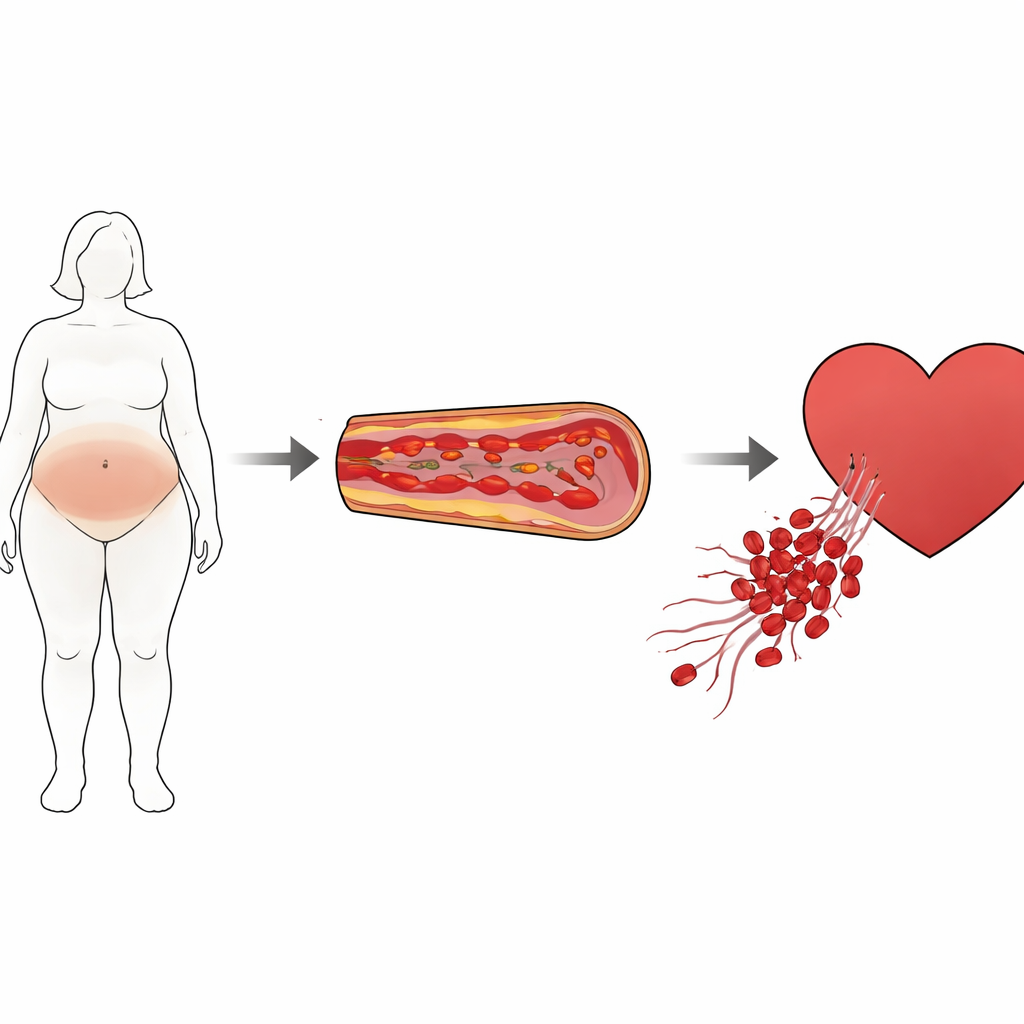
What the Blood Revealed
Four proteins stood out as being consistently higher in women with PCOS than in the equally obese control group. One, intercellular adhesion molecule‑1 (ICAM‑1), is a marker of blood vessel activation, reflecting a stickier vessel wall that attracts immune cells and promotes inflammation. The other three—tissue plasminogen activator (tPA), plasminogen activator inhibitor‑1 (PAI‑1) and D‑dimer—are closely tied to clot formation and breakdown. Elevated levels of these proteins together point to a system that is more prone to forming clots and less efficient at dissolving them. Importantly, these changes did not track with either insulin resistance or testosterone levels, suggesting that they are not just a by‑product of these well‑known PCOS features.
What Stayed the Same
Many other blood vessel‑related proteins did not differ between the groups. Molecules linked to inflammation, such as tumour necrosis factor and interleukins, as well as several other adhesion and growth factors, were similar in women with and without PCOS when weight and inflammation were matched. This pattern suggests that obesity itself may explain many vascular changes previously reported in PCOS, but that a specific cluster of clotting‑related and vessel‑activation markers is more directly tied to the syndrome. Additional statistical matching that balanced age, body mass index and inflammation again highlighted ICAM‑1, PAI‑1 and D‑dimer as key altered markers, reinforcing their importance. 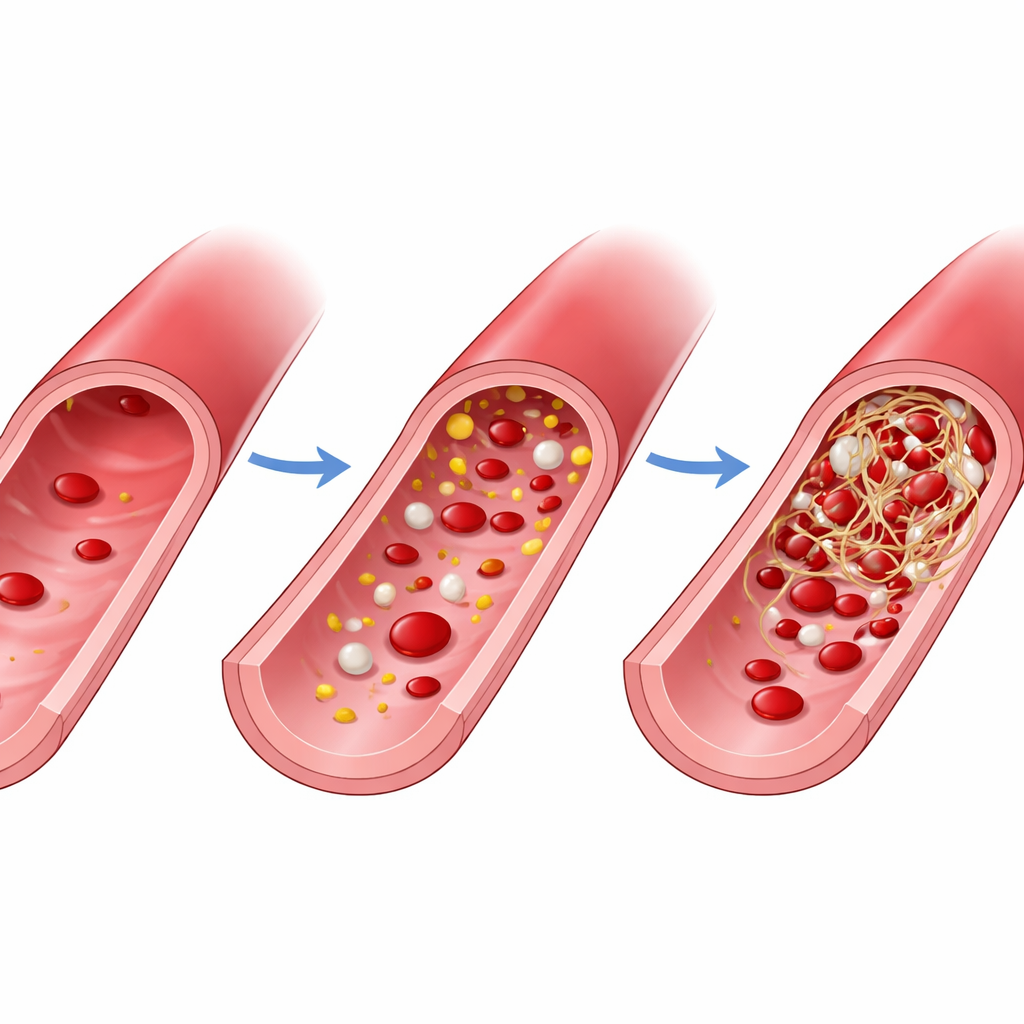
What This Means Going Forward
For a lay reader, the main message is that PCOS appears to carry its own signature of blood vessel and clotting changes, above and beyond the effects of obesity. Women with PCOS in this study showed signs of a more activated vessel lining and a blood clotting system tipped toward forming and maintaining clots, even when their weight and overall inflammation level matched those of women without PCOS. These findings help explain why PCOS is increasingly linked to higher rates of heart disease and blood clots, and they highlight potential blood tests that could one day help identify women at greatest risk. While more research is needed, especially in diverse populations, the work underscores that managing PCOS is not just about reproductive health—it is also about protecting long‑term heart and blood vessel health.
Citation: Borde, P., Niinuma, S.A., Habib, H. et al. Dysregulation of Endothelial cell markers in polycystic ovary syndrome. Sci Rep 16, 9300 (2026). https://doi.org/10.1038/s41598-026-40533-3
Keywords: polycystic ovary syndrome, endothelial dysfunction, blood clotting, cardiovascular risk, women’s health