Clear Sky Science · en
Hydrogen enhanced biodiesel production from Botryococcus braunii algal oil for sustainable fuel development
Turning Pond Scum into Power
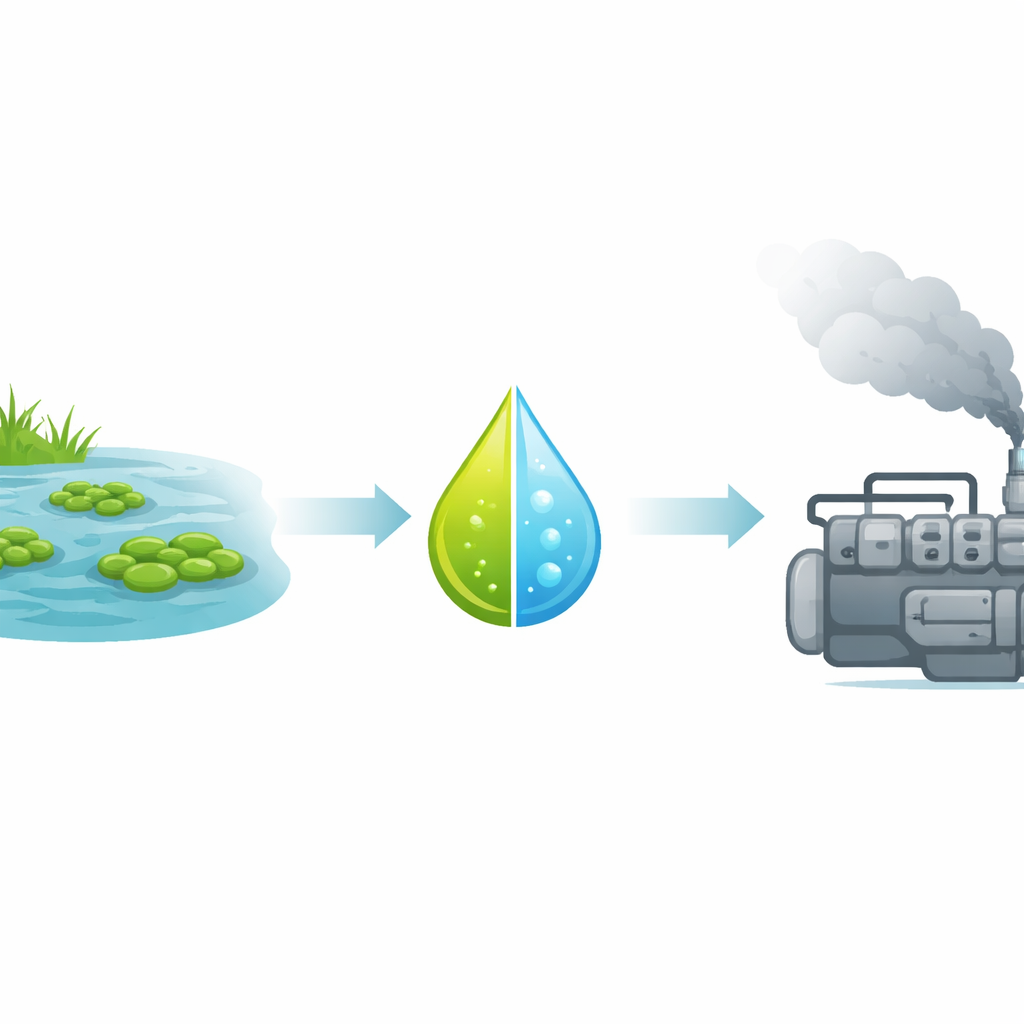
As the world searches for cleaner replacements for diesel fuel, an unlikely ally is emerging from shallow ponds and tanks: microscopic algae. This study looks at a particular oil-rich alga, Botryococcus braunii, and asks a practical question a driver or truck owner might care about: if we turn this algae into biodiesel, and then mix that fuel with hydrogen gas, can a modern diesel engine run just as strongly as it does on regular diesel—while breathing out a cleaner exhaust?
From Green Slime to Golden Fuel
The researchers first grew large quantities of Botryococcus braunii in water enriched with carbon dioxide, which helps the algae pack itself with oils. After about two and a half weeks, they harvested the algae, removed most of the water, and dried it. Using a common solvent mix, they extracted the oils and then chemically converted them into biodiesel with properties similar to regular diesel fuel, such as how easily it ignites and how much energy it contains. The resulting fuel was blended so that 30% came from algae biodiesel and 70% from standard diesel—a mixture the authors call A30—chosen because it had previously shown a good balance between engine power and cleaner exhaust.
How the Test Engine Was Set Up
To see how this algae-based blend behaves in the real world, the team used a single-cylinder diesel engine fitted with the same high-pressure injection technology found in modern cars and trucks. They ran the engine on pure diesel, on the A30 blend alone, and on A30 while feeding hydrogen gas into the air intake at two different flow rates, roughly “low” (4 LPM) and “high” (8 LPM). Careful sensors tracked how much fuel the engine used, how hot and how high the pressure grew inside the cylinder, and what gases and particles came out of the exhaust pipe. Strict safety steps—such as flame arrestors, leak detectors, and pressure relief valves—kept the hydrogen system under control.
More Power with Less Fuel
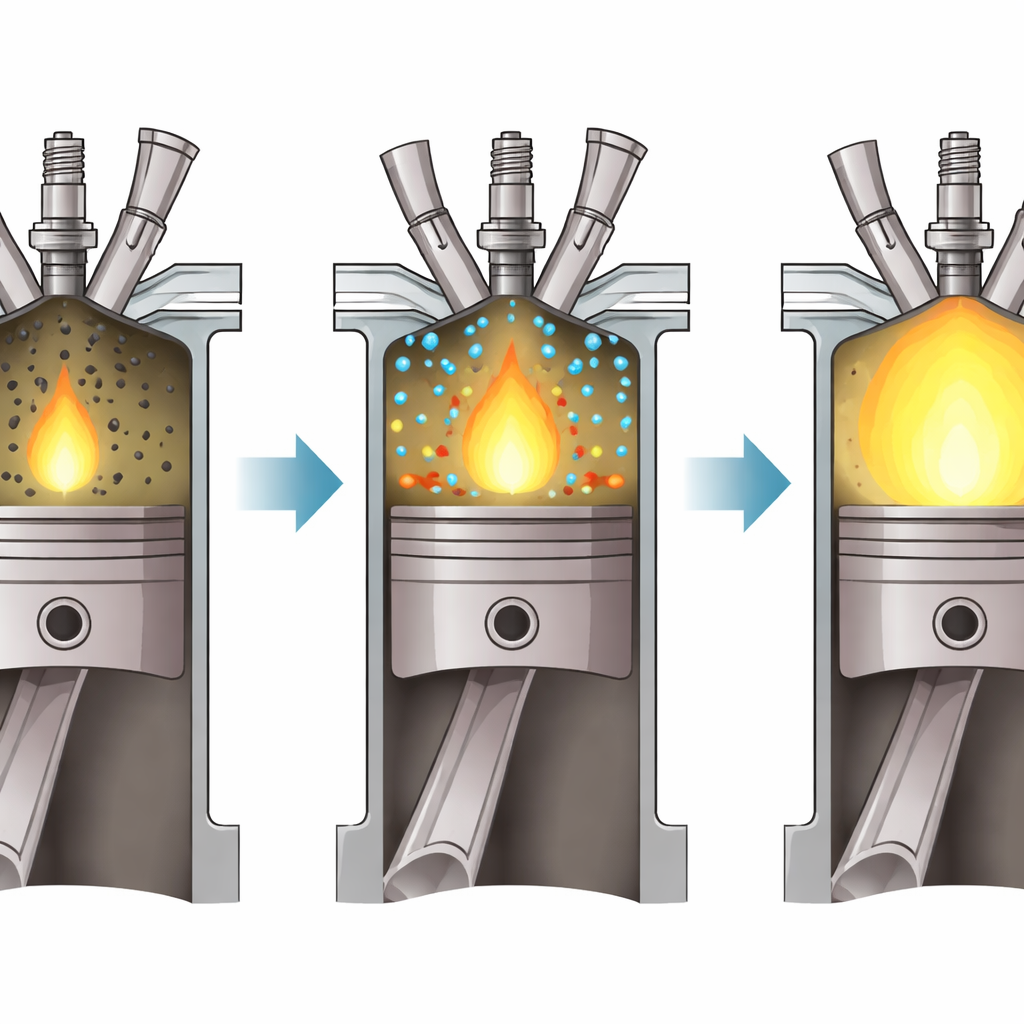
When the engine was pushed to full load, the algae blend with the higher hydrogen flow clearly outperformed straight diesel. Brake thermal efficiency—a measure of how much of the fuel’s energy ends up as useful power at the shaft—rose from 31% on pure diesel to about 37% with A30 plus high hydrogen, an improvement of nearly one‑fifth. At the same time, the engine needed less fuel to deliver each unit of power: specific fuel consumption fell by about 20%. The engine also “breathed” better, with volumetric efficiency rising from 82% on diesel to 91% with the algae–hydrogen combination. Inside the cylinder, peak pressure and the rate at which heat was released were both higher, signaling a faster, more complete burn of the fuel–air mixture.
Cleaner Exhaust, with One Important Catch
The cleaner burn showed up clearly in the exhaust. Compared with pure diesel at full load, the best algae–hydrogen case cut carbon monoxide, a sign of incomplete burning, by nearly 70%. Unburned hydrocarbon emissions dropped by about 43%, and the visible soot plume—measured as smoke opacity—fell by roughly 14%. Even carbon dioxide, the main greenhouse gas, was about 8% lower, reflecting both the improved efficiency and the lower carbon content of the algae-based fuel. Exhaust gas temperatures were slightly cooler as well, indicating that more of the fuel’s heat was being turned into useful work instead of being lost out the tailpipe. However, there was a downside: emissions of nitrogen oxides, a family of pollutants that contribute to smog and respiratory problems, rose by nearly 50% when hydrogen was added. These gases tend to form when combustion is very hot and efficient, exactly the conditions created by the algae–hydrogen mix.
What This Means for Future Engines
For a non-specialist, the core message is straightforward: a diesel engine can run at least as strongly—and significantly more cleanly—on a blend of algae-derived biodiesel and hydrogen as it does on regular diesel alone. The algae fuel takes pressure off fossil oil, and hydrogen helps the engine squeeze more useful work out of every drop while sharply cutting most harmful emissions. The trade‑off is an increase in nitrogen oxides, which the authors suggest could be tackled using existing strategies such as exhaust gas recirculation, water injection, or special additives. Taken together, the results point toward a future where heavy-duty engines might be powered by fuels grown in tanks rather than pumped from underground, with hydrogen acting as a powerful helper in the push for cleaner transport.
Citation: Selvam, M., Nagarajan, P., Harish, K.A. et al. Hydrogen enhanced biodiesel production from Botryococcus braunii algal oil for sustainable fuel development. Sci Rep 16, 9783 (2026). https://doi.org/10.1038/s41598-026-40516-4
Keywords: algae biodiesel, hydrogen dual fuel, diesel engine emissions, sustainable fuels, Botryococcus braunii