Clear Sky Science · en
Insight on the impact of Acacia nilotica leaves extract on the characteristics of natural and synthetic rubber composites
Why leaves matter for everyday rubber
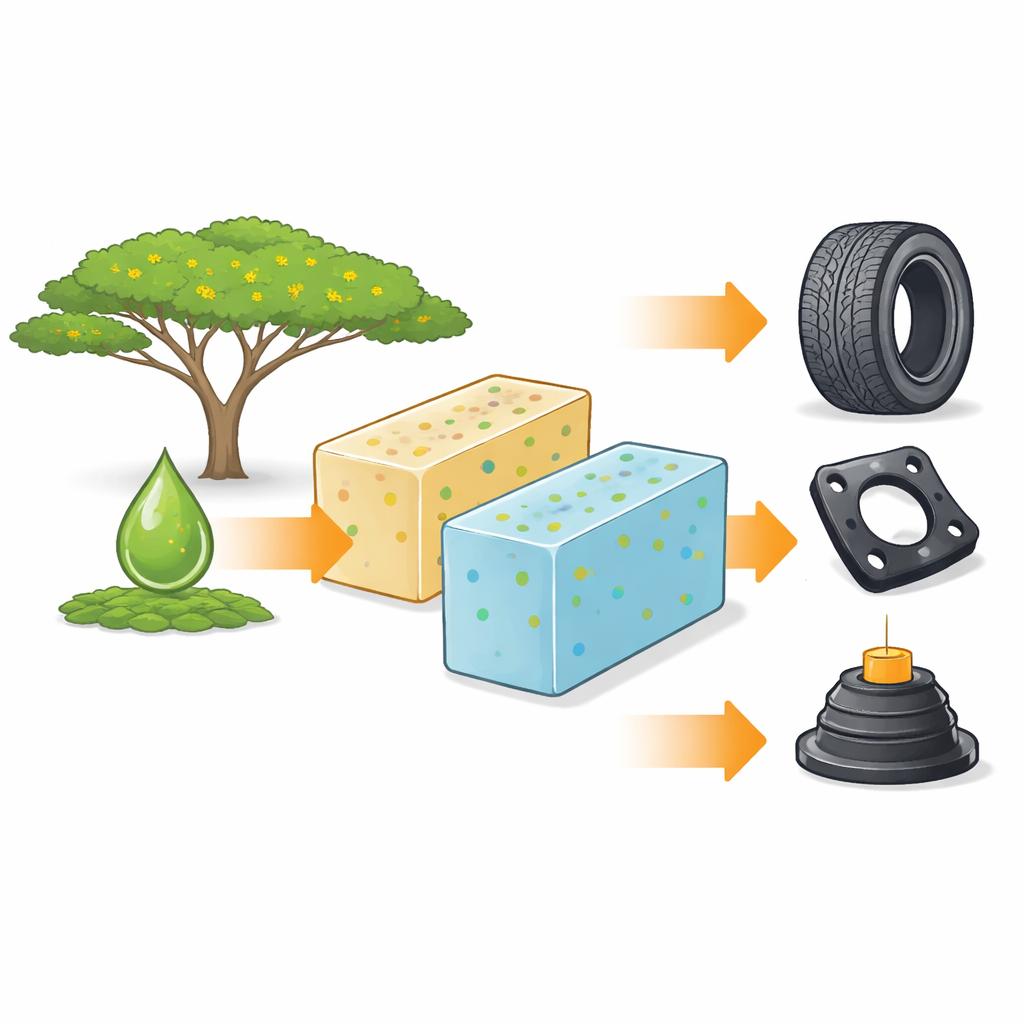
Car tires, gaskets, and vibration pads quietly work for years under the hood of your car or inside machines, all made from rubber that slowly ages and cracks in heat and oxygen. This study explores whether a simple plant extract from the leaves of the Acacia nilotica tree can replace a common synthetic chemical in helping rubber last longer. By doing so, it connects familiar products like tires with the broader push for greener, less harmful additives in everyday materials.
The problem with rubber getting old
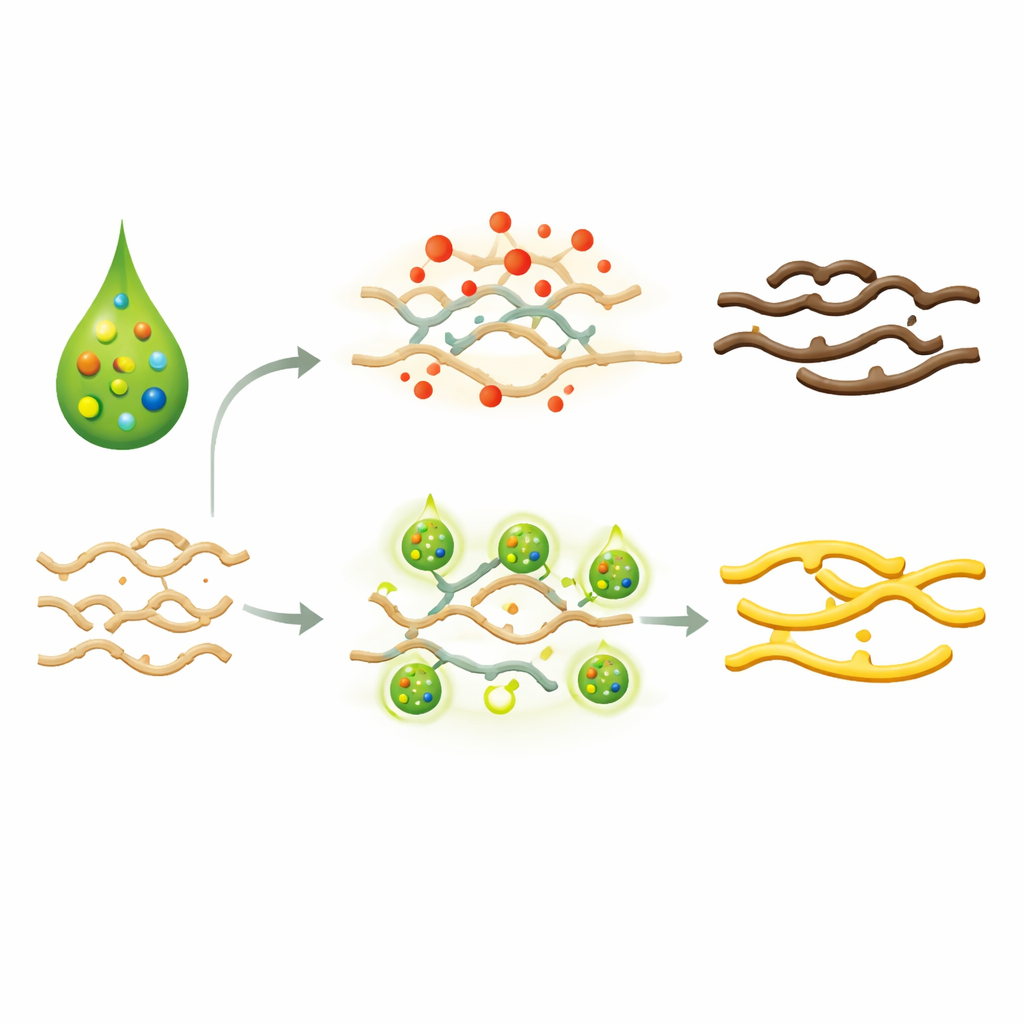
Natural and synthetic rubbers are popular because they stretch and spring back, making them essential in tires, seals, and damping parts. But the same chemical features that give rubber its bounce also make it vulnerable to slow damage when exposed to heat, air, and sunlight. Over time, oxygen attacks the rubber chains, creating microscopic breaks and extra bonds that harden the material. This aging process reduces strength, flexibility, and appearance, shortening the useful life of rubber products and increasing waste.
Turning a tree into a helper for rubber
The researchers focused on leaves from Acacia nilotica, a tree common in parts of Africa and Asia. They extracted and purified natural compounds rich in so-called polyphenols, which are known to neutralize harmful reactive species. These molecules were carefully separated and characterized in the lab to confirm their structures. The resulting leaf extract was then mixed into two types of rubber: natural rubber (NR) and a widely used synthetic rubber called styrene-butadiene rubber (SBR). The team compared different amounts of the plant extract with a standard commercial antioxidant known as TMQ, which is commonly used but is synthetic and less environmentally friendly.
How plant extract changes rubber behavior
To see how the leaf extract affected rubber, the scientists examined chemical bonds, surface structure, curing behavior, and mechanical performance before and after aging at 90 °C for up to a week. Microscopy images showed that small amounts of the extract helped carbon black filler spread more evenly through the rubber, while very high amounts led to clumping. Measurements of curing and swelling revealed that in natural rubber, the extract could even act like a mild accelerator at certain doses, increasing the density of the three-dimensional network that holds the material together. In SBR, by contrast, higher extract levels tended to slightly slow or dilute the forming network, showing that the same natural additive interacts differently with different rubber types.
Strength and flexibility over time
The most practical test was how well the rubbers kept their strength and stretch after being aged in hot air. For natural rubber, adding just 0.5 parts of leaf extract per 100 parts of rubber preserved tensile strength and stretchability better than the commercial TMQ, even though high loadings did not give extra protection and could reduce initial strength. Hardness rose with more extract, indicating stiffer, less stretchy material at higher doses. In synthetic SBR, moderate amounts of extract (around 0.5–1 part) improved both strength and elongation compared with untreated rubber and outperformed TMQ in limiting excessive stiffening during aging. Very high levels again reduced benefits, likely because of particle agglomeration or over-interference with the curing chemistry.
What this means for greener rubber
Overall, the study shows that a simple plant-leaf extract can act as a powerful natural protector for both natural and synthetic rubber, especially when used in small, carefully chosen amounts. For natural rubber, 0.5 parts of Acacia leaf extract gave the best balance of toughness and flexibility over time, while in SBR, optimal performance came at 0.5–1 part. These findings suggest that rubber parts in cars and industrial equipment could be made more durable while reducing reliance on fully synthetic antioxidants. In everyday terms, the work points toward tires, seals, and vibration dampers that last longer and are a bit kinder to the environment, thanks to the chemistry hidden in a tree leaf.
Citation: Zidan, T.A., El-Toumy, S.A., Ismail, M.N. et al. Insight on the impact of Acacia nilotica leaves extract on the characteristics of natural and synthetic rubber composites. Sci Rep 16, 9530 (2026). https://doi.org/10.1038/s41598-026-40512-8
Keywords: natural rubber, styrene-butadiene rubber, plant-based antioxidant, material aging, sustainable additives