Clear Sky Science · en
The efficacy of integrating assistive technology and the CAPE lesson planning framework toward improving students’ speaking skills
Talking to Your Phone, Learning to Talk to the World
Imagine practicing English conversation any time you like just by speaking to your phone, without worrying about making mistakes in front of classmates. This study explores how pairing Apple’s Siri, the voice assistant many people already carry in their pockets, with a thoughtful way of planning lessons can help university students become more confident and capable English speakers.
Why Speaking English Is Still So Hard
Even though English is the global language of travel, study, and work, many students who learn it as a foreign language struggle most with speaking. Reading and listening often improve faster because they demand less risk and less public performance. Speaking well, by contrast, requires steady practice, quick thinking, and clear pronunciation, all while managing the anxiety of being judged. Traditional classroom approaches and limited class time leave many learners with too few chances to actually talk, especially in large classes where the teacher is the main voice.
Phones, Voice Assistants, and a New Kind of Lesson
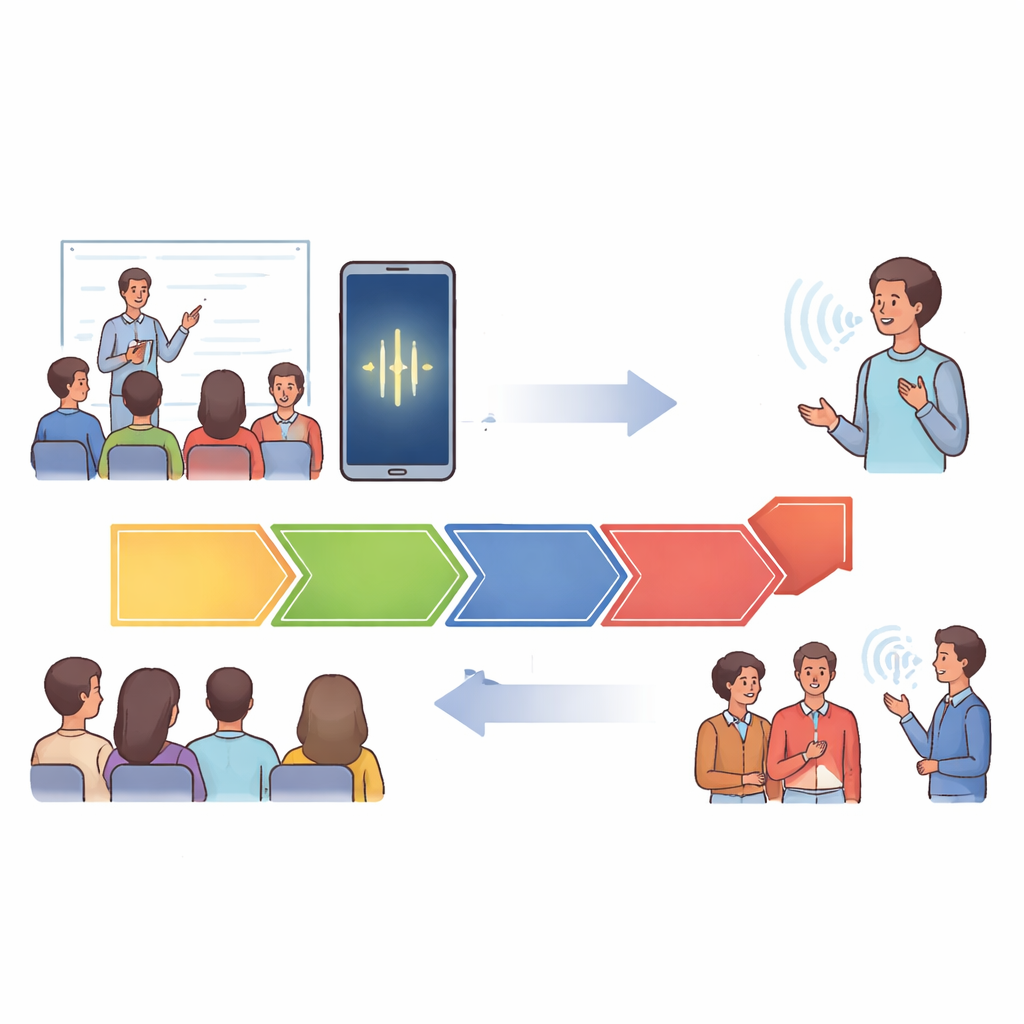
Modern language teaching has long used computers and mobile phones to support learning, and voice-driven helpers such as Siri offer something new: they can listen, respond instantly, and never tire. Yet technology alone does not guarantee progress. The authors argue that what really matters is how tools like Siri are woven into lessons. They compare a familiar, step-by-step lesson pattern called PPP (Presentation–Practice–Production) with a more flexible structure known as CAPE (Context–Analysis–Practice–Evaluation). CAPE begins with real-life situations, looks closely at learners’ needs, offers guided practice, and then reflects on what worked and what did not. The big question was whether using Siri within this responsive CAPE structure would boost students’ speaking more than using Siri in the more rigid PPP pattern.
Putting Siri to the Test in Real Classrooms
The researchers worked with 128 university students learning English in Cyprus. All took an initial exam, and only those who reached a certain level were included. They were randomly split into two groups. Both groups learned an oral communication course over seven weeks, five hours per week, and both regularly used Siri in English. What differed was how the lessons were planned. For the experimental group, classes followed CAPE: teachers started with everyday topics such as “talking to digital assistants,” drew out what students already did with their phones, and then had them explore common request patterns with Siri, practice real tasks like checking the weather or finding a café, and finally reflect on how clearly Siri understood them. The comparison group used PPP: the teacher first explained key phrases, drilled them, and then moved to more open speaking tasks, again with the help of Siri.
What the Numbers and Voices Revealed
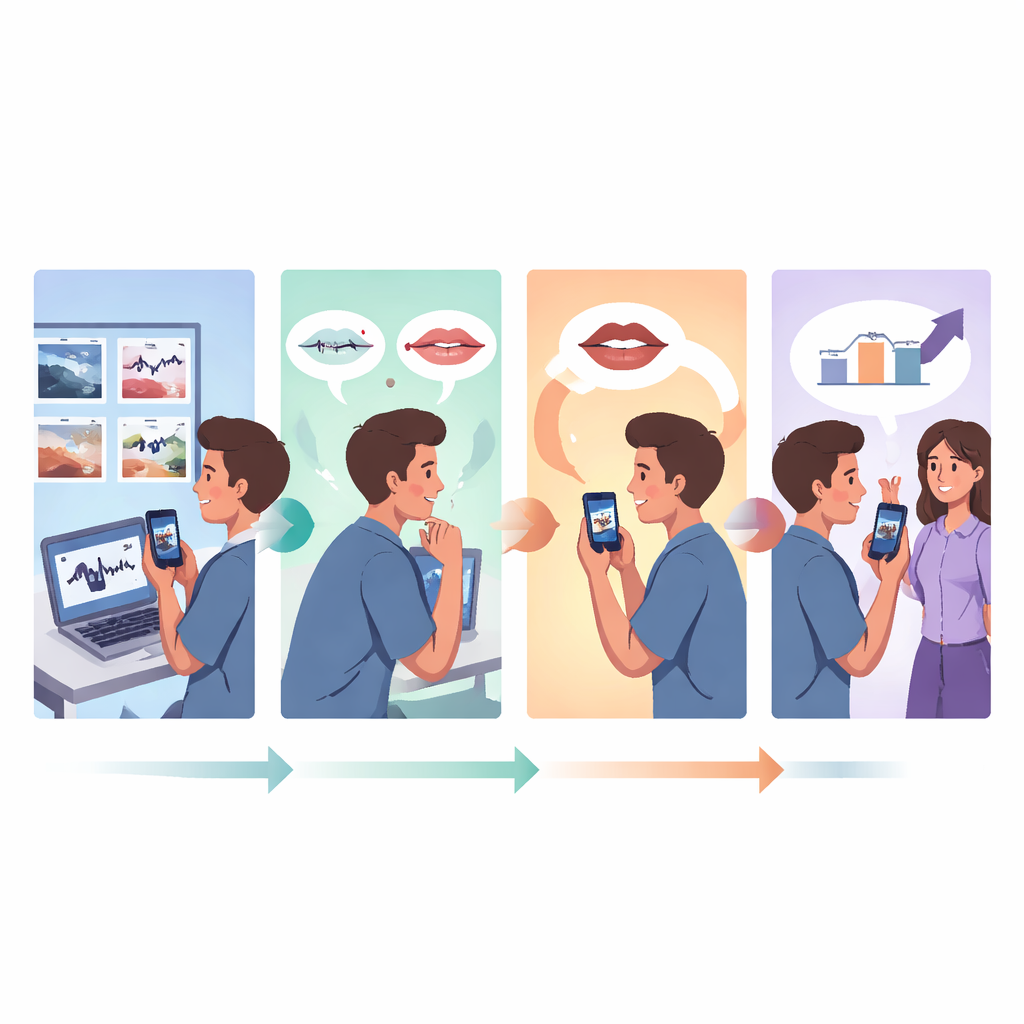
At the end of the course, all students completed a speaking test based on an international standard scale. The group that used CAPE plus Siri did noticeably better: roughly three out of four students in this group passed, compared with a little over one in three in the PPP plus Siri group. Statistical checks showed that this gap was large and very unlikely to be due to chance. Interviews with 50 students from the CAPE group added human detail. Learners said that Siri’s clear accent helped them hear and imitate difficult words, and that talking to a “robot partner” felt less stressful than speaking in front of classmates. Many reported feeling newly motivated; they wanted to communicate well enough that Siri would understand them easily, and some described using Siri outside class as a kind of portable speaking coach. Students also felt more independent, because they could choose when and how often to practice, turning formerly passive time into extra language exposure.
What This Means for Learners and Teachers
For non-specialists, the takeaway is simple: blending an everyday digital helper with smart lesson design can substantially improve language learning. Siri on its own is not a magic fix, and neither is any single teaching recipe. But when a voice assistant is used within a flexible, reflective structure like CAPE that connects to real life, listens to learners’ needs, and builds in feedback, students gain more chances to speak, make mistakes safely, and gradually sound more natural. Not every learner improved, and the study was limited to one university and one skill, so more research is needed. Still, the findings suggest a promising path: thoughtfully planned conversations with technology can make speaking practice more frequent, more personal, and less intimidating for people learning to express themselves in a new language.
Citation: Ironsi, C.S., Bostanci, H.B. The efficacy of integrating assistive technology and the CAPE lesson planning framework toward improving students’ speaking skills. Sci Rep 16, 9305 (2026). https://doi.org/10.1038/s41598-026-40481-y
Keywords: English speaking practice, voice assistants in education, mobile language learning, lesson design frameworks, autonomous language learning