Clear Sky Science · en
Assessment of reinforcing sutures of double-stapling anastomosis with manual and powered circular staplers in Porcine models
Why this matters for people facing bowel surgery
When a portion of the bowel is removed during rectal cancer surgery, surgeons must reconnect the remaining ends so stool can still pass. If this new connection leaks, patients can become seriously ill and may need more operations. This study used pig bowel to test how well different surgical tools and extra stitches can strengthen that connection, offering clues that may one day make rectal surgery safer for patients.
Making a safe connection in the gut
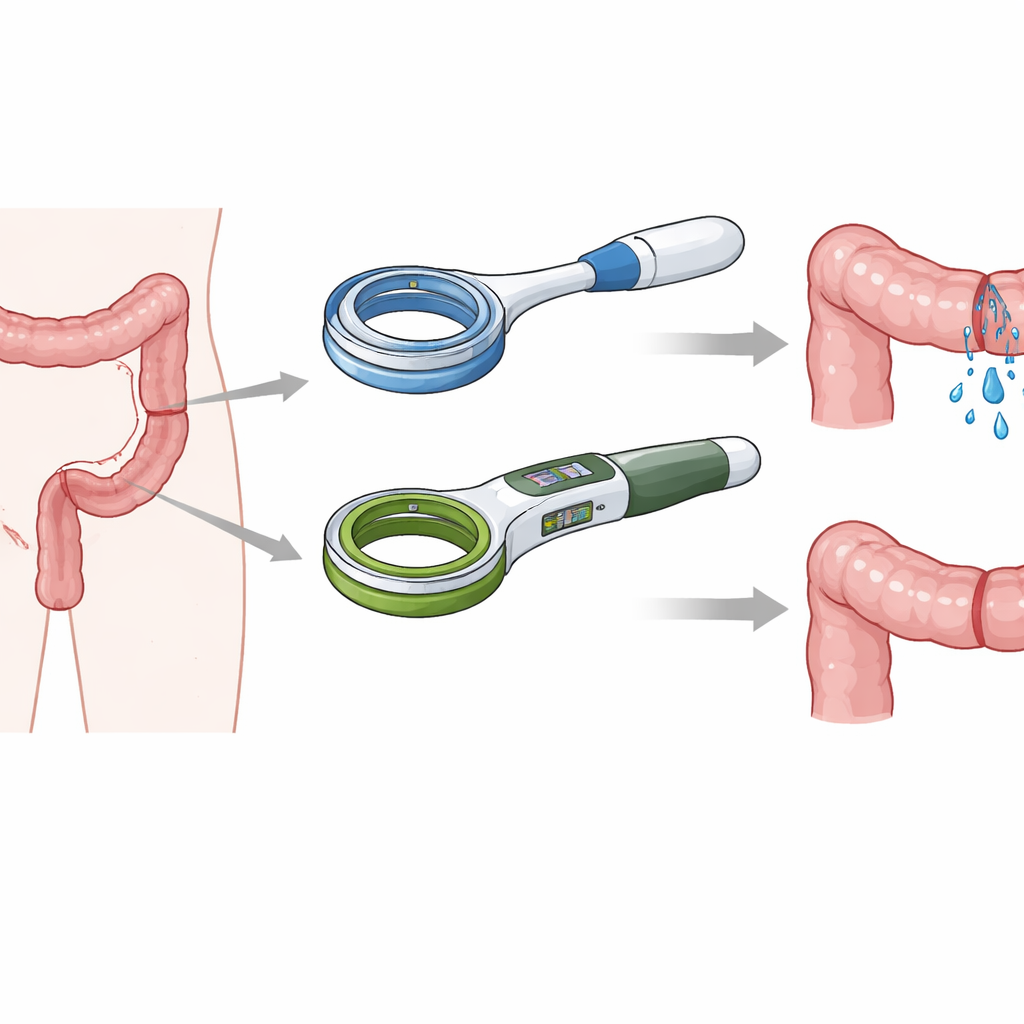
To reconnect bowel, many surgeons now rely on a device called a circular stapler, which closes and staples the cut ends in a ring. This is faster and often safer than sewing by hand, but leaks at the join still occur in about one in ten rectal cancer operations. Leaks are influenced by blood flow to the tissue, how tight the join is pulled, and how much pressure builds up inside the bowel. Surgeons have begun using newer battery-powered staplers that fire more smoothly, and some also add reinforcing stitches around the staple line, hoping to reduce leaks. Until now, however, there has been limited direct testing of how much these approaches actually strengthen the join.
How the pig bowel experiment was done
The researchers used sections of pig colon, a common stand-in for the human large intestine, to create model bowel joins in the laboratory. They used a standard method called double-stapling, in which one stapler closes the bowel and a circular stapler then creates the ring-shaped connection. Two types of circular stapler were tested: a traditional hand-powered device and a newer battery-powered model designed to apply a steady, controlled squeeze. For each type of stapler, some joins were left as they were, while others received four extra stitches along the staple line, especially where two staple rows crossed, which are thought to be natural weak spots.
Putting the joins under pressure
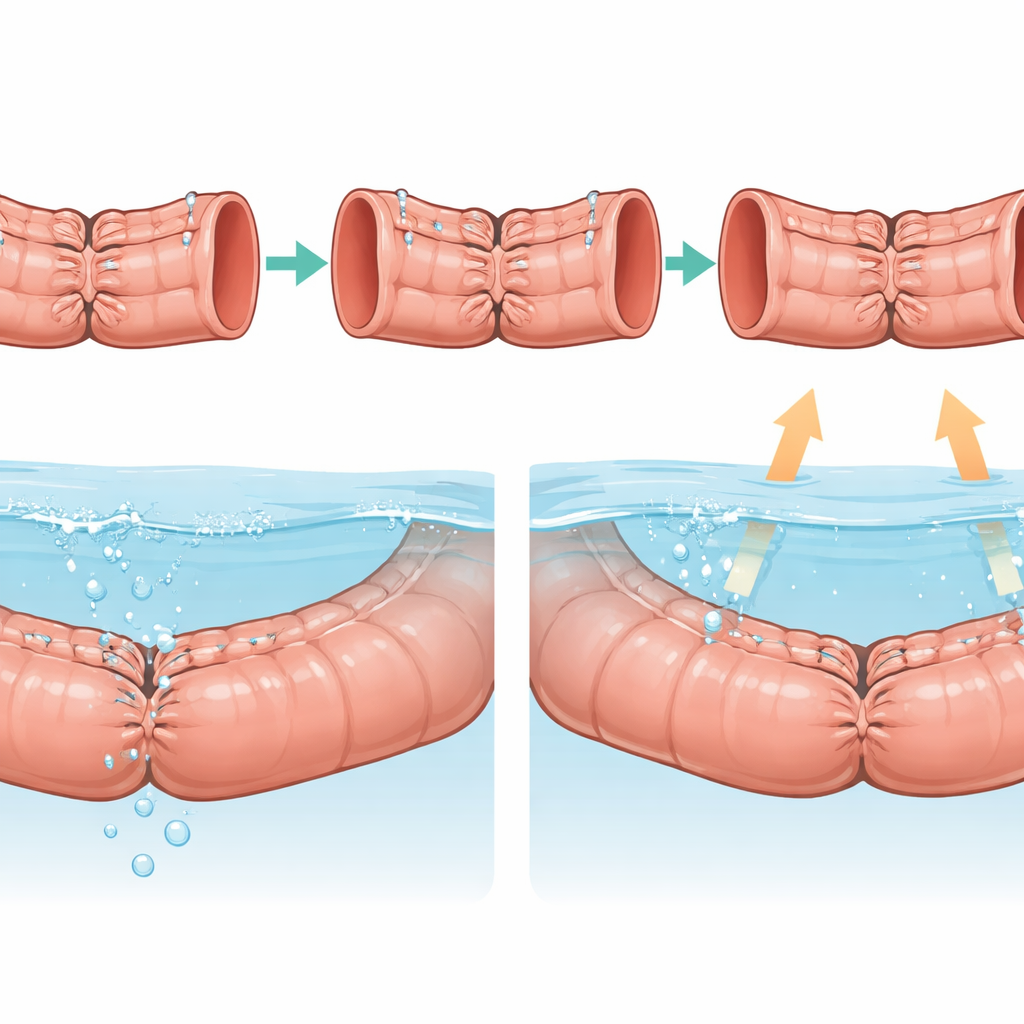
To test strength, each bowel segment was submerged in water and gently inflated with air while a pressure gauge tracked how hard it was being pushed from the inside. The team watched for bubbles appearing from the staple line, which signaled that the join had “burst” and started to leak. The pressure at that moment—known as burst pressure—served as a stand-in for how well the connection might hold up inside a living body, where bowel pressure can spike during straining or bowel movements.
What the team discovered
Across 16 bowel models, the powered stapler generally produced stronger joins than the manual stapler. When no extra stitches were used, joins made with the powered device held higher pressures than those made with the manual device. Adding reinforcing stitches boosted strength in both groups, but the effect was most striking for the manual stapler, where burst pressure rose by roughly half. The combination of the powered stapler plus extra stitches produced the strongest joins of all, with burst pressure about two-thirds higher than the weakest setup, which used a manual stapler with no reinforcement. Most leaks occurred exactly where expected—at the crossing points of the staple lines—supporting the idea that those spots are structural weak links.
What this could mean for future patients
This was a small, early study using bowel taken from pigs after slaughter, so it cannot by itself prove that powered staplers or extra stitches will prevent leaks in real patients. Pressures achieved in the lab are best viewed as comparisons between techniques, not as hard safety thresholds. Even so, the findings suggest that powered staplers provide a more even, reliable squeeze, while reinforcing stitches can offer extra security in especially tight or tricky joins. Together, these approaches may help surgeons build stronger bowel connections and, with further research in larger patient studies, could contribute to fewer dangerous leaks after rectal surgery.
Citation: Yoshida, D., Hasegawa, T., Nakashima, S. et al. Assessment of reinforcing sutures of double-stapling anastomosis with manual and powered circular staplers in Porcine models. Sci Rep 16, 9710 (2026). https://doi.org/10.1038/s41598-026-40474-x
Keywords: rectal surgery, anastomotic leakage, circular stapler, reinforcing sutures, colorectal anastomosis