Clear Sky Science · en
The effect of daily aerobic cycling exercise on cannabis withdrawal: An inpatient randomised controlled trial
Why this study matters
As more people seek help to cut back on cannabis, doctors are looking for simple, side‑effect‑free ways to ease the discomfort that comes with stopping. Exercise is already known to help people quitting cigarettes and other drugs, and some scientists have suggested it might even briefly release stored cannabis from body fat, softening withdrawal. This study put that idea to the test in a real‑world hospital setting, asking whether daily cycling workouts could outperform gentle stretching for people going through cannabis withdrawal.
Testing two kinds of movement
The researchers recruited 46 adults who were dependent on cannabis and had chosen a seven‑day inpatient stay to help them stop. Everyone stayed on the same specialist hospital ward, with standard medical and counselling support. Participants were randomly assigned to one of two groups: one did a 35‑minute session of moderate‑to‑hard stationary cycling each day, while the other did a routine of light stretching with a brief easy spin on the bike before and after. Neither group was told that one type of exercise was the “real” treatment, helping to keep expectations in check. Over the week, the team carefully tracked withdrawal symptoms, cravings, heart rate, effort, blood fats, and levels of cannabis compounds in the blood. 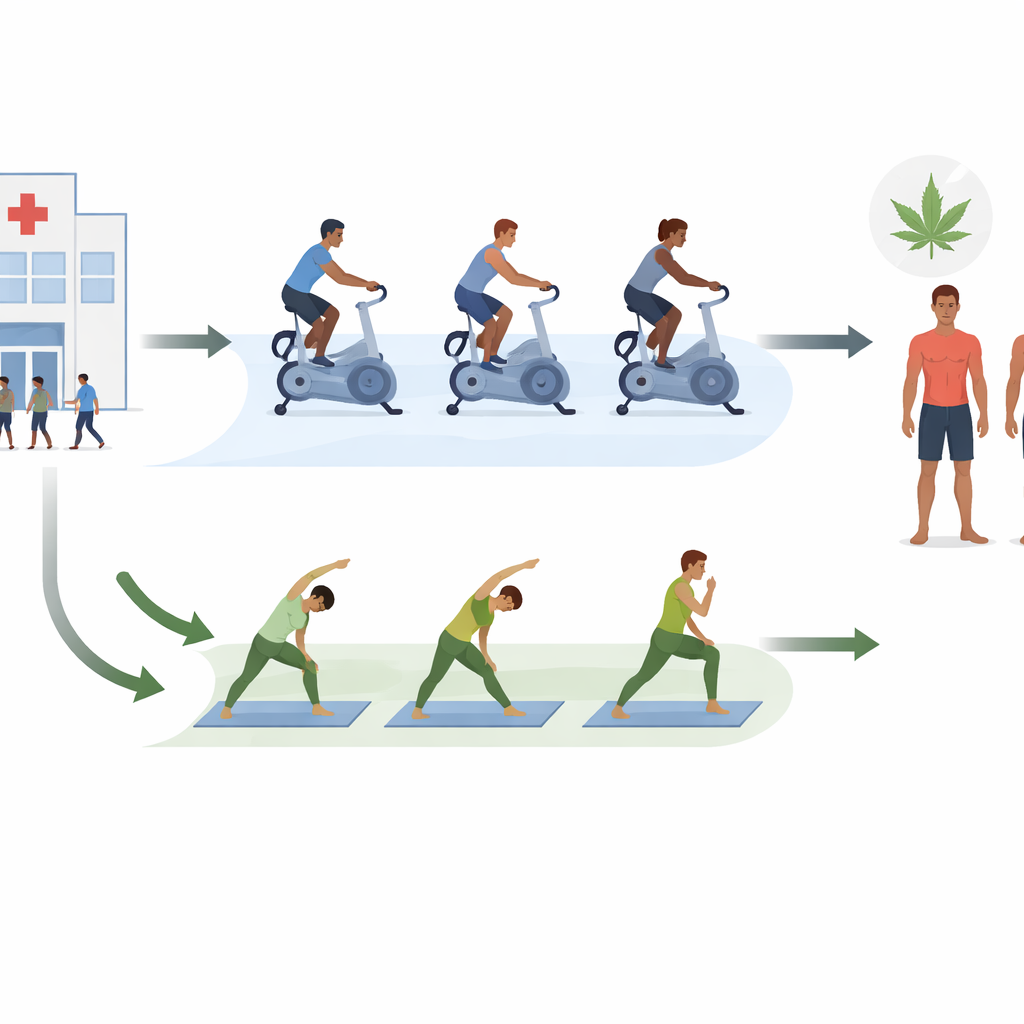
The big idea behind the workout
The study was built on a striking hypothesis. Because the main active compound in cannabis, THC, dissolves in fat, it can linger in the body long after someone stops using. Intense exercise is known to increase the breakdown of fat, releasing fatty acids into the bloodstream. Animal studies and small human experiments had hinted that this process might nudge stored THC back into the blood, creating a mild, temporary “re‑intoxication” that could take the edge off withdrawal. At the same time, regular exercise often improves sleep, mood, anxiety, and restlessness — all common complaints when people stop using cannabis. The cycling group was therefore expected to show more fat breakdown, higher brief THC levels, and ultimately fewer withdrawal symptoms than the stretching group.
What actually happened on the ward
The first check was whether the two exercise programs really differed in intensity, and they did. During the sessions, people in the cycling group had much higher heart rates, reported working harder, and were exercising at roughly twice the aerobic level of those in the stretching group. Yet when it came to how people felt, the contrast faded. On average, withdrawal scores and cannabis cravings steadily fell over the seven‑day stay in both groups. Irritability and restlessness started out slightly higher in the cycling group but then eased in parallel with the stretching group. By the end of the week there were no meaningful differences between them in overall withdrawal or in key symptoms such as nervousness, low mood, appetite change, or sleep problems.
Inside the body: fat, blood, and cannabis traces
The blood tests told a similarly surprising story. Both groups showed modest rises in markers of fat breakdown after their sessions, even though the cycling sessions were much more demanding. However, these changes were not accompanied by the predicted spikes in circulating THC or its breakdown products. Instead, levels of these cannabis‑related compounds steadily declined from the start of the stay to later measurements, and they did so at similar rates in both groups. In the month after leaving hospital, most people cut their cannabis use dramatically, and about a third stayed completely abstinent, again with no clear advantage for either type of exercise. 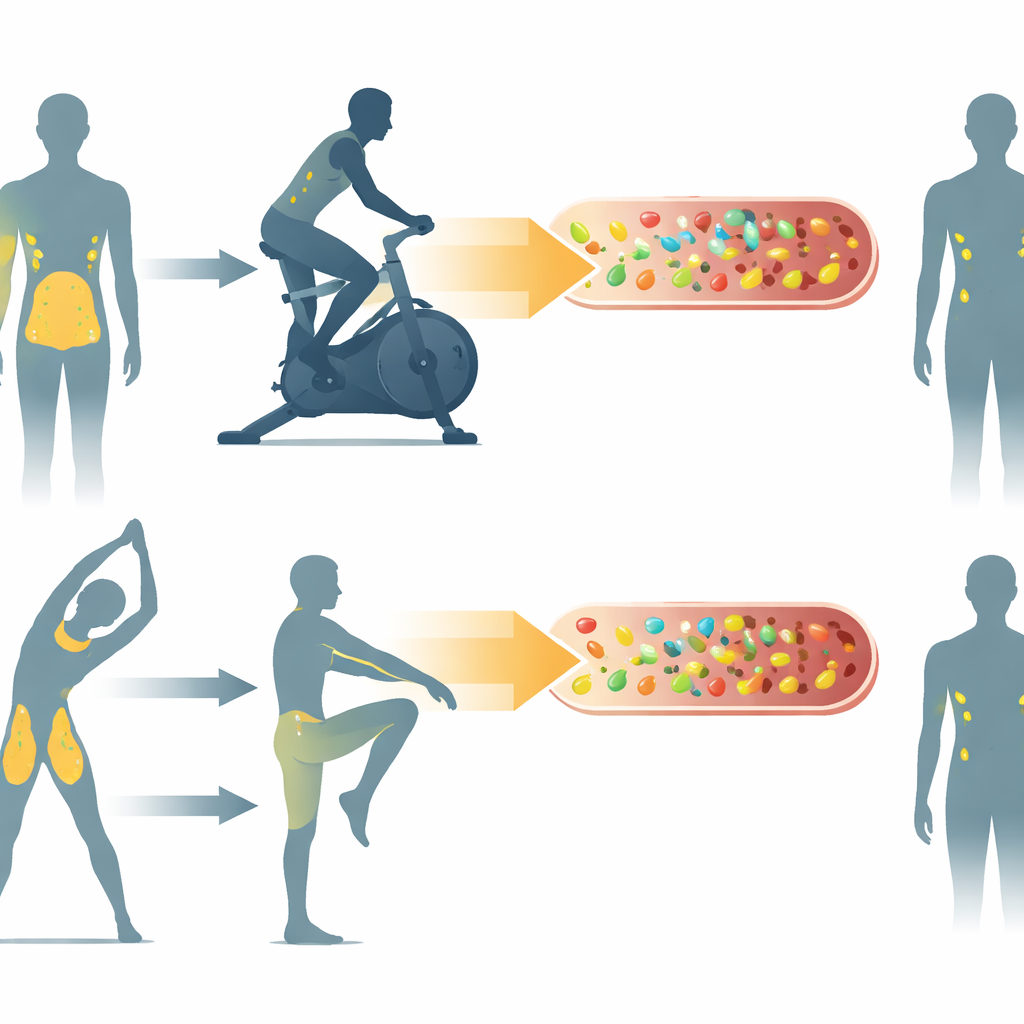
Rethinking movement for quitting cannabis
For lay readers, the bottom line is that in this small inpatient trial, harder daily cycling did not beat gentle stretching for easing cannabis withdrawal or craving, and it did not trigger the hoped‑for release of stored cannabis back into the bloodstream. Both types of movement were safe, acceptable, and occurred alongside a general improvement in symptoms over time. While other work from the same study suggests that more vigorous exercise may help sleep, this trial suggests that simple, low‑impact routines — the kind that can be done in a small room without special gear — may offer benefits comparable to tougher workouts during withdrawal. More research, including comparisons with no exercise at all, will be needed to pin down exactly how much and what kind of movement best supports people who decide to stop using cannabis.
Citation: Mills, L., Rooney, K., McCartney, D. et al. The effect of daily aerobic cycling exercise on cannabis withdrawal: An inpatient randomised controlled trial. Sci Rep 16, 9527 (2026). https://doi.org/10.1038/s41598-026-40468-9
Keywords: cannabis withdrawal, aerobic exercise, stretching, addiction treatment, THC and fat