Clear Sky Science · en
Foliar application of citric acid alleviates lead toxicity and enhances physiological resilience in tomato seedlings
Why this matters for your dinner table
Tomatoes are a staple in salads, sauces, and countless everyday dishes. But as farms are increasingly exposed to pollution from industry and traffic, toxic metals like lead can move from soil and water into the plants we eat. This study explores a surprisingly simple helper—citric acid, the same weak acid that makes lemons sour—as a spray for young tomato plants to help them cope with lead contamination, stay healthier, and potentially keep less lead in their tissues.
Hidden trouble in farm soils
Across the world, heavy metals such as lead are building up in agricultural soils through mining, industrial waste, fertilizers, and exhaust from past use of leaded fuels. Lead is especially worrisome because it does not break down, interferes with plant growth even at low levels, and can damage human health if it enters the food chain. In tomatoes, lead exposure stunts roots and shoots, reduces leaf number, and strips green pigment from leaves, all of which cut yields. It also dries plants out by disturbing water balance and pokes holes in fragile cell membranes, causing precious nutrients and water to leak away.
Using a common acid as a plant shield
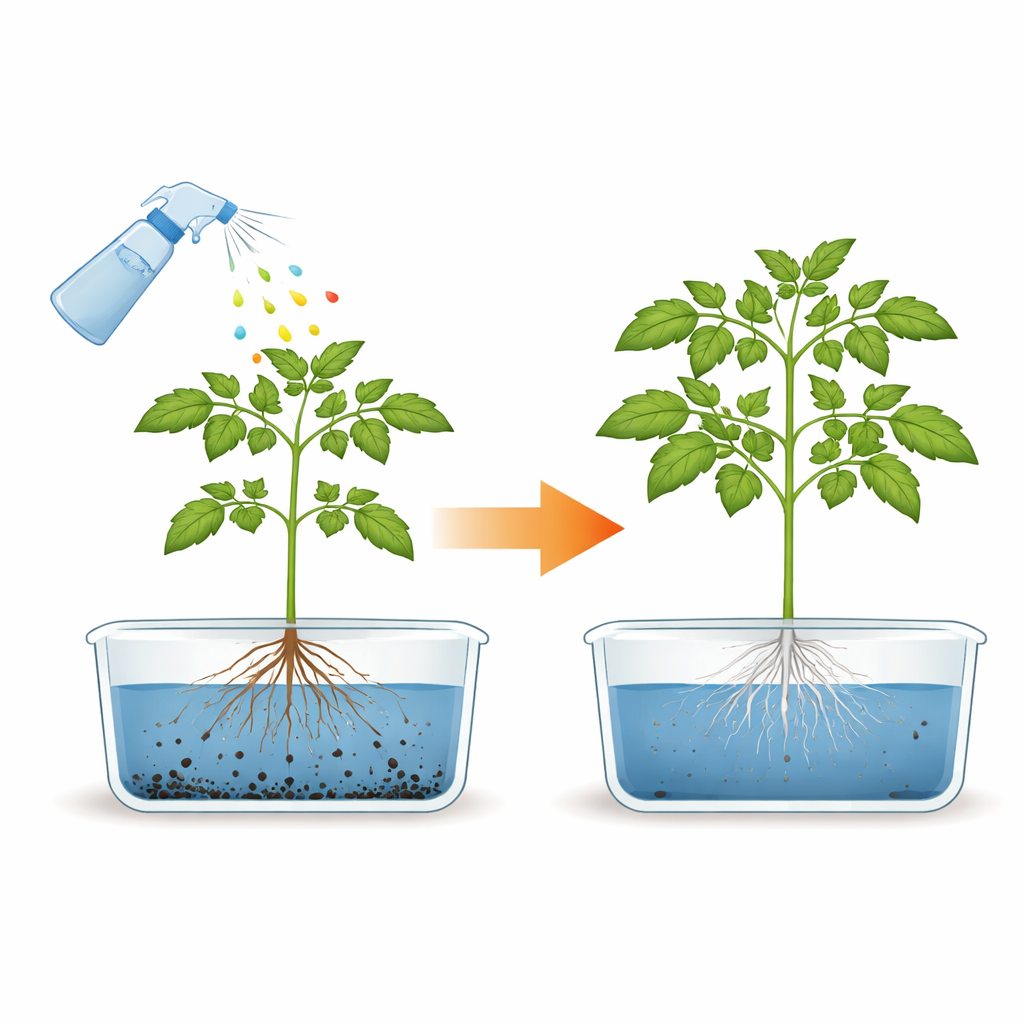
Citric acid occurs naturally in many fruits and inside plant cells. Because it can bind metals, scientists have proposed using it to help crops tolerate polluted conditions. In this experiment, researchers grew tomato seedlings in nutrient solutions containing two levels of lead, with or without repeated sprays of citric acid on the leaves at two doses. This setup let them ask a practical question: can a foliar mist of citric acid help seedlings withstand a heavy dose of lead, and if so, what changes inside the plants signal that they are coping better?
Stronger roots, greener leaves, better water balance
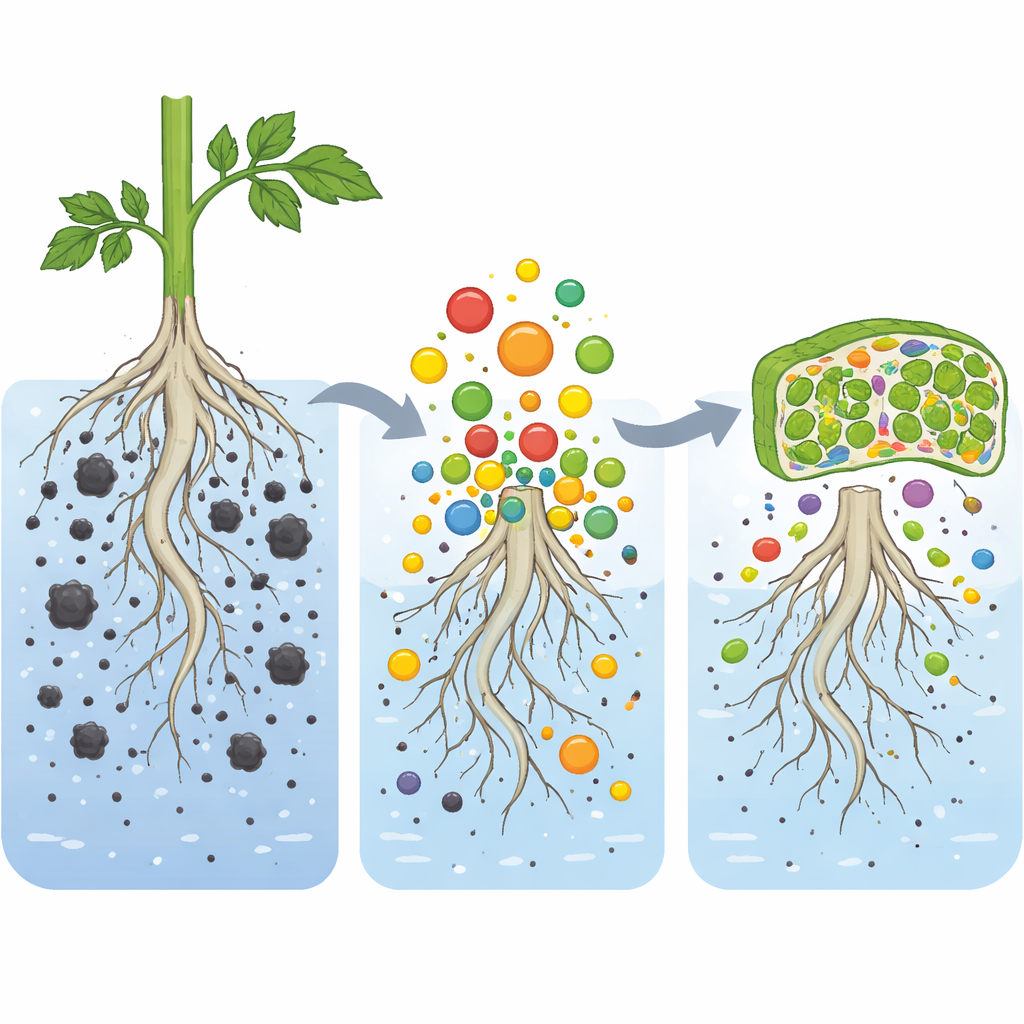
Under lead alone, tomato seedlings became smaller, with shorter roots and shoots, lighter stems, and fewer leaves. Their roots shrank dramatically in volume, showing how strongly lead suppresses underground growth. The plants also lost water quickly and suffered extreme leakage of salts from their cells, clear signs that their internal plumbing and membranes were being damaged. Citric acid sprays, especially at the higher concentration, reversed much of this decline. Treated seedlings rebuilt root length and volume, recovered shoot height and biomass, and produced more leaves. Their leaves held onto water, lost less through wilting and leakage, and maintained firmer, more stable cells, suggesting that citric acid helped to keep tissues hydrated and membranes intact even in the presence of lead.
Brighter pigments and healthier mineral balance
Lead dulled the plants’ color by sharply reducing chlorophyll and other protective pigments such as carotenoids, lycopene, and beta-carotene. These molecules not only give tomatoes their green and red hues but also capture light for photosynthesis and help guard cells against oxidative damage. With citric acid sprays, pigment levels rebounded strongly, indicating that the photosynthetic machinery was recovering. At the same time, lead caused the roots and leaves to hoard more lead while becoming deficient in essential minerals like calcium and magnesium, which are key for membrane strength and chlorophyll formation. Citric acid cut the amount of lead found inside roots and leaves while lifting calcium and magnesium levels, pointing to a dual action: tying up some of the toxic metal and improving supply of beneficial nutrients.
Patterns that tell a consistent story
To see how all these measurements fit together, the researchers used statistical tools that group related traits and treatments. Seedlings exposed only to lead clustered with signs of stress—high lead in tissues, high water loss, and severe leakage. In contrast, plants that also received citric acid grouped with healthier features like strong growth, higher pigment levels, better water content, and richer stores of calcium and magnesium. The higher citric acid dose consistently appeared in the healthiest group, suggesting a clear dose–response under these controlled conditions.
What this means for safer crops
For a non-specialist, the take-home message is straightforward: repeated sprays of citric acid helped young tomato plants endure heavy lead pollution by keeping them greener, better hydrated, richer in key minerals, and lower in accumulated lead. This work was done in a hydroponic lab system at lead levels higher than those usually found in field soils, so more testing under real farm conditions is needed before turning it into advice for growers. Still, the findings point to common organic acids like citric acid as promising, relatively gentle tools that could one day help farmers produce safer, more resilient crops on contaminated land.
Citation: Mahamud, M.A., Imran, S., Sarker, P. et al. Foliar application of citric acid alleviates lead toxicity and enhances physiological resilience in tomato seedlings. Sci Rep 16, 9326 (2026). https://doi.org/10.1038/s41598-026-40466-x
Keywords: lead toxicity, citric acid, tomato seedlings, heavy metal stress, plant resilience