Clear Sky Science · en
Seed metabolomic profiling of contrasting mung bean (Vigna radiata) genotypes under heat stress
Why hot weather matters for a humble bean
Mung bean may not grab headlines, but for millions of people across Asia it is a key source of affordable protein, minerals, and vitamins. As heat waves become more frequent with climate change, farmers are already seeing flowers drop, pods shrivel, and yields fall. This study asks a deceptively simple question with big implications: what is happening inside the seeds of mung bean plants that cope well with heat compared with those that fail? By looking deeply at the tiny molecules that fill the seeds, the researchers uncover chemical clues that could help plant breeders develop heat‑resilient varieties and protect food and income for smallholder farmers.
Two bean types, one shared challenge
The team compared two mung bean genotypes—one that stays productive under high temperatures and one that is easily damaged by heat. Both were grown in controlled greenhouse conditions under a comfortable regime and under intense heat, with daytime temperatures reaching 42 °C. The scientists measured classic yield traits such as number of pods, seeds per plant, and seed weight. Even in normal conditions, the heat‑tolerant line produced slightly more pods and seeds than the sensitive one. Under heat, both suffered, but the tolerant plants still set many more pods and seeds and delivered higher seed yield, clearly separating “survivor” from “casualty” in agronomic terms. 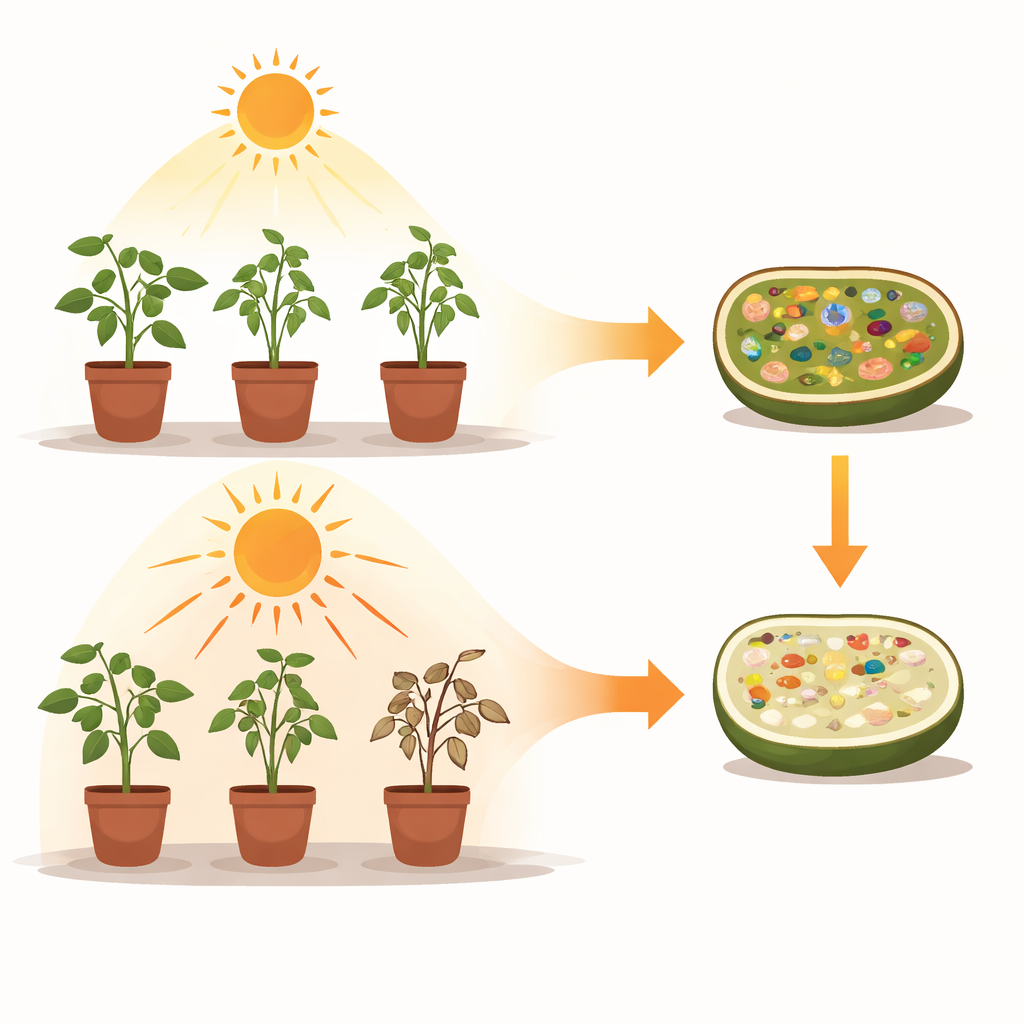
Peeking inside the seeds
To understand why the tolerant plants held up better, the researchers used a powerful technique called metabolomics. Instead of focusing on one or two familiar nutrients like protein or starch, metabolomics surveys hundreds of small molecules at once—sugars, acids, oils, and a wide range of plant‑made protective compounds. Using ultra‑high‑performance liquid chromatography coupled to high‑resolution mass spectrometry, they created detailed chemical fingerprints of mature seeds from both genotypes in both temperature regimes. Statistical tools then sifted through these fingerprints, separating patterns linked to genotype and to heat, and pinpointing which specific molecules changed the most.
Protective plant chemicals step into the spotlight
The clearest signal came from a family of colorful plant compounds known as flavonoids, along with related phenolic acids. Seeds of the heat‑tolerant genotype consistently accumulated higher levels of several flavonols—such as derivatives of kaempferol, quercetin, and myricetin—as well as phenolic acids like hydrocinnamic acid and 5‑hydroxyferulic acid. These molecules are renowned for their ability to mop up reactive oxygen species, the aggressive by‑products of stress that damage membranes, proteins, and DNA. In contrast, some other flavonoids, including naringin, diosmin, and related molecules, were more abundant in the sensitive genotype, especially under heat. Rather than signaling protection, their build‑up in the weaker line may reflect a stressed, unbalanced metabolism that cannot keep pace with damage. 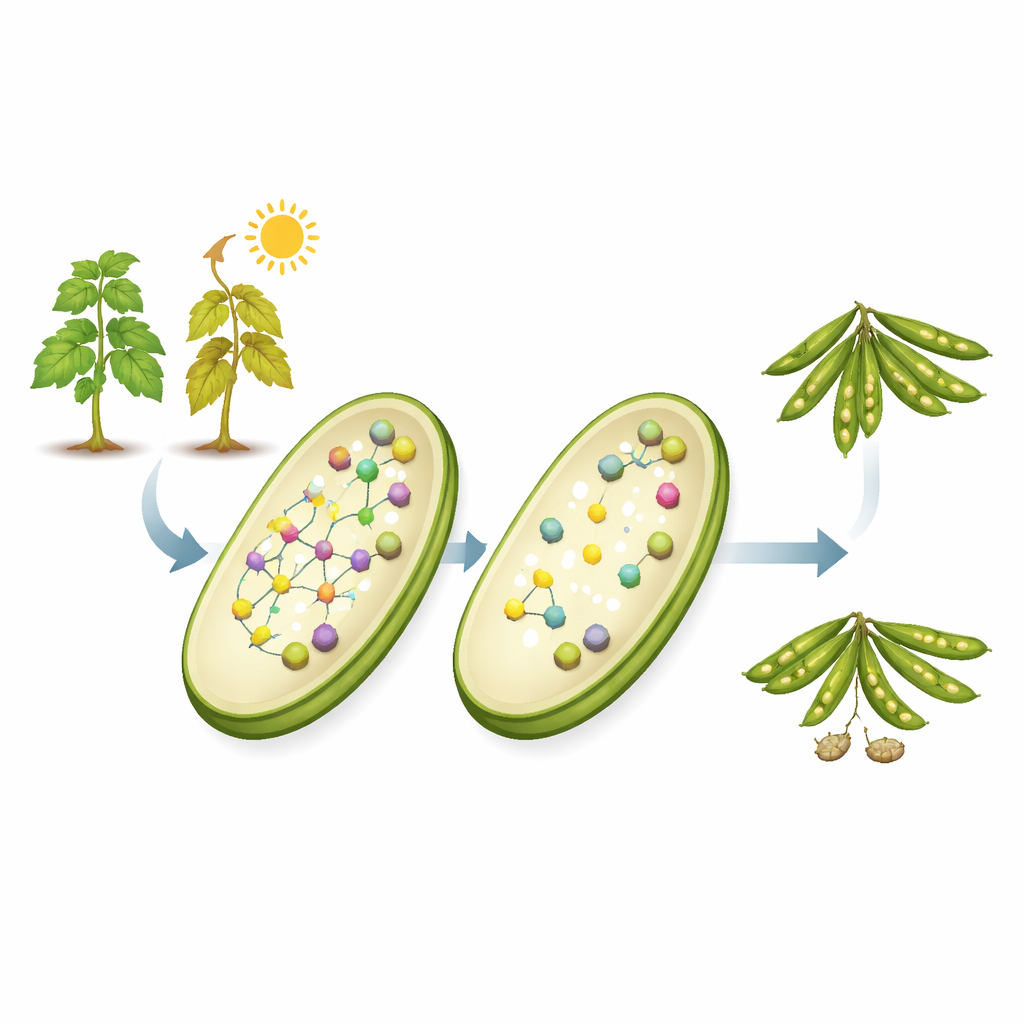
Hidden fuel lines and hormone signals
When the scientists mapped the changing metabolites onto known biochemical pathways, more pieces of the puzzle fell into place. Pathways linked to starch and sucrose metabolism were strongly affected, suggesting that heat reshapes how seeds manage their basic fuel supply during filling. Tyrosine‑related metabolism, steroid‑like plant hormone pathways, and even caffeine‑associated routes also stood out. Together, these networks influence how cells sense stress, adjust energy use, and control growth. In the tolerant genotype, the coordinated shift in these pathways appears to support steadier energy flow and stronger antioxidant defenses, allowing pods and seeds to develop more normally despite high temperatures.
What this means for future beans on the plate
For non‑specialists, the take‑home message is that not all mung beans are created equal when it comes to heat, and the difference lies deep in the chemistry of their seeds. The study identifies a small set of recurring “good” molecules—particular flavonoids and phenolic acids—that are strongly associated with plants that keep yielding under scorching conditions. These metabolites can serve as practical markers for breeders, helping them screen thousands of lines more efficiently and stack the right traits into new varieties. While further work is needed to prove exactly how each compound contributes to protection, this metabolomic roadmap brings us closer to mung bean crops that can withstand hotter seasons and still deliver nutritious seeds to dinner tables worldwide.
Citation: Jha, U.C., Nayyar, H., Tallury, S. et al. Seed metabolomic profiling of contrasting mung bean (Vigna radiata) genotypes under heat stress. Sci Rep 16, 9549 (2026). https://doi.org/10.1038/s41598-026-40462-1
Keywords: mung bean, heat stress, seed metabolites, climate resilience, crop breeding