Clear Sky Science · en
Cold plasma treatment as a way to sanitize bovine milk while maintaining full nutritional value, stability, toxicological and microbiological safety
Why Rethinking Milk Safety Matters
Milk is a daily staple for many people, valued for its protein, vitamins, and minerals. Yet making milk safe to drink usually means heating it, which can quietly chip away at some of those very nutrients. This study explores a promising alternative: using "cold" plasma — an energized gas at near-room temperature — to sanitize cow’s milk. The researchers ask a simple but important question: can we make milk safer from germs without sacrificing its nutritional value or changing its character?
A New Way to Clean Milk
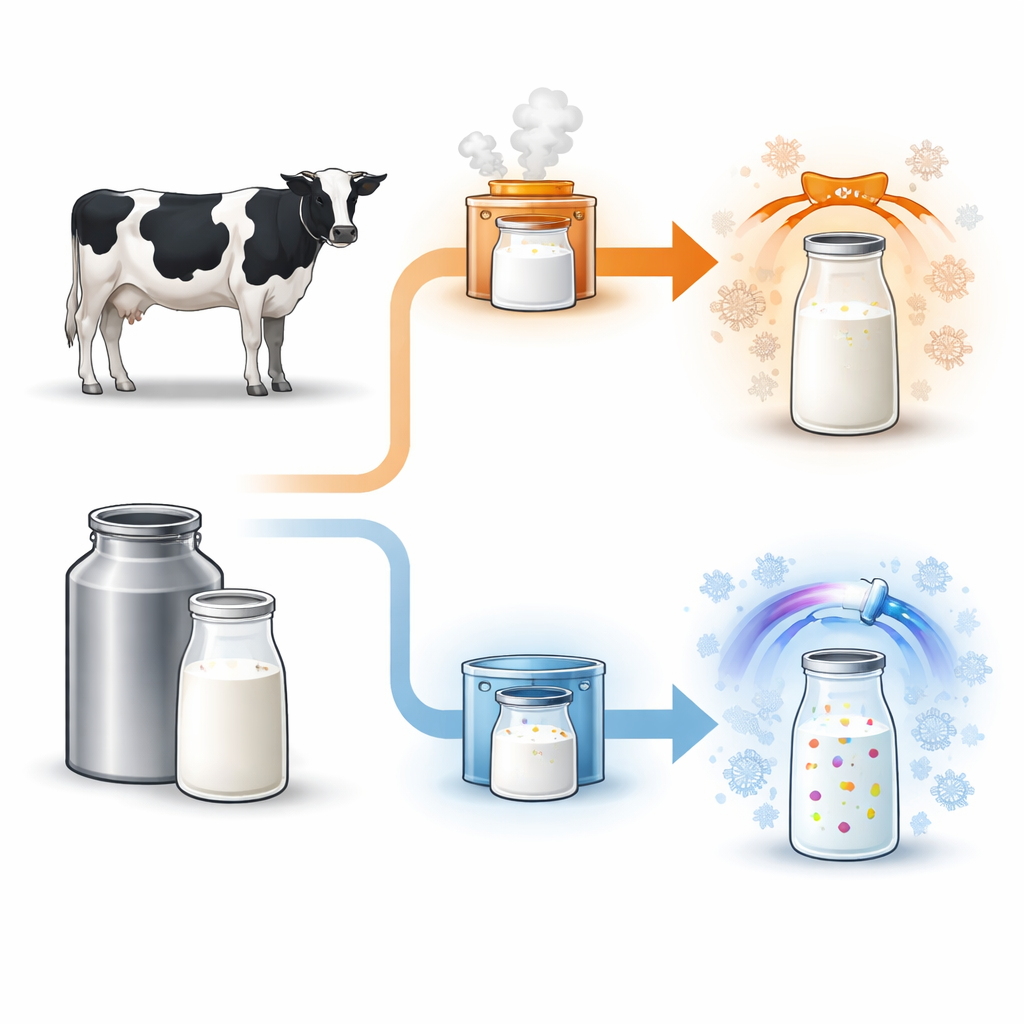
In the study, fresh cow’s milk was divided and processed in three different ways. One portion was pasteurized, another was sterilized at higher temperature, and several others were treated with cold plasma created from either air or nitrogen gas. Unlike heat treatments, the plasma process kept milk below body temperature, so the liquid never boiled or even became hot. The team then examined each milk sample from multiple angles: how many microbes survived, whether it remained safe in animal tests, how much of its vitamins and minerals were preserved, and whether its look and physical behavior changed.
Testing Safety with Tiny Fish
To check for hidden toxicity, the scientists turned to zebrafish larvae, a small, transparent fish widely used in medical and environmental research. These larvae were exposed to diluted samples of each kind of milk for nearly a day. Sterilized milk, and to a lesser degree pasteurized milk, led to high death rates in the fish at certain concentrations, suggesting that high heat may create harmful by-products or remove protective components. In contrast, milk treated with cold plasma generally produced higher survival rates, especially when nitrogen was used to generate the plasma. This points to cold plasma as a gentler method that avoids many of the damaging side effects of intense heat.
Keeping Germs Down and Nutrients Up
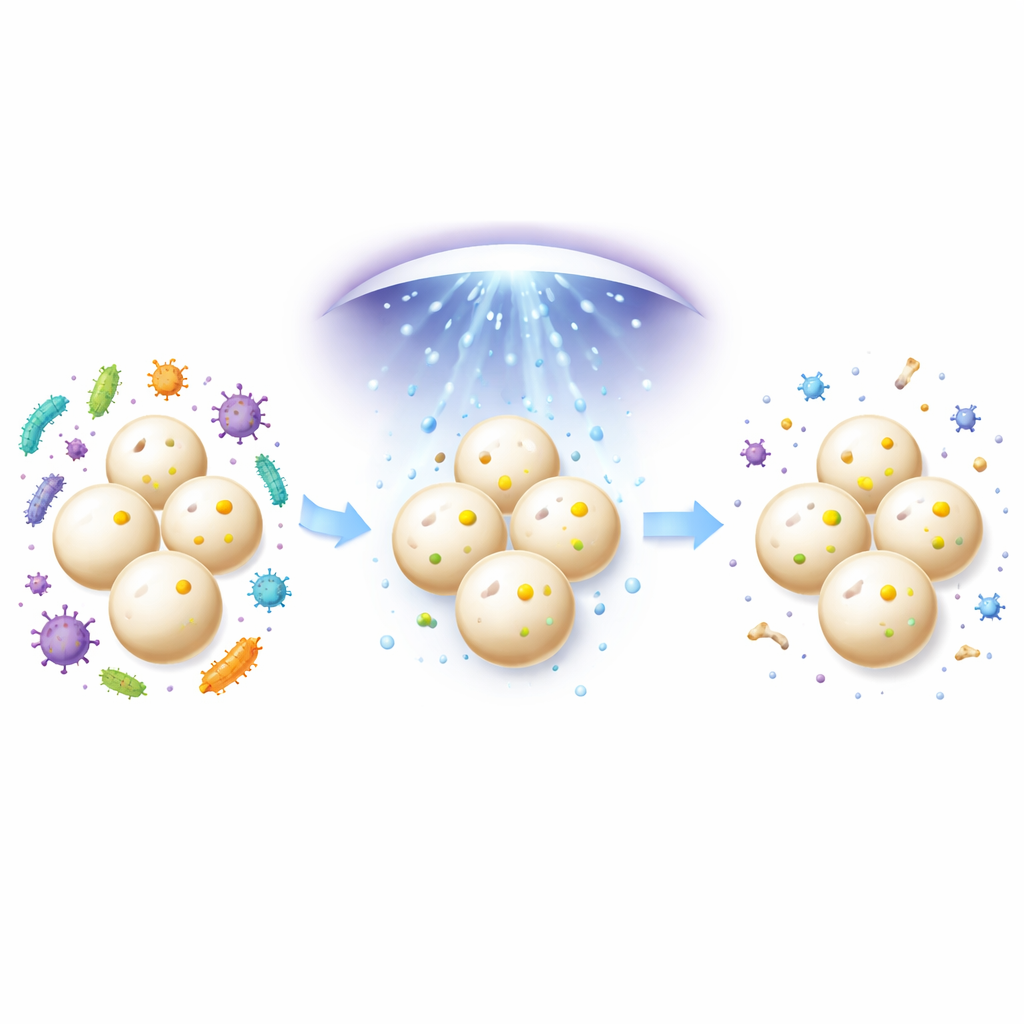
Of course, any replacement for pasteurization must still control microbes. The researchers counted common bacteria, yeasts and molds in all samples. As expected, pasteurization and sterilization wiped out detectable microbes entirely. Cold plasma did not reach absolute zero counts, but longer treatments of 10 to 20 minutes cut bacterial and fungal levels enough to meet food safety standards. Crucially, plasma-treated milk kept much more of its original nutritional profile. B vitamins, especially heat-sensitive ones like B1 and B12, as well as minerals such as calcium, zinc and selenium, declined noticeably after sterilization. By comparison, milk treated with nitrogen-based cold plasma for 10 minutes showed vitamin losses of at most about 10–11% and even slightly higher mineral levels, likely because water loss concentrated the dissolved minerals. Natural plant-derived compounds known as polyphenols also fared better with short plasma treatments than with prolonged heating.
How the Milk Itself Holds Together
Beyond safety and nutrients, the team looked at how well the milk stayed mixed and how it appeared. They tracked its stability over several days, checked acidity and electrical conductivity, measured droplet size, and analyzed color. Untreated fresh milk was actually the least stable, with more tendency for particles to clump or separate. Both heat and plasma treatments improved stability, likely by subtly altering proteins so they form a more cohesive network. Sterilization, however, shifted the pH more strongly, increased conductivity, enlarged fat droplets, and caused a marked yellowing of the milk — visual signs of deep chemical change. Plasma-treated milk, even after up to 20 minutes, showed only small shifts in acidity and color, and droplet sizes remained close to those found in fresh milk, suggesting that its structure stayed much closer to the natural state.
What This Could Mean for Your Glass of Milk
Taken together, the findings suggest that cold plasma treatment can make milk microbiologically safe while better preserving its vitamins, minerals, and physical qualities than traditional high-heat methods. A 10-minute treatment, especially with nitrogen gas, offered the best balance of safety, low toxicity in zebrafish tests, strong microbial control, and minimal nutrient loss. While more work is needed to verify long-term effects, taste, and industrial-scale feasibility, this approach points toward future milk processing that keeps the familiar look and feel of fresh milk, protects more of its health-promoting components, and does so with less energy and heat. In other words, cold plasma may help deliver a safer glass of milk that is also closer to what comes out of the cow.
Citation: Grządka, E., Krajewska, M., Budzyńska, B. et al. Cold plasma treatment as a way to sanitize bovine milk while maintaining full nutritional value, stability, toxicological and microbiological safety. Sci Rep 16, 9482 (2026). https://doi.org/10.1038/s41598-026-40450-5
Keywords: cold plasma milk, nonthermal food processing, milk safety, vitamin retention, dairy technology