Clear Sky Science · en
Two-week cumulative tendon load estimated from insole sensor contact forces is associated with plantar flexor function in Achilles tendinopathy
Why everyday steps matter for sore heels
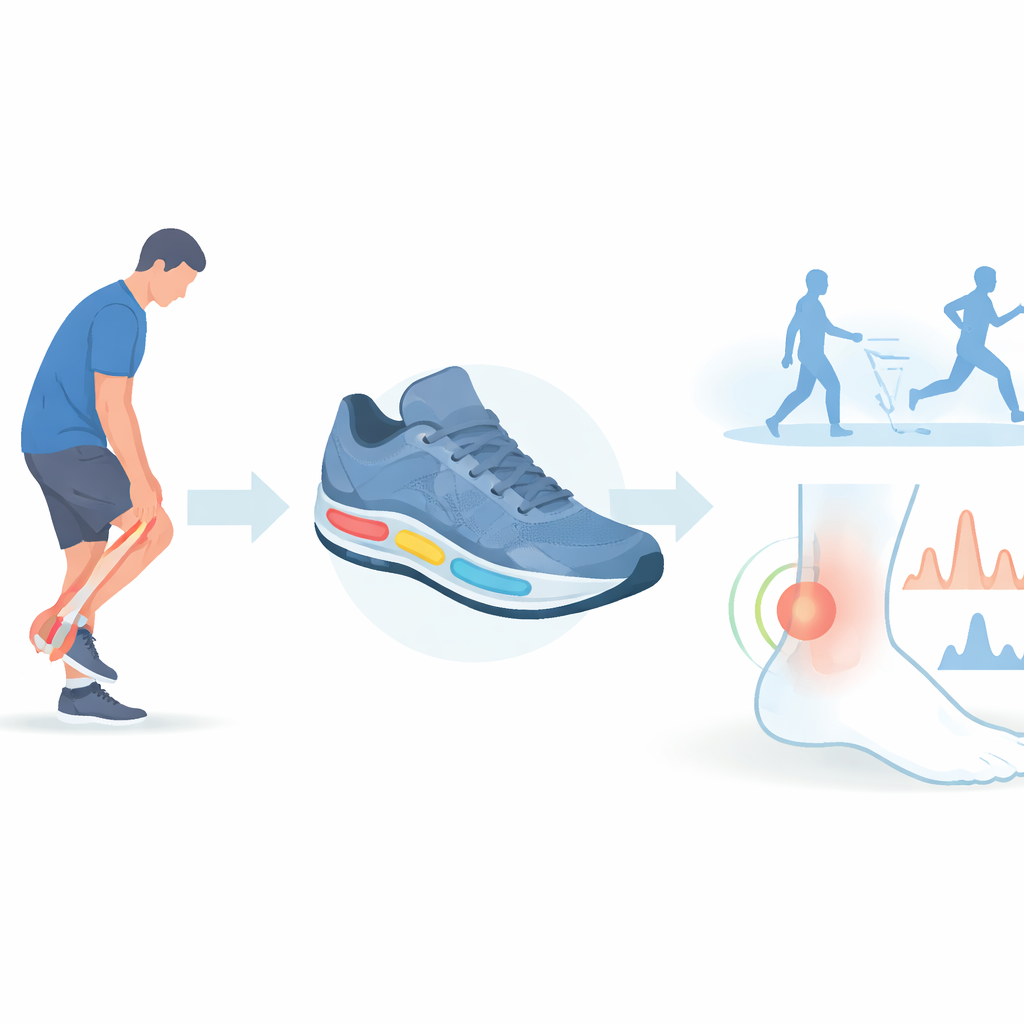
Many runners and active adults develop stubborn pain at the back of the ankle known as Achilles tendinopathy. Doctors know that how much load the Achilles tendon sees during exercise can make or break recovery, but outside the clinic it has been almost impossible to measure. This study followed people with Achilles tendon problems for two weeks using special sensor insoles in their shoes, linking the forces under their feet to strength tests, movement performance, and self-reported symptoms. The findings suggest that smart wearables can reveal how real-world loading relates to function in a way that simple pain scores and activity questionnaires cannot.
Tracking tendon stress in daily life
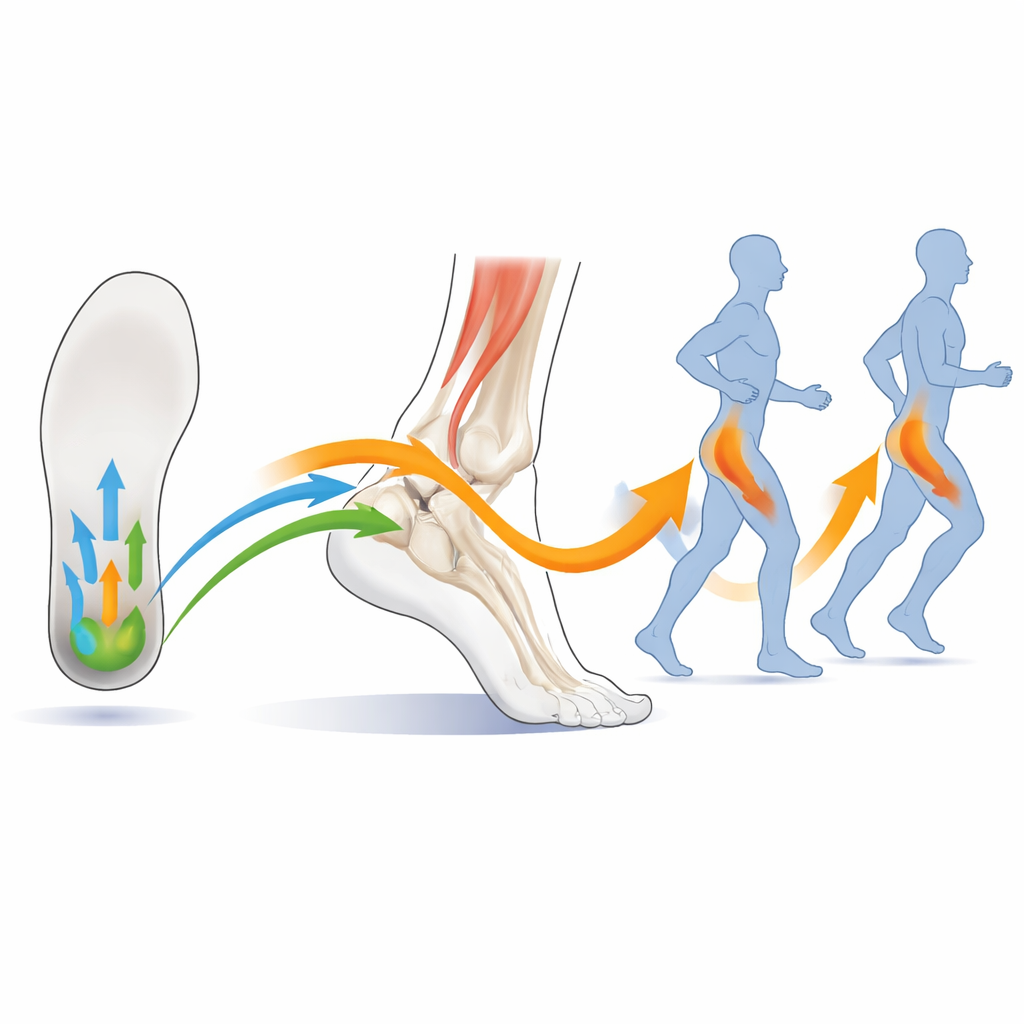
The researchers recruited fifteen adults with diagnosed Achilles tendinopathy. Each person completed lab tests that measured calf strength and jumping and heel-raise performance, along with surveys about pain, disability, and usual activity level. Then they went home wearing a thin insole containing three pressure sensors inside one shoe for up to two weeks. These sensors recorded the forces under the heel, midfoot, and forefoot throughout the day. Using a physics-based calculation, the team converted these contact forces into an estimate of how much load the Achilles tendon experienced over time.
Everyday load versus high-load moments
To make sense of the continuous force data, the authors defined two kinds of cumulative tendon load. "Overall" load counted all time when the tendon was loaded above a very low baseline typical of gentle seated heel raises, representing general daily use. "High-level" load counted only the episodes when tendon force rose above about three times body weight, a level similar to the peak load during walking and exceeded mainly during more dynamic activities such as brisk exercise, sports, or repeated heel raises. For each participant, these loads were totaled across all monitoring days and then averaged per hour of time the tendon was actually bearing weight in the insole-equipped shoe.
What high loads reveal about calf performance
When the researchers compared insole-based loading measures to lab tests, a clear pattern emerged. The overall load—which reflects a mixture of standing and walking—showed only weak to moderate relationships with calf strength and movement measures. In contrast, high-level load closely tracked how well the calf muscles and tendon performed demanding tasks. People who accumulated more high-level loading per hour tended to generate greater pushing force at the ankle during fast strength tests and to reach higher double-leg heel raises. Self-reported current activity level also matched high-level load quite well, while age and symptom scores showed only modest links. In other words, how often someone exposed their tendon to strong forces in real life lined up with their ability to produce power, but not necessarily with how much pain they felt.
How much data do you really need?
Wearing instrumented insoles for many days can be inconvenient, so the team tested how estimates changed if they used fewer days of data. For the overall load, even a single monitoring day gave results that were fairly close to the full two-week picture. High-level load was much more variable: one day could over- or underestimate a person’s typical high-load exposure by more than 60 percent. Accuracy improved steadily as more days were included, with about six days of recordings giving a good approximation of the full two-week pattern. This suggests that brief monitoring can capture everyday walking demands, but reliably characterizing sports-like, high-impact activity requires longer wear.
What this means for people with Achilles pain
The study shows that high bursts of tendon loading captured by shoe sensors are strongly tied to how powerful and functional the calf and Achilles are, whereas simple totals of all tendon loading and symptom questionnaires tell only part of the story. Standard heel-raise tests and self-reported activity levels do a reasonable job of reflecting high-load exposure, but they can miss important differences between individuals. By providing an objective, continuous view of how the tendon is stressed in the real world, insole-based monitoring could become a valuable tool for tailoring rehabilitation—helping clinicians ensure that patients neither overload a weak tendon nor underload it so much that it fails to regain strength.
Citation: Song, K., Kwon, M.P., Smith, A.K. et al. Two-week cumulative tendon load estimated from insole sensor contact forces is associated with plantar flexor function in Achilles tendinopathy. Sci Rep 16, 9495 (2026). https://doi.org/10.1038/s41598-026-40438-1
Keywords: Achilles tendinopathy, wearable sensors, tendon loading, rehabilitation, plantar flexor function