Clear Sky Science · en
Comprehensive study on the batch electrocoagulation for real dyeing wastewater treatment
Why Cleaning Colorful Water Matters
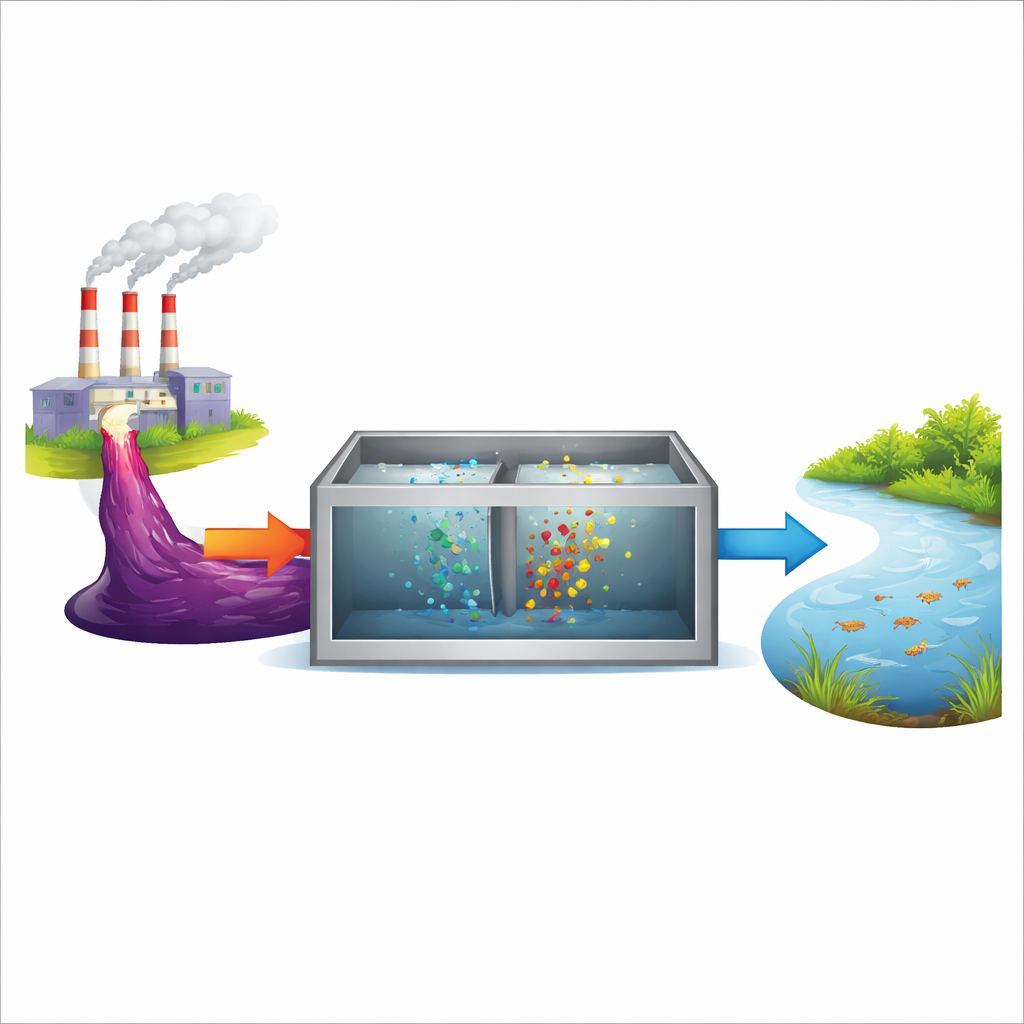
From the clothes we wear to the foods we buy, dyes are everywhere. But making those bright colors often leaves behind wastewater so polluted and intensely colored that sunlight can barely penetrate it, harming rivers, lakes, and the life within them. This study explores a promising "plug-in" approach to cleaning real dyeing wastewater from a factory using electricity instead of large doses of added chemicals, aiming for a greener, simpler way to turn murky industrial water back into something that can safely return to the environment.
A New Way to Spark Clean Water
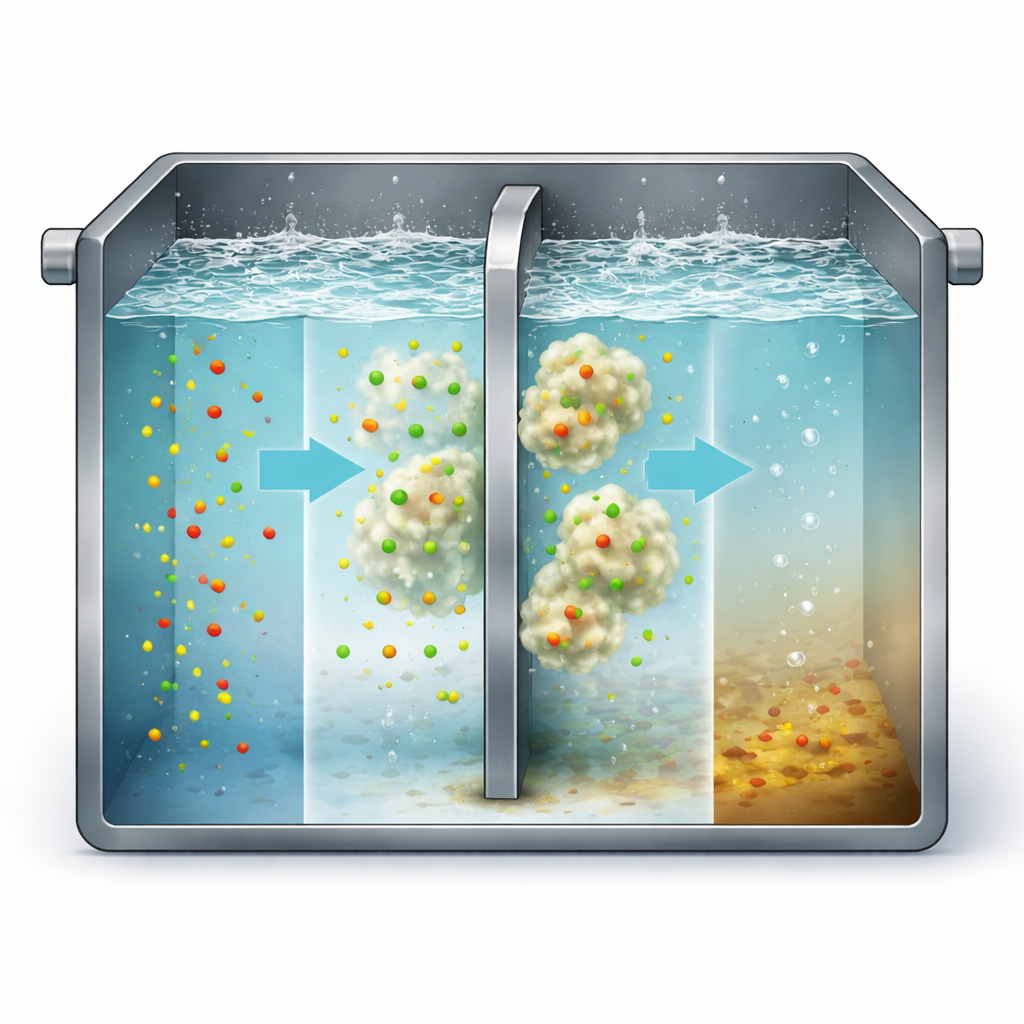
The researchers focused on a treatment method called electrocoagulation, which uses an electric current and metal plates to pull pollutants out of water. Instead of using a traditional setup with separate plates inside a tank, they built a new laboratory reactor where the tank’s metal body itself serves as one of the electrodes. A single metal plate placed in the middle acts as the partner electrode. When current is applied, tiny metal-based particles form in the water, cling to dye molecules and other contaminants, and gather into larger clumps that can be removed. This redesign increases the working surface area, improves how the current is spread through the water, and makes it easier to access and clean the metal surfaces.
Testing Real Factory Wastewater
To see how well this new reactor works in practice, the team collected actual wastewater from a dyeing factory in Isfahan, Iran. This water was extremely polluted: it carried more than a hundred times the allowed dye level, very high organic loads, and intense color and cloudiness. They built six reactors: three made of aluminum and three made of iron, each run with exactly the same water volume. In each reactor, a central metal plate acted as the anode while the box walls acted as the cathode. The scientists varied two key settings: the distance between the central plate and the tank wall (2, 5, or 7 centimeters) and the time the water spent in the reactor (10 to 30 minutes). For every test, they measured how much color, cloudiness, and organic pollution was removed, as well as how much energy was used, how quickly the metal plates wore away, how much sludge formed, and how the water’s acidity (pH) and electrical conductivity changed.
Finding the Sweet Spot
The experiments revealed a careful balancing act. When the plates were very close together, the current was strong, which sped up pollutant removal but also increased energy use, metal corrosion, sludge production, and shifts in pH, especially for iron. Larger gaps reduced energy needs and metal loss, but also cut the cleaning power because fewer helpful metal particles and gas bubbles were created. Time mattered too: most of the improvement in water quality happened within the first 20 minutes. Beyond that, gains leveled off and the metal surfaces began to develop passive layers that slowed the process. Overall, aluminum electrodes consistently outperformed iron, removing more color and particles while keeping the pH closer to neutral, which is better for both downstream treatment and aquatic life.
What Happens to Sludge and Salts
During treatment, the pollutants and metal particles combine into a sludge that settles out of the water. The team found that iron produced more and denser sludge than aluminum, linked to stronger corrosion and higher pH. Aluminum sludge was lighter and easier to separate. Analyses showed that the solid material contained common minerals, including calcium carbonate and aluminum compounds, while the remaining liquid held mostly harmless dissolved salts. Electrical conductivity generally dropped during treatment, reflecting the removal of dissolved ions as they joined the settling flocs. These results suggest that, with proper handling, the leftover sludge and the treated water can be managed in ways that limit secondary pollution, and in some cases the sludge could even be reused as a material in other processes.
Cleaner Water with Less Effort
By comparing many combinations of plate material, spacing, and treatment time, the researchers identified operating conditions that deliver strong cleaning without excessive energy or waste. The best compromise came from aluminum reactors with a 5-centimeter gap and 20 minutes of treatment. Under these conditions, the system removed about 83% of two key measures of organic pollution, nearly all suspended solids and color, and over 90% of cloudiness. Importantly, it did this without adding extra chemicals, relying mainly on electricity and recyclable metal plates. For the lay reader, the takeaway is straightforward: with smart design, an electrically driven reactor can turn deeply polluted, brightly dyed factory water into much cleaner water quickly and efficiently, offering a practical tool for industries that want to protect rivers and reduce their environmental footprint.
Citation: Rezaei, S., Heidarpour, M., Aghakhani, A. et al. Comprehensive study on the batch electrocoagulation for real dyeing wastewater treatment. Sci Rep 16, 9167 (2026). https://doi.org/10.1038/s41598-026-40437-2
Keywords: dyeing wastewater, electrocoagulation, water treatment, industrial pollution, aluminum electrodes