Clear Sky Science · en
Short-term modulation of mineral phosphorus fractions by functionalized biochars in different alkaline soil types
Why farmers and gardeners should care
Phosphorus is a key ingredient in plant food, but in many dry, alkaline soils much of it is locked away in stubborn minerals rather than feeding crops. To compensate, farmers often pour on extra fertilizer, raising costs and polluting waterways. This study explores a different path: smartly engineered "biochars"—charcoal-like materials made from plant waste—designed not just to add carbon to soil, but to unlock this hidden phosphorus and help crops like maize thrive with less fertilizer.
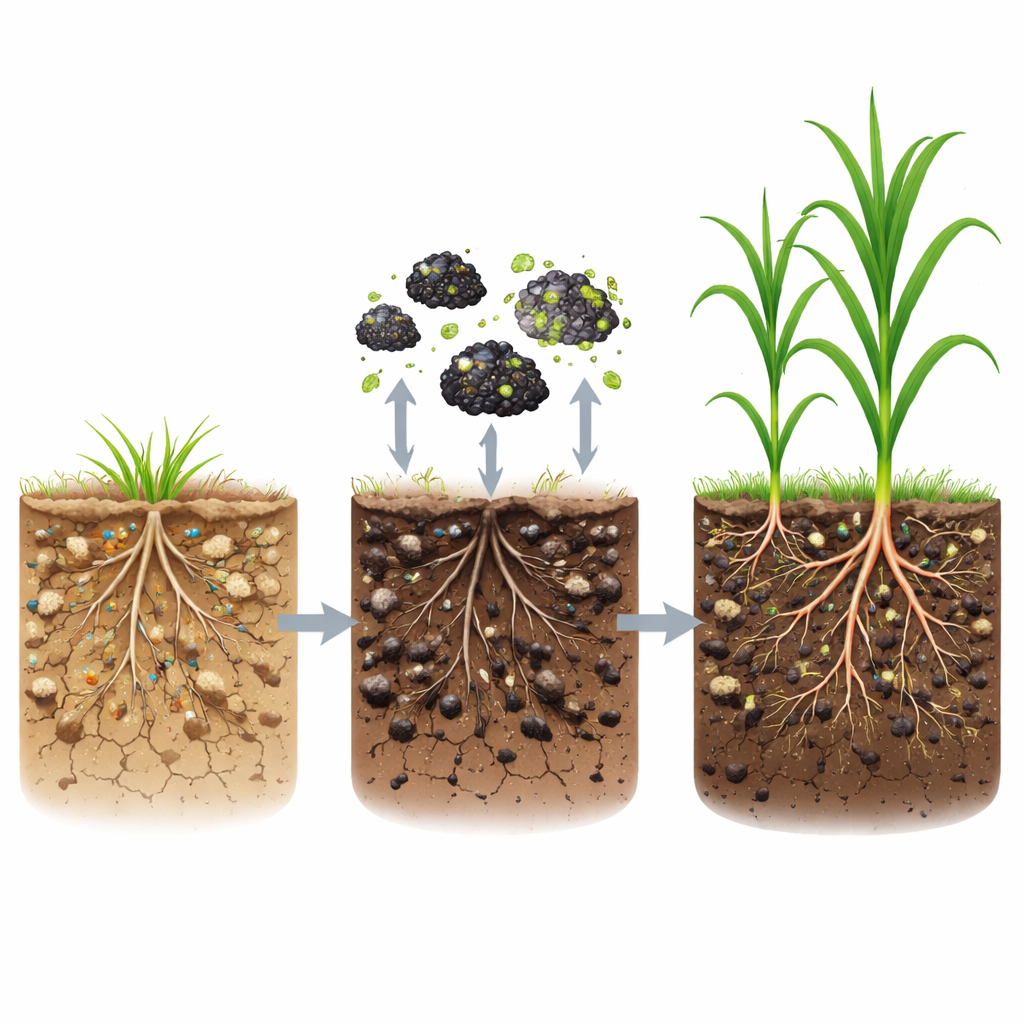
Turning a hardy shrub into a soil helper
The researchers started with a tough shrub, Dodonaea viscosa, and converted its pruned branches into biochar by heating them with little oxygen. They then created three upgraded versions. One was ground very finely with a ball mill to increase its reactivity. Another was chemically treated with a manganese compound to introduce acid-forming and metal-binding surfaces. The third was "biologically activated" by loading it with a beneficial bacterium, Bacillus subtilis, which can form sticky films and release acids that dissolve minerals. These modified biochars were carefully analyzed for their structure, mineral content, and surface chemistry to see how each might influence phosphorus behavior in soil.
Testing biochar in tough, alkaline soils
The team worked with three Egyptian soils that are common in arid farming regions and all moderately to strongly alkaline. In these soils, calcium carbonate and metal oxides grab onto phosphate and make it hard for plants to use. The different biochars were mixed into the soils in lab incubations and in column experiments where maize seedlings were grown for 30 days. The scientists tracked how phosphorus shifted among "pools": easily available forms dissolved in water or loosely attached to soil, moderately available forms held by iron and aluminum, and tightly bound forms associated with calcium or locked in residues. They also examined soil structure, salinity, pH, and how much nitrogen and potassium stayed in the root zone.
How engineered biochars unlock hidden nutrients
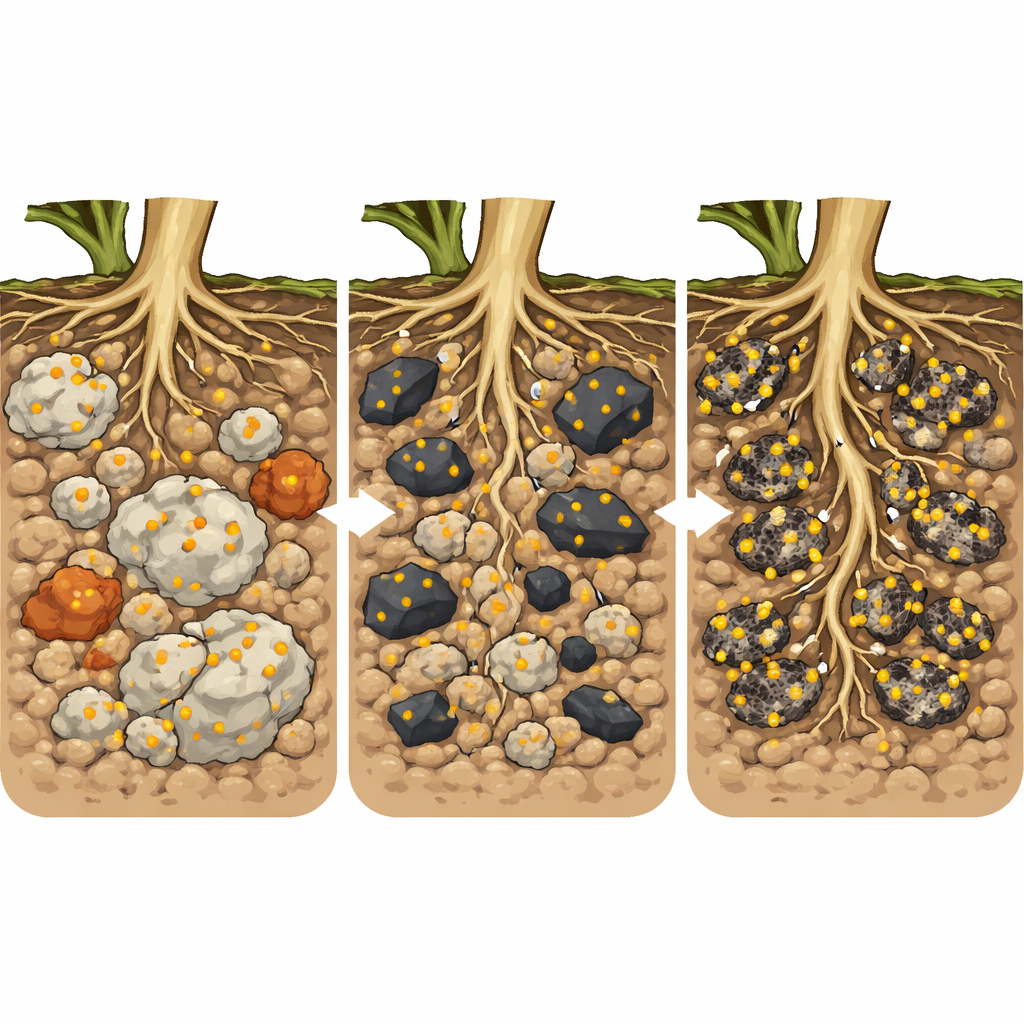
All of the modified biochars changed the soil’s tiny architecture. Under the microscope, soil grains became coated with thin layers of biochar, and more of the material moved into small, stable microaggregates—the very soil fraction known to store plant-available phosphorus. Compared with bare soil, treatments with biochar greatly boosted the "labile" phosphorus pool: water‑soluble forms increased by tens to several hundred percent, and loosely exchangeable forms rose by up to nearly tenfold, depending on soil type. Finely ground biochar was especially effective at improving soil wettability and intercepting calcium, iron, and aluminum ions that normally lock up phosphate. The chemically treated biochar introduced manganese oxides and acidifying compounds that slightly lowered pH and bound metal ions in ways that freed more phosphorus. The biologically activated biochar added another layer of action: its microbial coating secreted organic acids and enzymes that dissolved mineral phosphates and reshuffled phosphorus from stubborn pools into more accessible ones.
Benefits for young maize plants
These changes in the soil’s phosphorus economy translated into better nutrition for maize seedlings. Across the alkaline soils, plants grown with biochar generally had higher phosphorus concentrations in their tissues, and many treatments also improved nitrogen and potassium status. Physically and biologically modified biochars in particular boosted plant height, leaf area, and biomass. At the same time, a substantial share of phosphorus remained in plant‑available forms in the soil after harvest, suggesting that biochar can act as a slow‑release reservoir rather than simply soaking up fertilizer and keeping it away from roots.
What this means for future farming
For non-specialists, the bottom line is that not all biochars are alike: by tailoring how they are ground, chemically treated, or biologically "seeded," they can be turned into precision tools that help free trapped phosphorus in harsh, alkaline soils. In this study, functionalized biochars coated soil particles, weakened the grip of calcium and metals on phosphate, and encouraged microbes and roots to recycle legacy phosphorus that would otherwise go to waste. Used wisely, such materials could let farmers in dry regions grow healthy crops with less mineral fertilizer, lower costs, and reduced risk of water pollution.
Citation: Fathy, R., Elagroudi, W., Taha, A.A. et al. Short-term modulation of mineral phosphorus fractions by functionalized biochars in different alkaline soil types. Sci Rep 16, 9338 (2026). https://doi.org/10.1038/s41598-026-40420-x
Keywords: biochar, phosphorus availability, alkaline soil, soil fertility, maize