Clear Sky Science · en
Integrated analysis of meteorological conditions and agricultural yields in Indonesia using causal learning and intelligent clustering for climate change mitigation
Why Weather and Harvests Matter to Everyone
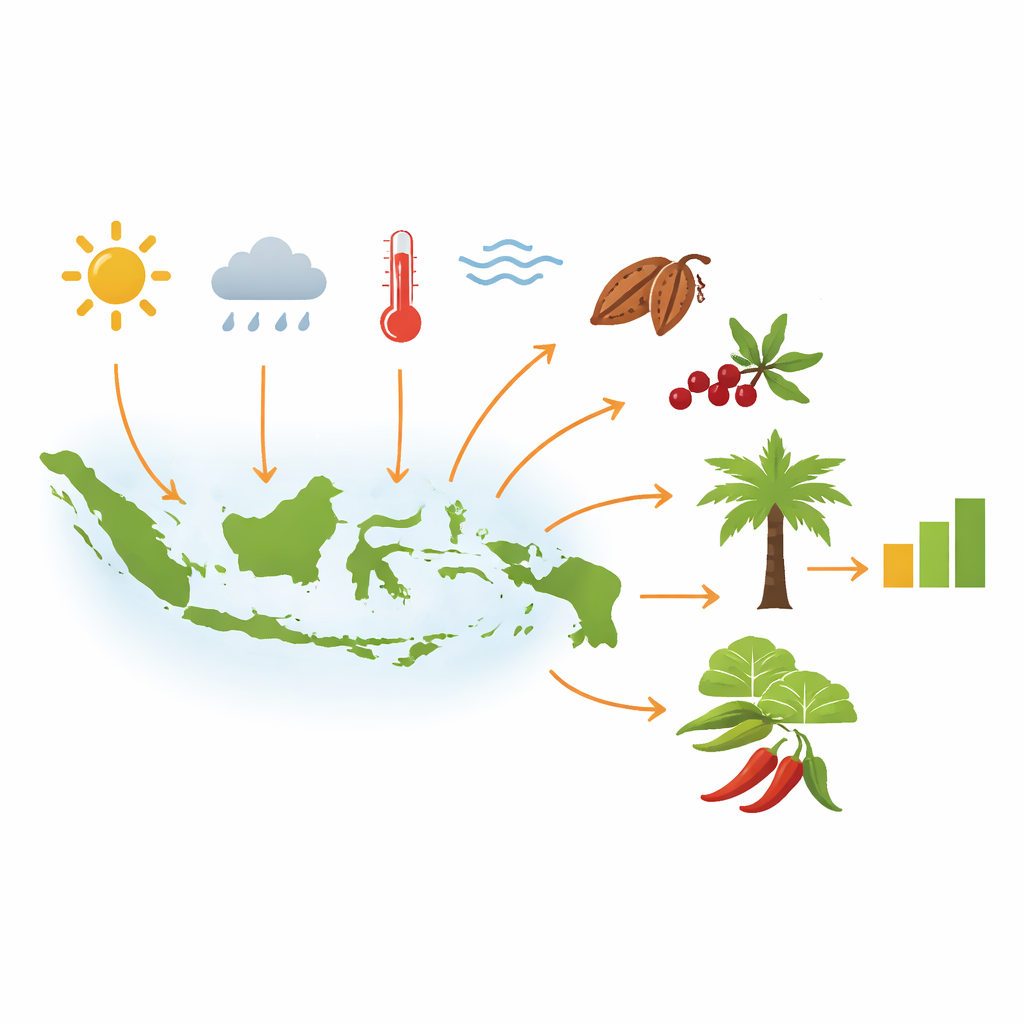
For millions of Indonesians, daily meals depend on what farmers can grow in changing weather. This study looks at how shifts in temperature, rain, sunshine, and wind are already shaping the harvests of cocoa, coffee, palm oil, chili, and rice across the country. By combining modern data tools with more than a decade of records, the authors show where climate change is quietly eroding key crops, and how this knowledge can guide smarter policies to protect food and livelihoods.
Connecting the Dots Between Sky and Soil
The researchers brought together two large collections of information: detailed weather readings from 100 stations across Indonesia and yearly records of crop area, production, and productivity for hundreds of districts. They focused on five important crops that drive both local diets and export earnings: cocoa and coffee, which support many smallholders; palm oil, a major export; cayenne pepper, a staple in local cuisine; and paddy rice, the country’s main source of calories. By lining up these records from 2010 to 2024, they could see how changing weather patterns matched up with rises or falls in harvests over time and across regions.
Using Smart Algorithms to Uncover Hidden Patterns
Instead of looking only at simple correlations, the authors used a technique called causal graph learning to explore which weather factors seem to drive changes in crop outcomes. This method tests thousands of possible links and keeps only those that consistently fit the data, producing network-like diagrams where arrows point from likely causes to effects. They also used an intelligent clustering method that automatically groups districts with similar weather and crop performance, without pre‑deciding how many groups should exist. This combination allowed them to both infer likely cause‑and‑effect chains and map the country into zones with shared climate and yield characteristics.
What Is Happening to Indonesia’s Major Crops
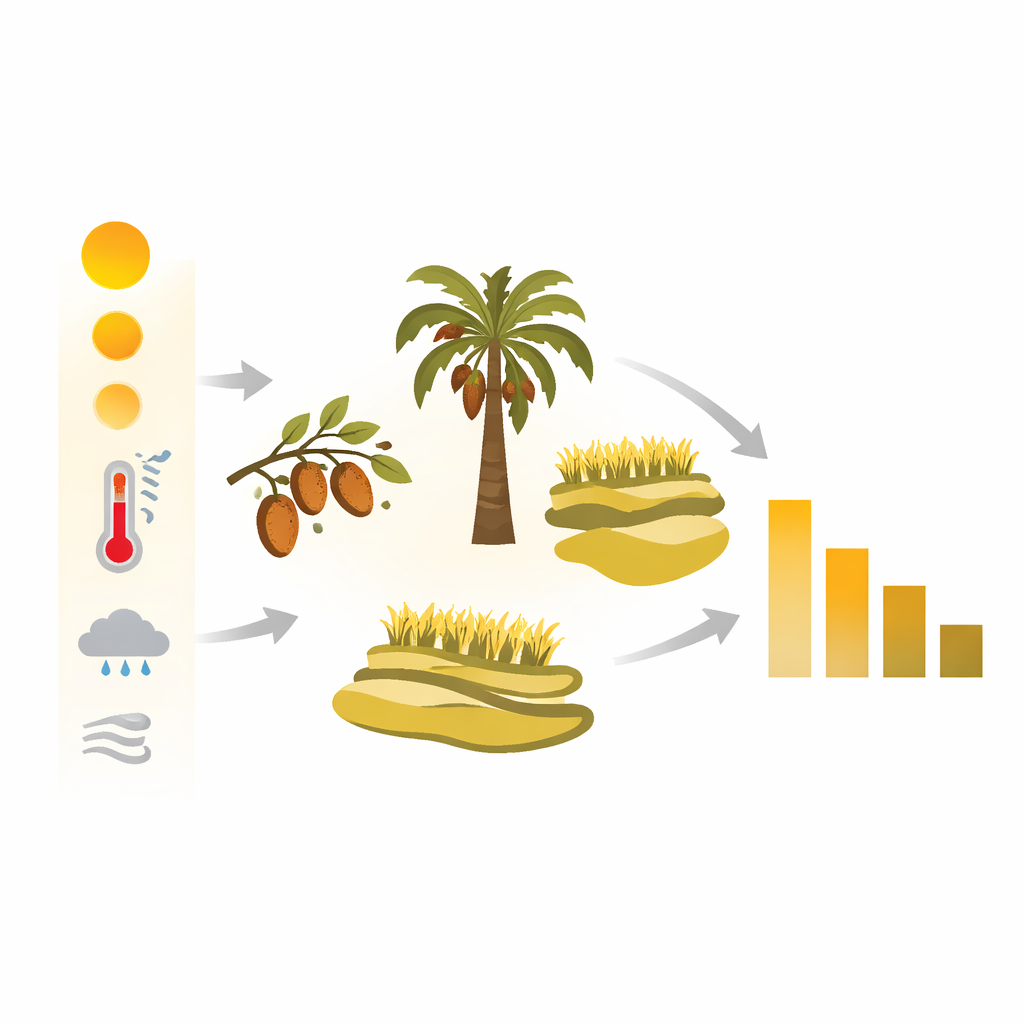
Across the country, minimum and average temperatures are creeping upward, while wind speeds tend to decline and sunshine duration increases. For cocoa, the analysis suggests that higher temperatures, especially warmer nights, and reduced wind are tied to shrinking land area and falling productivity. Oil palm shows a similar story: all temperature measures, along with humidity, rainfall, and sunshine, are linked to lower productivity when they rise beyond certain levels. For paddy rice, the results are stark: increases in minimum, maximum, and average temperature are associated with reduced production, smaller planted area, and lower yield per hectare, while moderate wind appears to help rice growth.
Different Regions, Different Levels of Risk
The clustering analysis reveals that not all districts are affected in the same way. Some cocoa‑producing districts in Sulawesi, for example, currently achieve very high yields yet are already experiencing more frequent extremely hot days, hinting at future vulnerability. Key palm oil regions in Sumatra and Kalimantan show rising sunshine but declining wind and a recent downturn in yields after earlier gains. For coffee and cayenne pepper, the statistical links to weather are more mixed, but the data still show pockets where rising heat and shifting rainfall coincide with stagnating or declining productivity. Together, these maps highlight which areas contribute heavily to national production while facing intensifying climate pressures.
What This Means for Food and Farmers
For a non‑specialist, the main message is straightforward: Indonesia’s warming climate is already nudging down yields of some of its most important crops, particularly cocoa, palm oil, and rice. If these trends continue unchecked, they threaten both food security at home and export income abroad. The study shows that data‑driven tools can pinpoint where and how weather shifts are hurting harvests, giving governments and farmers a head start on solutions. These include breeding and adopting heat‑tolerant crop varieties, improving irrigation and water storage, adjusting planting calendars, and supporting climate‑smart farming practices. With targeted action informed by this kind of analysis, Indonesia can better protect its farmers and food supplies in a hotter, less predictable future.
Citation: Handhayani, T., Arisandi, D. & Wasino, W. Integrated analysis of meteorological conditions and agricultural yields in Indonesia using causal learning and intelligent clustering for climate change mitigation. Sci Rep 16, 8657 (2026). https://doi.org/10.1038/s41598-026-40418-5
Keywords: climate change, crop yields, Indonesia agriculture, temperature effects, machine learning analysis