Clear Sky Science · en
Cardioprotective effects of curcumin and piperine against obesity induced oxidative stress in rats
Why Spices and Heart Health Matter
Obesity is often discussed in terms of body weight and appearance, but one of its most serious consequences is hidden: slow, ongoing damage to the heart. This study explores whether two familiar kitchen spices—turmeric and black pepper—can work together to shield the heart from obesity-related harm. Using an animal model, the researchers asked if curcumin (the yellow pigment in turmeric) and piperine (a key component of black pepper) could blunt the cascade of chemical changes that link a high-fat diet to heart disease. The findings suggest that this natural duo may help calm inflammation, reduce harmful oxidants, and stabilize heart cells, offering clues for future prevention strategies.
What the Researchers Set Out to Test
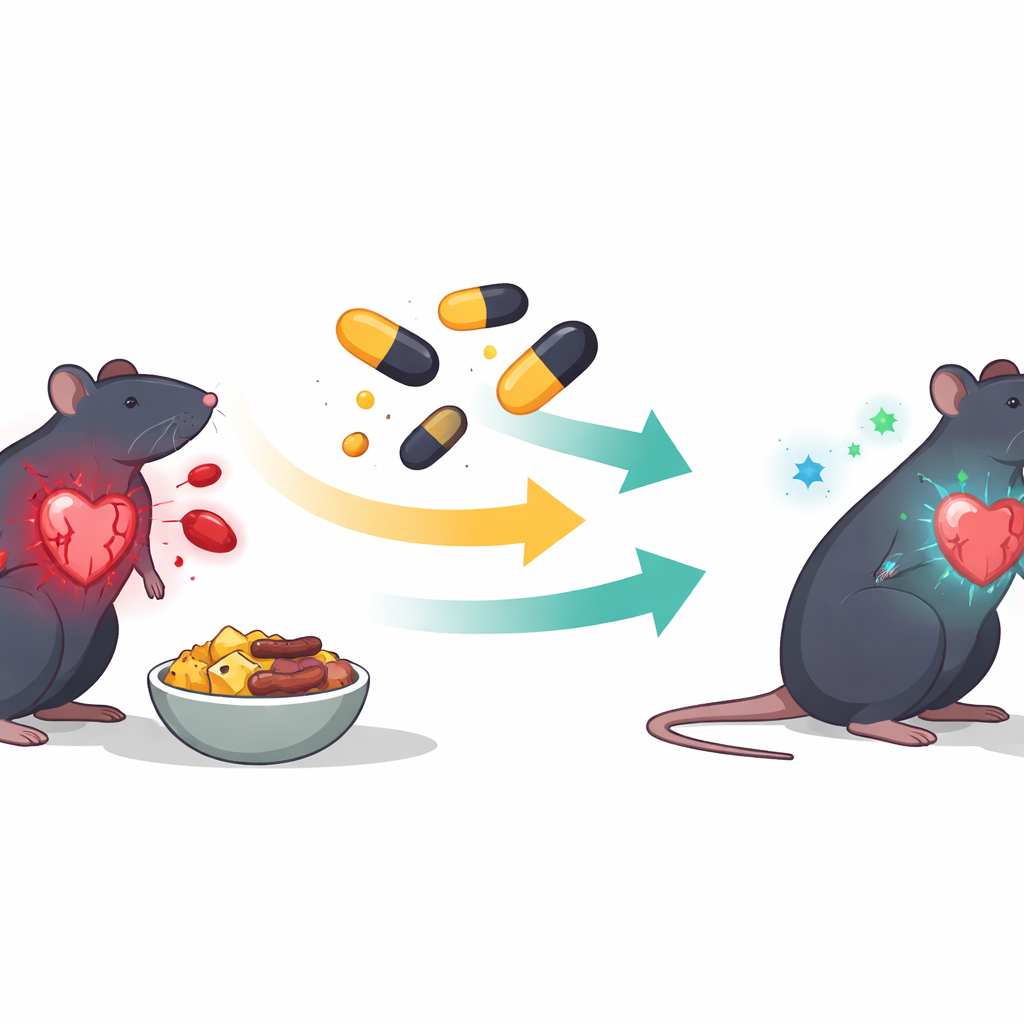
The team focused on how a long-term high-fat diet affects the heart and whether adding curcumin plus piperine could prevent or reduce that damage. Male rats were divided into several groups: some ate a normal diet, some received the high-fat diet to induce obesity, and others received the same high-fat diet but were also given curcumin and piperine by mouth for eight weeks. The scientists tracked body weight, blood fats like cholesterol and triglycerides, hormones such as insulin, chemical markers of inflammation and oxidative stress, and signs of direct heart injury. They also examined the heart tissue under the microscope and checked activity in key molecular switches involved in inflammation.
How a High-Fat Diet Hurts the Heart
Rats fed a high-fat diet became noticeably heavier and developed a blood profile resembling that seen in people at high risk for cardiovascular disease: cholesterol, triglycerides, and “bad” LDL fractions rose sharply, while “good” HDL levels dropped. Insulin levels climbed, hinting at strain on blood sugar control. Inside the heart, the body’s own antioxidant enzymes weakened, while damaging compounds linked to oxidative stress rose. Inflammatory messengers increased both in the heart tissue and in the blood, and classic heart injury markers—such as troponin and myoglobin—spiked, signaling cell damage. The balance of salts like sodium, potassium, calcium, and zinc in blood and heart tissue also shifted, and a key ion pump in heart cells slowed down, all consistent with stressed and unstable heart muscle.
What Curcumin and Piperine Changed
When curcumin and piperine were given together to the obese rats, many of these harmful changes were blunted. Weight gain was reduced, and the blood fat profile partially normalized: cholesterol, triglycerides, and LDL levels fell, while HDL rebounded. Antioxidant defenses inside the heart strengthened, and levels of oxidative stress markers dropped. Inflammatory signals in the heart and bloodstream decreased, while adiponectin—a hormone with anti-inflammatory and protective effects—went up. Heart injury markers in the blood fell toward normal, and the activity of the heart’s sodium–potassium pump improved, along with a more balanced mix of sodium, potassium, calcium, and zinc. At the genetic level, activation of NF-κB, a major switch that drives inflammation, was dialed down in the hearts of treated animals.
Snapshots of the Heart Under the Microscope
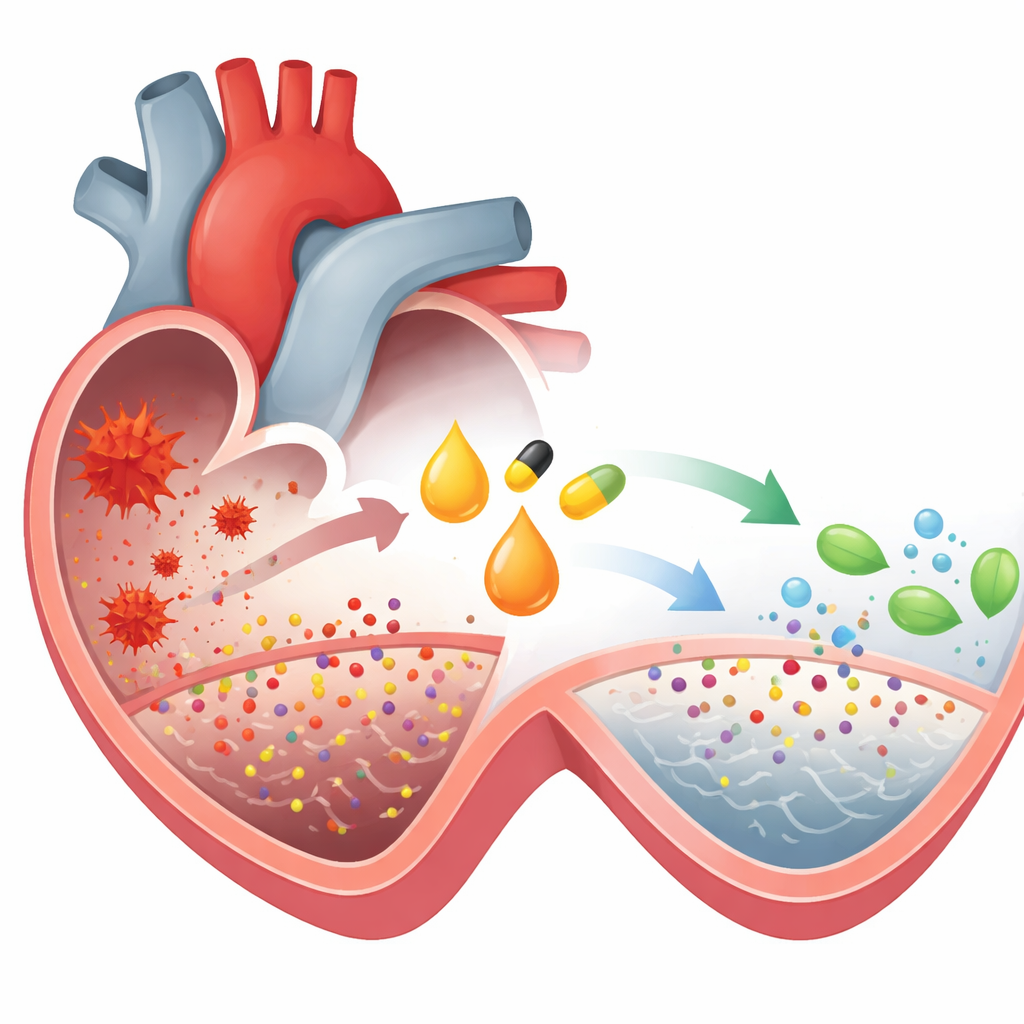
Microscopic examination provided a visual counterpart to the blood tests. Hearts from high-fat–fed rats showed widened spaces between cells, damaged muscle fibers, congested blood vessels, and shrunken, dying nuclei—typical features of tissue under chronic stress. In contrast, hearts from rats that received curcumin and piperine alongside the high-fat diet looked more like those of healthy controls. The muscle fibers were better organized, the spaces between them were smaller, and the cells had more normal, centrally located nuclei. Measurements of individual heart muscle cell size confirmed that the enlargement seen in obese animals was significantly reduced by the spice treatment, suggesting a partial reversal of early structural remodeling.
What This Could Mean for People
In plain terms, this rat study suggests that curcumin and piperine, when combined, can help protect the heart from some of the chemical and structural damage triggered by obesity and a high-fat diet. They appear to work on several fronts at once: lowering harmful blood fats, boosting the heart’s antioxidant defenses, calming chronic inflammation, and helping heart cells maintain stable internal conditions. While these results are promising, they come from an animal model, and the doses and conditions differ from everyday human use. The work nonetheless supports ongoing efforts to explore spice-derived compounds as part of broader strategies—alongside diet, exercise, and medical care—to reduce obesity-related heart risk.
Citation: Rashwan, H.M., Mohamed, E.O., Emam, N.M.M. et al. Cardioprotective effects of curcumin and piperine against obesity induced oxidative stress in rats. Sci Rep 16, 9327 (2026). https://doi.org/10.1038/s41598-026-40407-8
Keywords: obesity and heart disease, curcumin, piperine, oxidative stress, inflammation