Clear Sky Science · en
First insight of characteristics and prediction of Mycobacterium tuberculosis drug resistance by whole genome sequencing in Fujian Province, China
Why this study matters for everyday health
Tuberculosis (TB) is an ancient lung disease that still infects millions of people each year. The biggest modern threat is not just TB itself, but TB germs that can dodge our best medicines. This study from Fujian Province in southeastern China asks a simple but crucial question: can reading the complete genetic code of TB germs help doctors quickly tell which drugs will work, long before traditional tests are finished? The answer could shape how countries protect patients and communities from hard‑to‑treat TB.
Old tests are slow, but the clock is ticking
To choose the right treatment, doctors must know which antibiotics a patient’s TB strain can resist. The long‑standing method is to grow the bacteria in the lab with and without drugs and see which ones stop growth. While reliable, this process can take up to two months, during which patients may receive incomplete treatment and continue to spread resistant germs. In Fujian, where TB remains a serious public health issue, the overall drug resistance rate was previously estimated at about one in five TB cases. Health officials therefore need a faster way to match patients with the right medicines and to track how resistant strains are spreading.
Reading the TB germ’s instruction manual
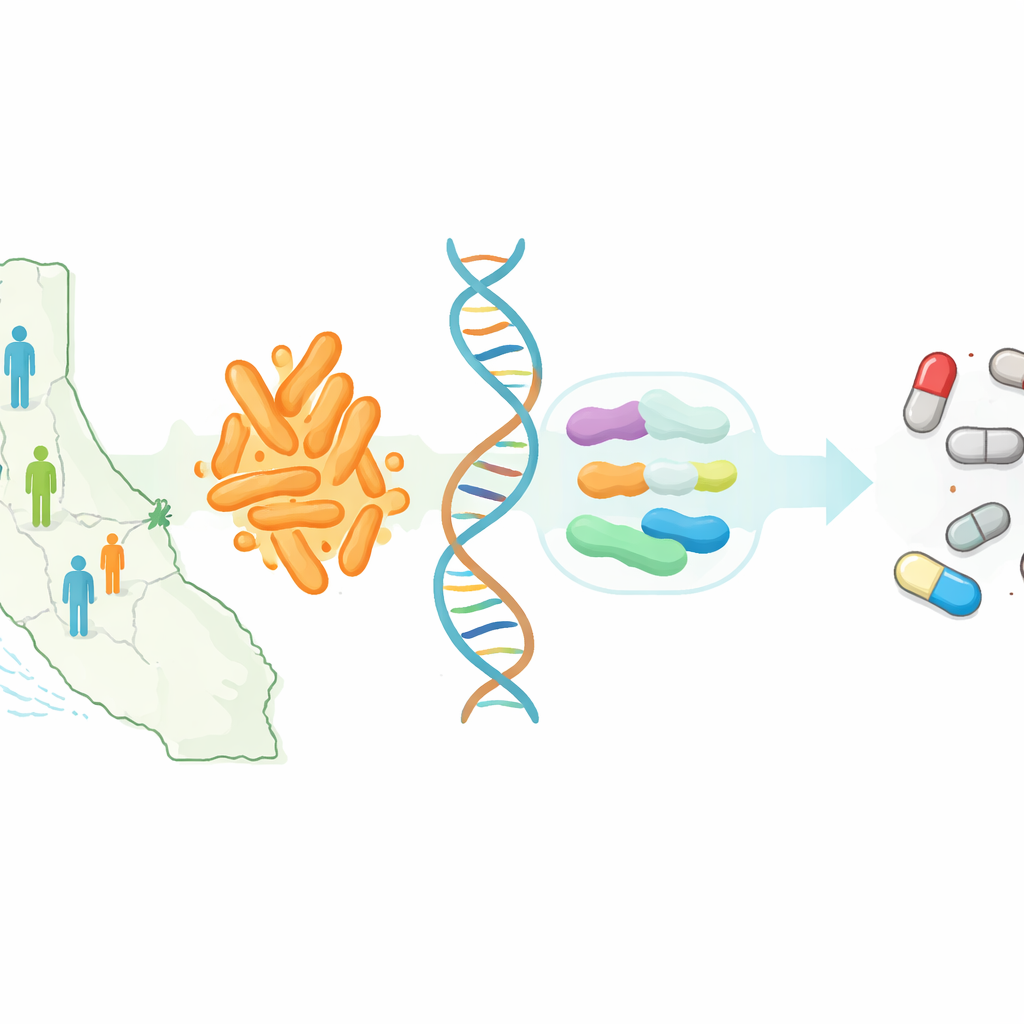
In this study, researchers examined 150 TB samples collected from patients across Fujian between 2021 and 2022. For each sample, they used both the classic growth‑based test and a newer method called whole‑genome sequencing. Instead of watching how germs behave in different drugs, genome sequencing reads every letter of the bacteria’s DNA, revealing tiny changes—mutations—that are known to make specific drugs less effective. By comparing these genetic clues with the traditional lab results, the team could judge how well DNA data alone can predict which drugs a given TB strain can resist.
Which TB families are spreading, and how resistant are they?
The genetic data also allowed the team to place each TB strain on a kind of family tree. In Fujian, two main TB families dominated: one known as Lineage 2 and another as Lineage 4. Together they made up almost all of the samples. Interestingly, drug resistance was common but spread across these families rather than being tied to just one branch. More than two‑thirds of the strains carried at least one mutation linked to resistance. Certain genetic changes kept appearing again and again, each associated with a particular medicine. For example, one mutation often went hand‑in‑hand with resistance to isoniazid, a mainstay TB drug, while another was strongly linked to resistance to rifampicin, a key backbone of standard treatment. Similar patterns were seen for other medicines such as fluoroquinolones and ethambutol.
How well does DNA prediction match real‑world results?
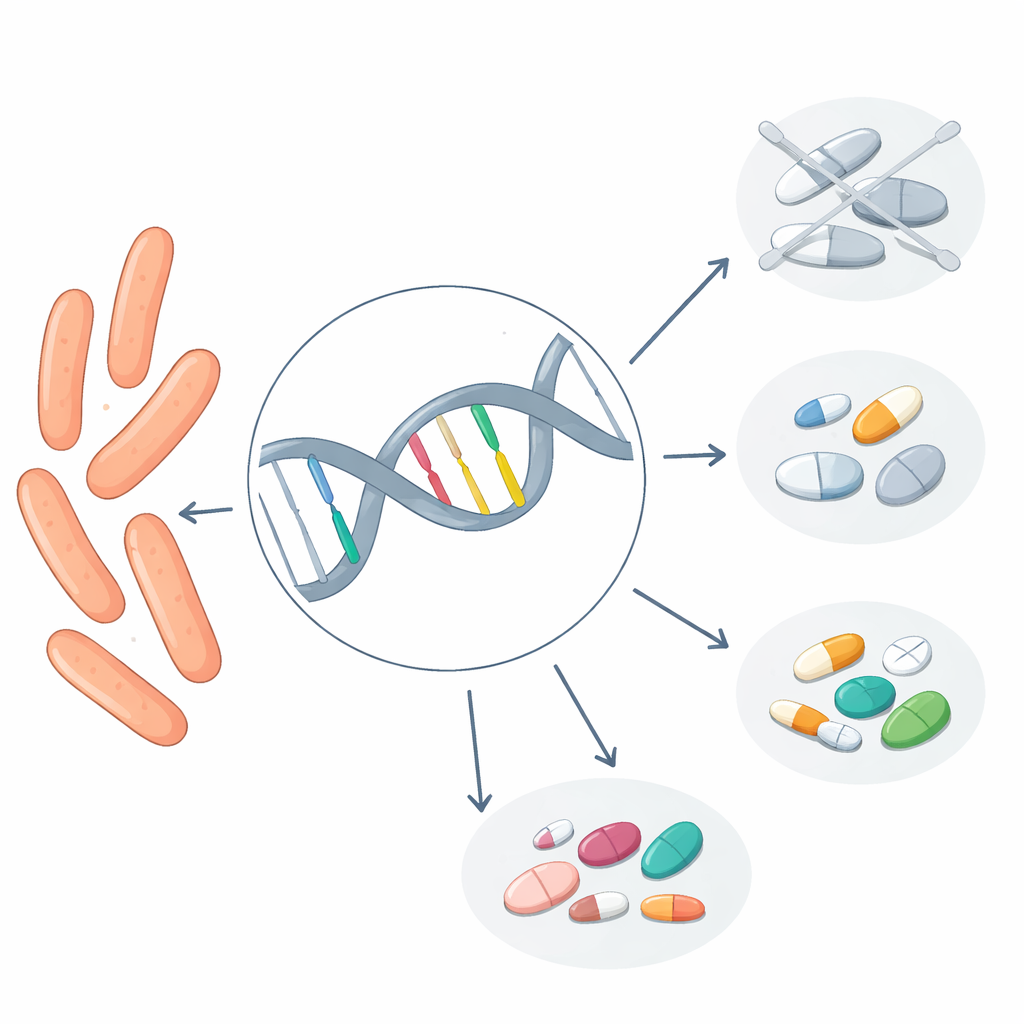
The crucial test was whether these DNA clues lined up with what the slower growth‑based tests showed. For three of the most important drugs—isoniazid, rifampicin, and a group called fluoroquinolones—the match was strong. The sequencing correctly flagged resistant strains in roughly three out of four cases and almost never misclassified a truly sensitive strain as resistant. In other words, when the DNA said a strain should be sensitive, it usually was. For two older drugs, streptomycin and ethambutol, the genetic predictions were less reliable, likely because scientists still have gaps in their knowledge of all the mutations that cause resistance. The method also struggled to judge resistance to several second‑line medicines simply because very few strains in this study were resistant to those drugs.
What this means for patients and public health
For people with TB and the health workers who care for them, the takeaway is encouraging. This research shows that a single DNA test can quickly reveal both the family background of a TB strain and, for several key drugs, whether that strain is likely to resist treatment. While traditional growth‑based testing is still needed, especially for some medicines, whole‑genome sequencing can give doctors an early, fairly accurate picture of which drugs are most likely to work. In places like Fujian, and potentially around the world, combining these approaches could lead to faster, more precise treatment, fewer opportunities for the disease to spread, and a stronger defense against the rise of drug‑resistant TB.
Citation: Wei, S., Zhao, Y., Lin, J. et al. First insight of characteristics and prediction of Mycobacterium tuberculosis drug resistance by whole genome sequencing in Fujian Province, China. Sci Rep 16, 9266 (2026). https://doi.org/10.1038/s41598-026-40398-6
Keywords: tuberculosis, drug resistance, whole genome sequencing, Fujian China, infectious disease surveillance