Clear Sky Science · en
Bmscs loaded exosome hydrogel promotes the repair of rotator cuff injury in rats in vivo
Why Shoulder Tendon Healing Matters
Tears of the shoulder’s rotator cuff are among the most common causes of arm pain and weakness, especially in older adults and active people. Even after surgery to reattach the torn tendon to the bone, the repaired area often heals as weak scar tissue that can tear again. This study in rats tests a new way to boost the body’s own repair machinery: a soft hydrogel “patch” loaded with tiny biological parcels from stem cells, aiming to help the tendon grow back stronger and more like its original form.
Small Packages with Big Healing Power
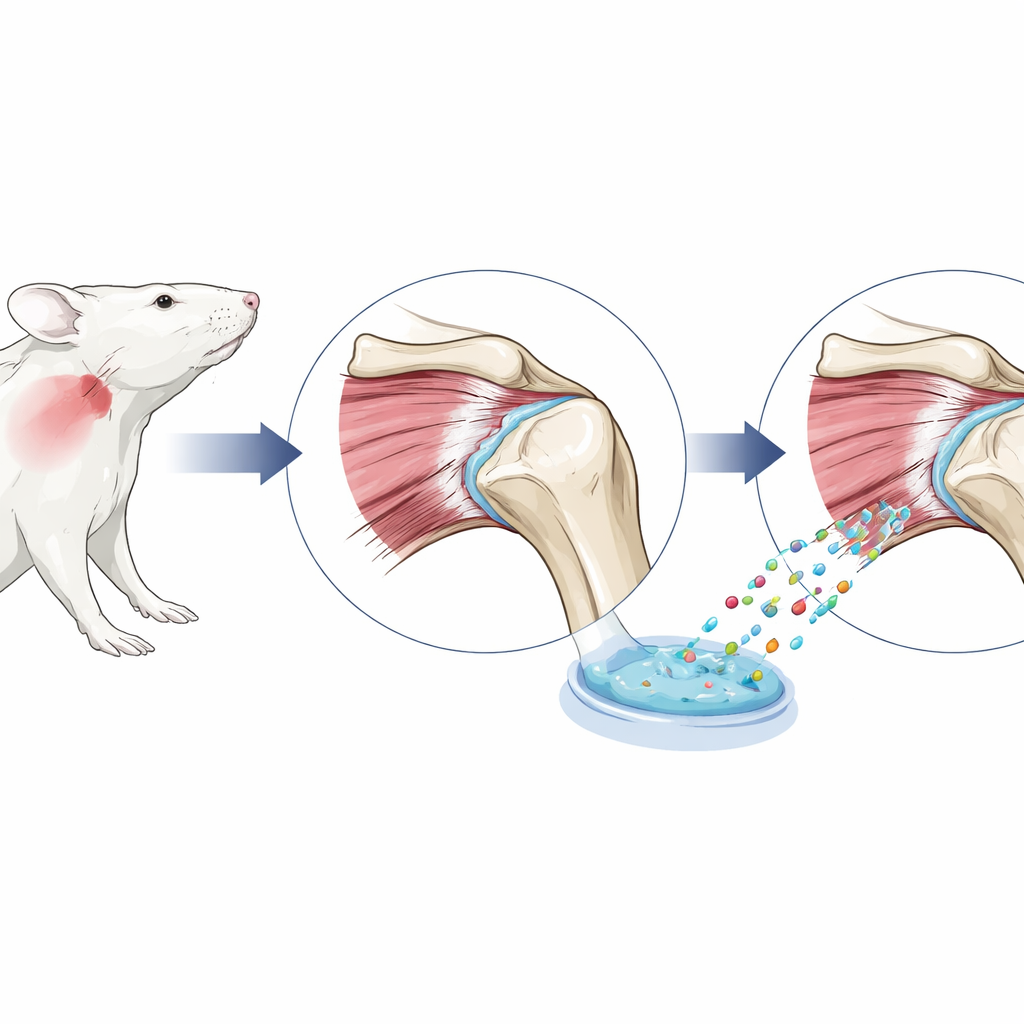
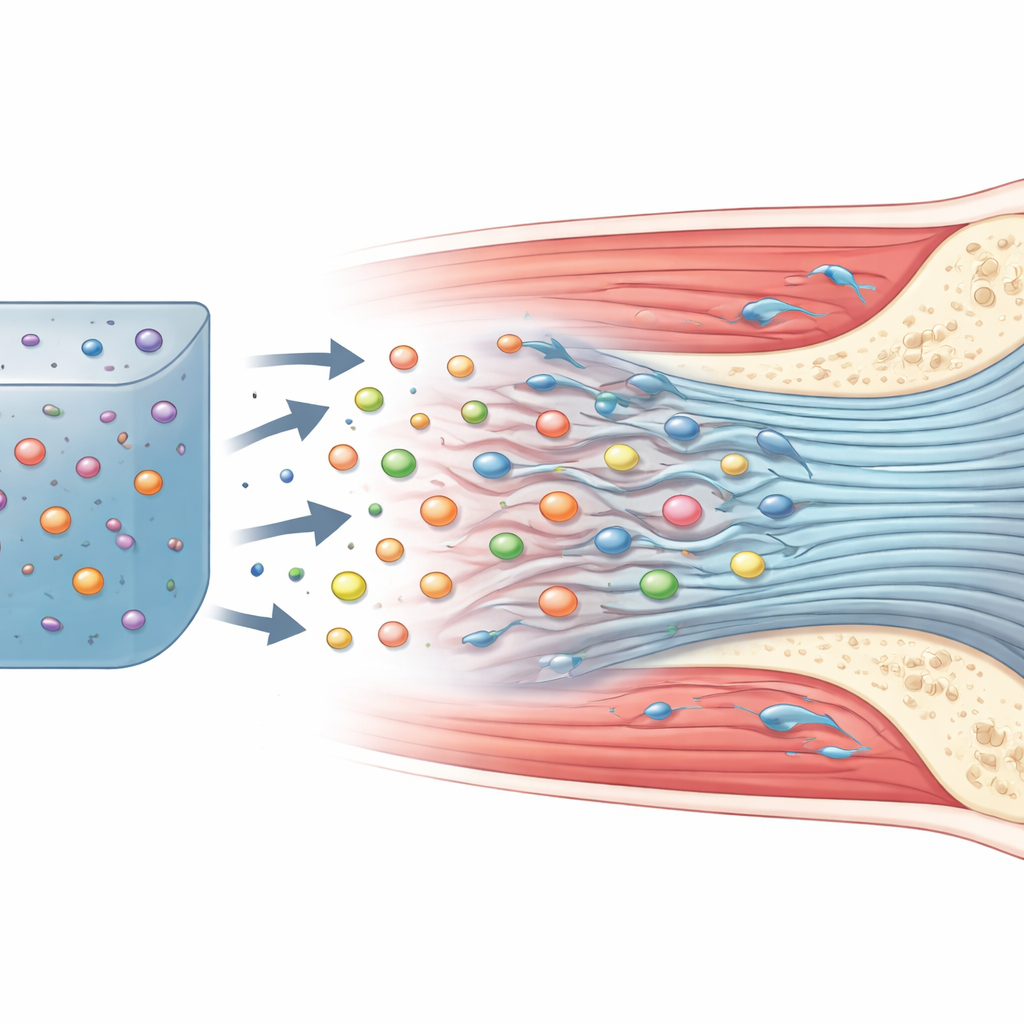
The researchers focused on exosomes, microscopic bubbles naturally released by bone marrow stem cells. These bubbles carry proteins and genetic material that can influence nearby cells, acting like molecular postcards that tell tissue how to grow and repair. Instead of transplanting whole stem cells—which can raise safety concerns—the team harvested exosomes from rat stem-cell cultures, confirmed their size and structure, and then mixed them into a gelatin-based hydrogel called GelMA. This material can be injected as a liquid and then quickly solidified with light to form a stable, localized reservoir that slowly releases exosomes at the injury site.
A Rat Model of Shoulder Repair
To mimic human rotator cuff surgery, the scientists surgically detached and then repaired a key shoulder tendon in rats. Animals were divided into groups: some received only the standard repair, some got the plain hydrogel, some received hydrogel loaded with stem-cell exosomes, and another group received the same exosome hydrogel plus a drug that blocks a signaling molecule called TGF-β1. A healthy, uninjured group served as a baseline. Six weeks after surgery, the team examined the repaired shoulders by measuring mechanical strength, looking at tissue structure under the microscope, and analyzing gene activity involved in tendon and tendon‑bone healing.
Stronger and Better-Organized Repairs
Rats treated with exosome-loaded hydrogel showed tendon repairs that were mechanically much closer to normal, healthy shoulders. The maximum load the tendon-bone connection could withstand and its stiffness were both significantly higher than in rats with standard repair or plain hydrogel, and similar to uninjured controls. Under the microscope, the exosome-treated group displayed denser, more continuous, and more parallel collagen fibers at the tendon-bone interface, with fewer blood vessels and inflammatory cells—features that resemble the natural, well-integrated attachment rather than fragile scar tissue. Staining that distinguishes different collagen types indicated that the balance of collagen in this group approached that of normal tissue.
A Key Signaling Pathway in Action
To understand how the exosomes were working, the team measured the activity of several genes linked to tendon structure and repair. In the exosome group, markers associated with strong tendon matrix, tendon cell identity, and tissue remodeling were all elevated compared with other treatment groups. When the TGF-β1 pathway was chemically blocked, these benefits largely disappeared: mechanical strength fell, collagen organization worsened, and healing-related genes were less active. This suggests that the exosomes act in part by boosting TGF-β1 signaling, which promotes cell growth and collagen production at the healing interface.
What This Could Mean for Patients
In simple terms, this rat study shows that a stem-cell–derived exosome hydrogel patch can help a surgically repaired shoulder tendon reconnect to bone in a way that is stronger and more orderly, and that a key communication signal, TGF-β1, is central to that effect. While much more work is needed before such a treatment could reach human patients—including long-term safety testing and trials in larger animals—this approach points toward future shoulder surgeries where surgeons do more than stitch torn tissue together. They might also deliver a targeted, cell-free medicine that quietly coaches the body to rebuild a more natural and durable tendon-bone link.
Citation: Peng, K., Wang, S., Li, J. et al. Bmscs loaded exosome hydrogel promotes the repair of rotator cuff injury in rats in vivo. Sci Rep 16, 9447 (2026). https://doi.org/10.1038/s41598-026-40392-y
Keywords: rotator cuff repair, exosome hydrogel, bone marrow stem cells, tendon healing, TGF-beta signaling