Clear Sky Science · en
Biosurfactant-producing Bacillus spp. suppress Fusarium via fungal membrane disruption and promote cucumber growth
Friendly Soil Helpers for Healthier Crops
Farmers around the world are searching for safer ways to protect crops without relying so heavily on chemical fungicides. This study explores a naturally occurring soil bacterium, Bacillus subtilis Kol B9, that both shields cucumber plants from damaging Fusarium fungi and helps the plants grow better. By understanding how this tiny helper attacks harmful fungi and boosts roots, researchers hope to turn it into a practical tool for more sustainable agriculture.
A Tiny Ally Living Around Roots
The scientists began by collecting Bacillus bacteria from the soil surrounding common garden and forest plants. They focused on a strain called Kol B9, which lives in the narrow zone of soil that clings to plant roots, known as the rhizosphere. In the lab, tests showed that Kol B9 belongs to the Bacillus subtilis group, a set of species already known for their hardy spores and close partnerships with plants. When grown on nutrient gel or in liquid broth together with two Fusarium species, Kol B9 slowed fungal growth dramatically, especially for a widely used model strain, Fusarium culmorum. Even an environmental Fusarium isolate from raspberry roots, which was naturally tougher, was still noticeably suppressed.
Soap-Like Molecules That Break Fungal Shields
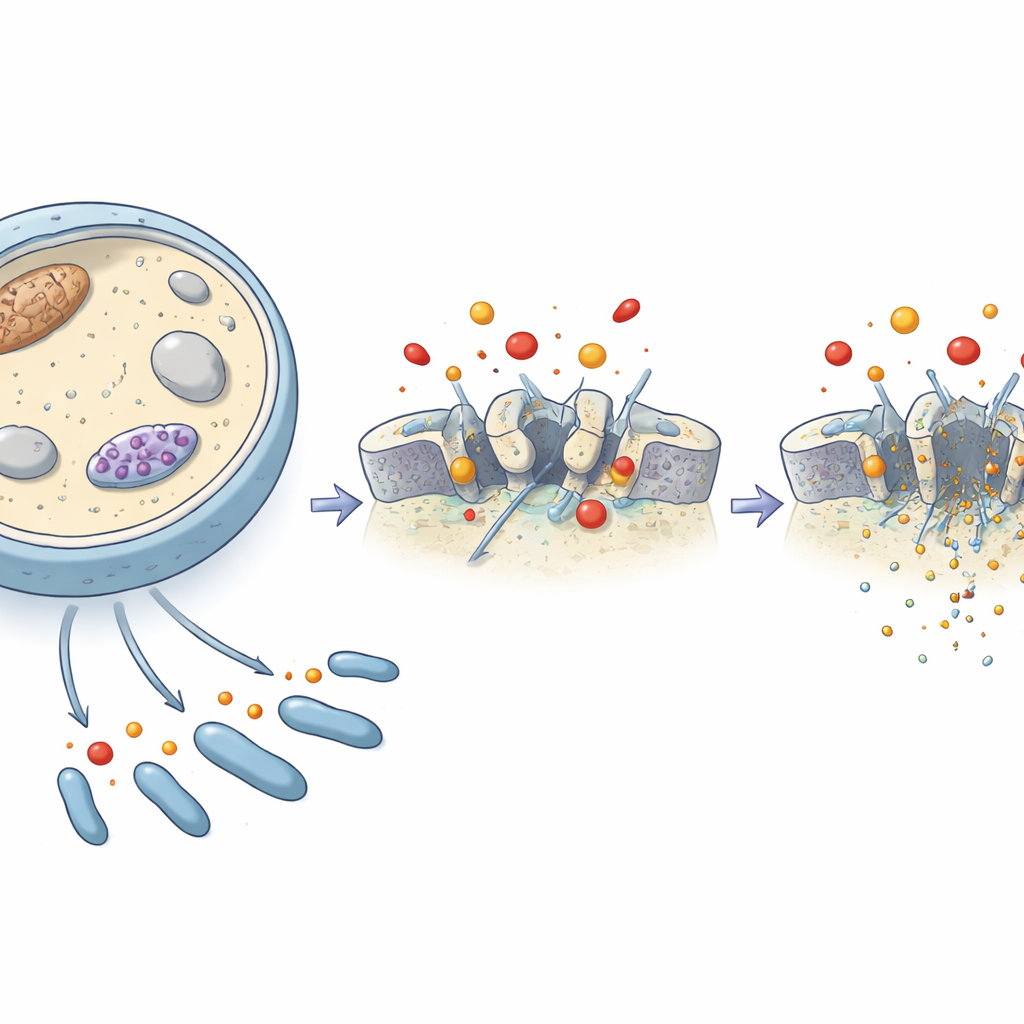
A key feature of Kol B9 is its ability to produce powerful, soap-like compounds called biosurfactants. These are small fat-and-peptide molecules that behave a bit like natural detergents. The team showed that Kol B9 makes several families of these molecules—surfactins, iturins, and fengycins—which are known to latch onto and disturb the outer layers of fungal cells. When fungal spores were exposed only to the liquid left after growing Kol B9 (with no live bacteria present), far fewer spores managed to germinate, and any resulting fungal threads stayed short and stunted. This indicated that the secreted molecules alone could strongly weaken the pathogen.
Attacking the Fungus at Its Protective Skin
To see what happens inside the fungus, the researchers examined the composition and leakiness of fungal cell membranes. They found that growing Fusarium together with Kol B9 changed the balance of phospholipids—the main building blocks of the membrane—in complex ways. For F. culmorum, important lipid types declined and a new class appeared, signs that the membrane was being remodeled under stress. A fluorescent dye that only enters damaged cells revealed that fungal membranes became five- to six-fold more permeable when exposed to Kol B9. In other words, the biosurfactants punched holes in the fungal “skin,” allowing cell contents to leak out and making the fungus much more vulnerable.
Helping Cucumber Roots Branch and Thrive
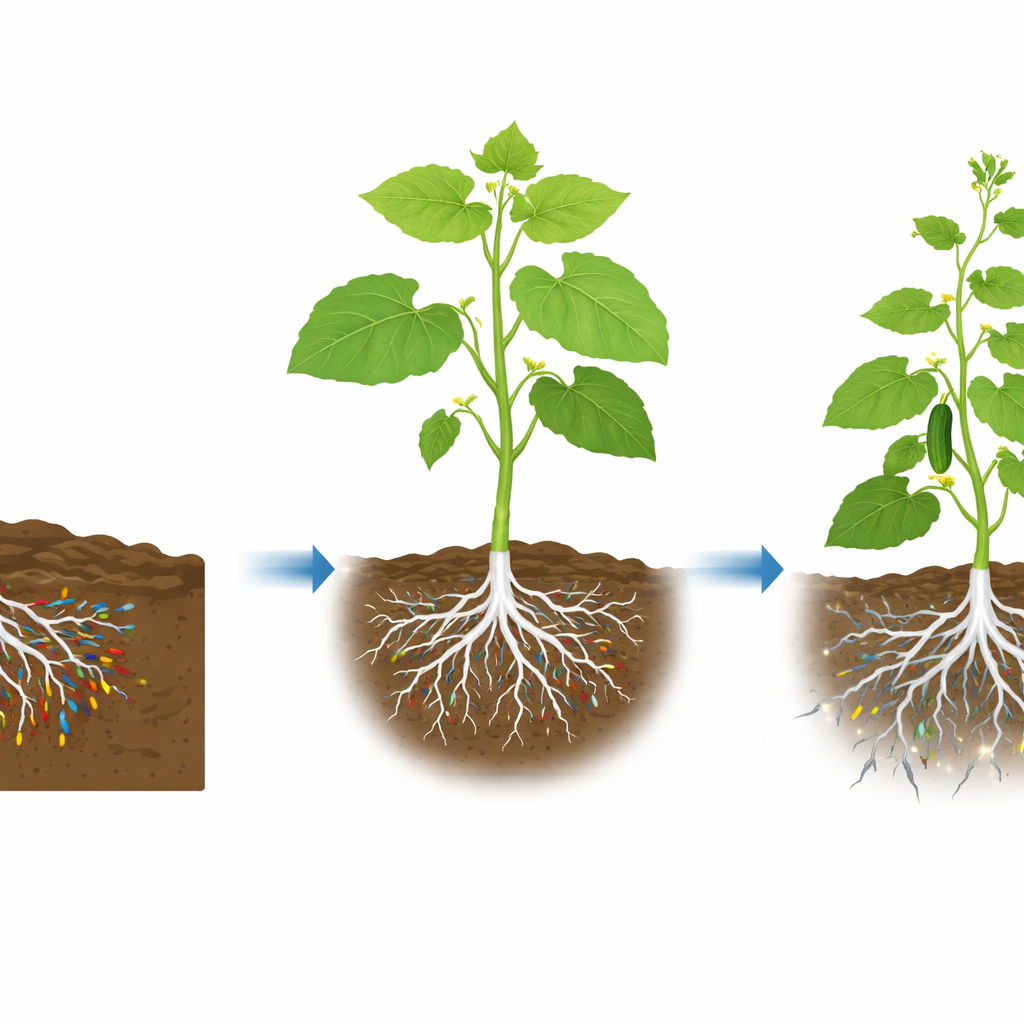
The benefits of Kol B9 did not stop at fighting disease. When cucumber seeds were coated with a suspension of this bacterium and then grown either on test plates or in soil, their roots grew longer, with larger surface area, higher volume, and many more branch tips. The above-ground shoots also lengthened and expanded in surface area. Although the roots were slightly thinner, the overall root system was denser and more effective at exploring the soil. In soil deliberately contaminated with Fusarium spores, seeds pre-treated with Kol B9 produced seedlings with higher dry biomass of roots and shoots than untreated seeds, especially when faced with the tougher environmental Fusarium isolate.
A Dual-Purpose Tool for Greener Farming
Overall, the study shows that Bacillus subtilis Kol B9 can both weaken Fusarium fungi by damaging their protective membranes and support stronger cucumber growth through a richer root system. For a non-specialist, the key idea is that a naturally occurring soil bacterium works on two fronts at once: it makes detergent-like molecules that poke holes in harmful fungi, and it behaves like a probiotic for plants, encouraging more robust roots and shoots. This combination makes Kol B9 a promising candidate for future bio-based seed coatings or soil treatments that reduce dependence on synthetic fungicides while keeping crops productive.
Citation: Jasińska, A., Walaszczyk, A., Bernat, P. et al. Biosurfactant-producing Bacillus spp. suppress Fusarium via fungal membrane disruption and promote cucumber growth. Sci Rep 16, 9460 (2026). https://doi.org/10.1038/s41598-026-40391-z
Keywords: biological control, plant probiotics, soil microbiome, cucumber diseases, sustainable agriculture