Clear Sky Science · en
Association between stress hyperglycemia ratio and ICU delirium among critically ill adults in MIMIC-IV
Why blood sugar spikes in the ICU matter for the mind
People admitted to an intensive care unit (ICU) are fighting for their lives, but the battle is not only in their lungs, heart, or kidneys. Many develop delirium—a sudden state of confusion and disorientation that can last days and leave lasting memory problems. This study asks a practical question: can a simple blood-based measure of how much a person’s blood sugar surges under stress help doctors spot who is most likely to develop delirium, and act earlier to protect the brain?
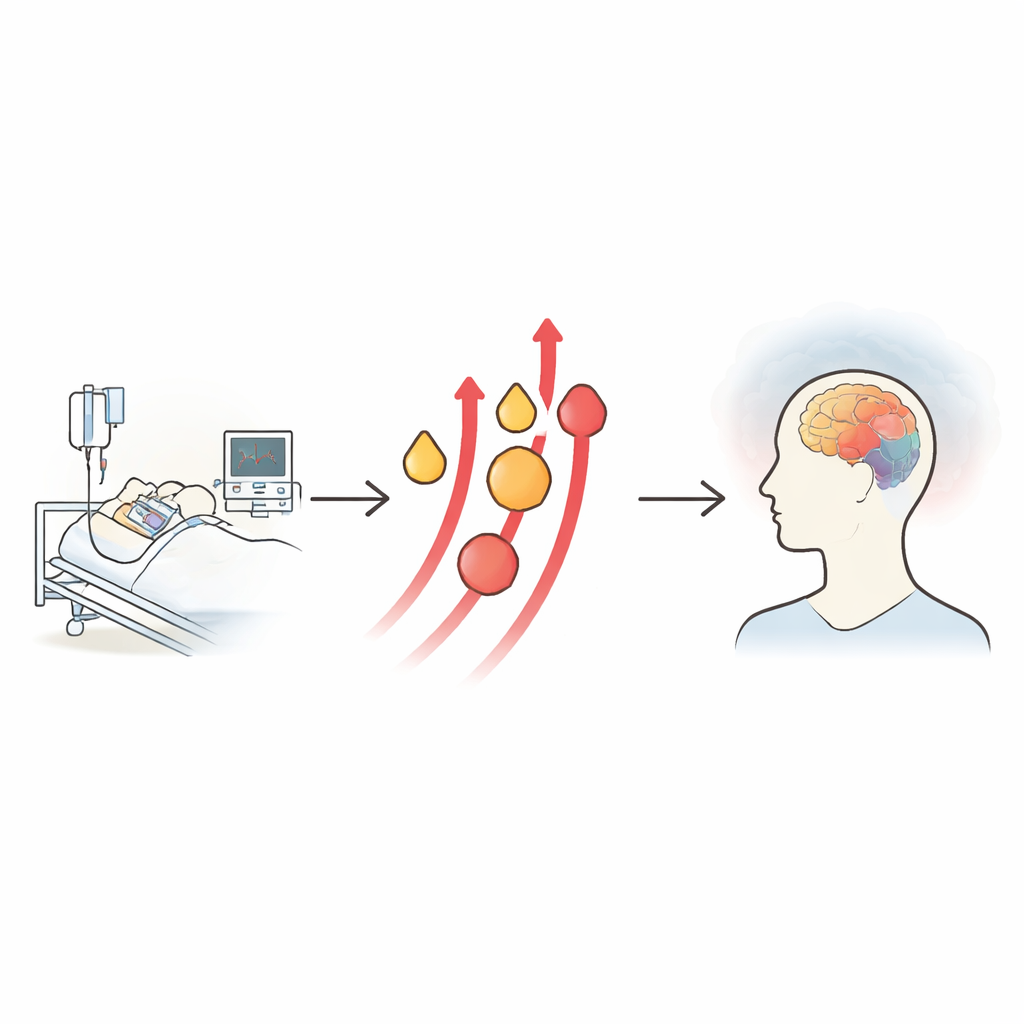
A closer look at confusion in the intensive care unit
Delirium is common in the ICU, affecting up to 8 in 10 critically ill patients. It shows up as trouble paying attention, confusion about place and time, or seeing and hearing things that aren’t there. These episodes are more than temporary “ICU fog”: they are linked to longer hospital stays, higher risk of death, and long-term thinking problems. Yet clinicians still lack easy tools to identify, on day one, which patients are most at risk so they can adjust medicines, monitor more closely, and involve families and rehabilitation teams early.
Turning stress and sugar into a single risk signal
Severe illness often drives blood sugar up, even in people without diabetes. However, a high reading on admission could reflect long-standing diabetes, a sudden stress reaction, or both. To tease these apart, researchers use the stress hyperglycemia ratio (SHR), which compares the blood sugar at ICU entry with the person’s usual level estimated from a longer-term marker (HbA1c). A higher SHR means the current spike is large compared to the person’s baseline, suggesting a strong stress response. Earlier work linked this ratio to heart and brain complications; this study asked whether it also tracks the risk of delirium in a broad mix of ICU patients.
What the research team did with thousands of ICU cases
Using the large public MIMIC‑IV database of ICU records, the authors studied 2,946 adults admitted for the first time to an ICU who had both blood sugar and HbA1c measured, and who were regularly checked for delirium using a standard bedside test. Patients already delirious on the first day or with very short ICU stays were excluded so that new-onset delirium could be captured. The team grouped people into four levels of SHR, from lowest to highest, and compared how often delirium appeared after the first 24 hours. They also adjusted for many other factors—age, vital signs, illness severity scores, existing diseases, lab tests, and sedative or steroid use—to see whether SHR added information beyond what doctors already know.
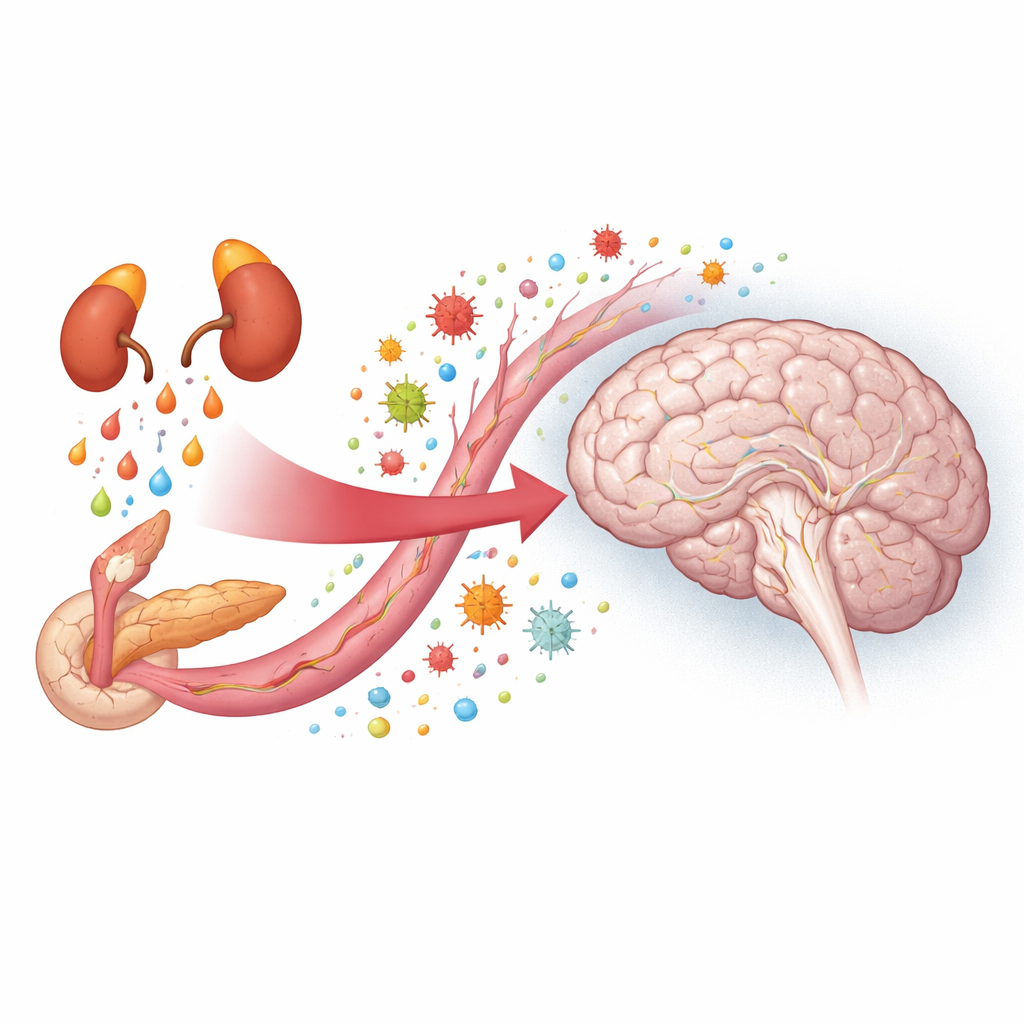
How rising stress sugar related to confused thinking
Overall, 21% of the patients developed delirium. Those who did were generally older, sicker, and more likely to have organ failure and infections. They also had higher blood sugar and, importantly, higher SHR. When analyzed as a simple curve, increasing SHR went hand in hand with a higher chance of delirium, even after many adjustments, though the very strictest model made the result just miss conventional statistical cutoffs. Looking by groups, however, patients in the third and fourth SHR levels had about one-and-a‑half times the odds of delirium compared with those in the lowest level, showing a clear upward trend. Detailed curve-fitting suggested a nonlinear pattern: the risk climbed steeply as SHR rose up to around 1.19, then tended to level off rather than continue rising sharply beyond that point.
What this could mean for bedside care
The link between SHR and delirium was seen across men and women, younger and older adults, and people with and without many common medical problems, and it held up in several sensitivity checks. The study also found that SHR slightly outperformed a single blood sugar value when used to predict who would become delirious. Because SHR can be calculated from tests often ordered at ICU admission, it may offer a low-cost way to flag patients whose brains are under particular metabolic stress. While this kind of retrospective study cannot prove that blood sugar surges directly cause delirium, it suggests that tracking the size of the stress-related spike—rather than blood sugar alone—could help clinicians target delirium prevention strategies, such as careful use of sedatives, early mobilization, and structured monitoring, to those who may need them most.
Take‑home message for patients and families
For families watching a loved one struggle in the ICU, sudden confusion can be frightening and hard to understand. This research suggests that how sharply a person’s blood sugar rises in response to illness carries important clues about their risk of delirium. A higher stress hyperglycemia ratio was linked to greater chances of developing confusion, especially up to a certain threshold. In the future, this simple number could help ICU teams recognize danger early and take extra steps to protect the brain during critical illness.
Citation: Wang, C., Lv, L., Ma, R. et al. Association between stress hyperglycemia ratio and ICU delirium among critically ill adults in MIMIC-IV. Sci Rep 16, 9411 (2026). https://doi.org/10.1038/s41598-026-40380-2
Keywords: ICU delirium, stress hyperglycemia, critical illness, blood sugar, MIMIC-IV