Clear Sky Science · en
Construction of a nomogram prediction model for individualized prediction of vertebral compression fracture risk in postmenopausal osteoporosis population
Why Bone Health Matters After Menopause
As women age, especially after menopause, their bones can quietly become weaker, raising the risk of painful spine fractures that may happen with only minor strain. These breaks can steal independence, limit movement, and add major medical costs. This study set out to build a practical bedside tool that helps doctors identify which postmenopausal women are most likely to suffer a vertebral compression fracture, so that prevention and early treatment can be better targeted.
Hidden Cracks in the Aging Spine
Vertebral compression fractures occur when weakened spinal bones collapse, often without any dramatic fall or accident. The result can be sudden or chronic back pain, stooped posture, reduced mobility, and even increased risk of death. Standard bone scans, which report a T-score for bone mineral density, are useful but imperfect: some women fracture despite “acceptable” scores, while others with very low values never do. Clinicians therefore need a more nuanced way to weigh several influences at once instead of relying on a single bone test.
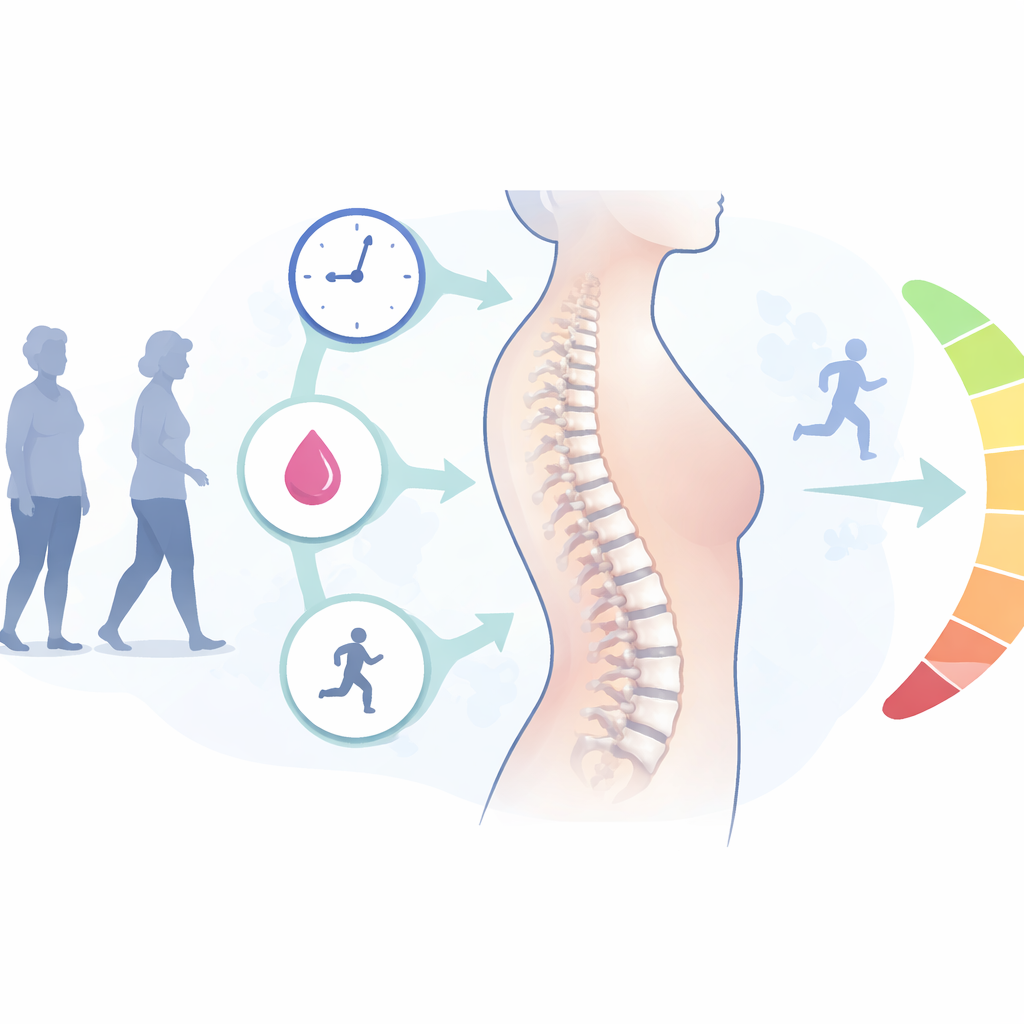
Who Was Studied and What Was Measured
The researchers reviewed medical records from 326 women with postmenopausal osteoporosis treated at a hospital in China between mid-2023 and late 2024. None had major traumatic injuries or prior fractures. They were split into a larger group to build the model and a smaller group to test it. For each woman, the team collected information that is routinely available in clinics: age, bone density, daily exercise time, sunlight exposure, use of calcium tablets, common chronic illnesses, and a range of blood test results. These included markers of bone breakdown, vitamin D levels, hemoglobin, and uric acid, a waste product linked to both gout and metabolism.
Key Ingredients of Fracture Risk
By comparing women who had vertebral fractures with those who did not, and then applying multivariable statistical analysis, the team pinpointed several factors that most strongly distinguished the high-risk group. Older age and lower bone density were major drivers, as expected. Women who exercised less than one hour a day were more likely to fracture, suggesting that regular movement protects the spine by preserving both bone and muscle support. Chronic digestive diseases were another strong signal, likely because they interfere with the absorption of nutrients such as calcium and vitamin D that bones depend on.
Signals in the Blood
Three common blood measurements added further insight. Higher uric acid levels were tied to greater fracture risk, possibly reflecting both kidney strain and low-grade inflammation that harms bone. A marker of bone breakdown called β-CTX was much higher in women with fractures, indicating that their bones were being resorbed faster than they were rebuilt. In contrast, lower levels of 25-hydroxyvitamin D, the circulating form of vitamin D, were associated with more fractures, fitting with vitamin D’s role in helping the body absorb calcium and in keeping the immune system from drifting into a bone-damaging, inflammatory state.
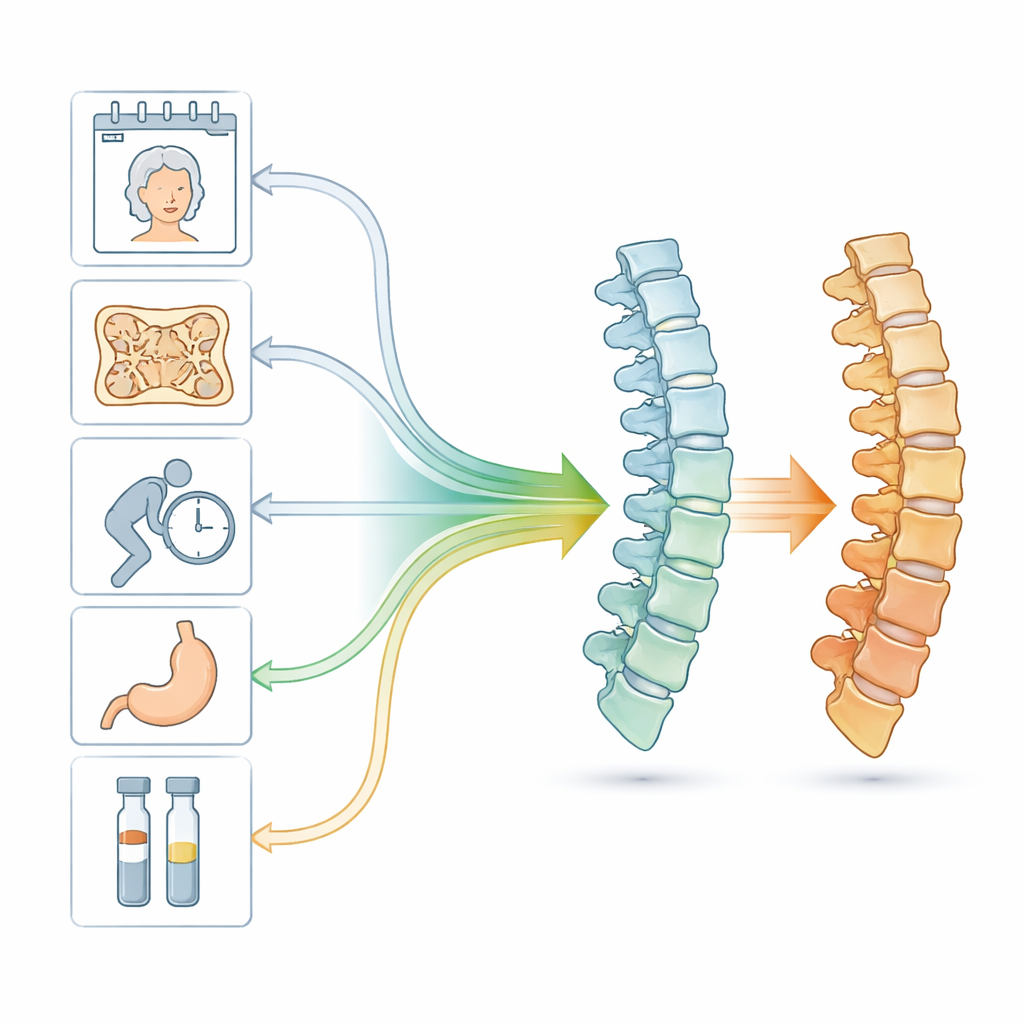
Turning Data Into a Simple Risk Picture
Using these seven main ingredients—age, bone density, daily exercise time, digestive disease, uric acid, β-CTX, and vitamin D—the researchers built a visual scoring chart known as a nomogram. A doctor can locate a patient’s value for each factor, read off a score, and add them up to estimate that woman’s chance of suffering a vertebral compression fracture. When the team tested the tool, its predictions closely matched what actually happened in both the building group and the separate validation group, and it clearly outperformed the simpler “treat all” or “treat none” approaches.
What This Means for Patients
In everyday terms, this study shows that vertebral fractures after menopause are not random bad luck. They reflect a combination of age, bone strength, lifestyle habits, digestive health, and subtle shifts in blood chemistry. By packaging these pieces into a single, easy-to-read chart, the authors offer clinicians a way to spot women at especially high risk and to intervene earlier with exercise guidance, nutrition and vitamin D support, and osteoporosis treatments. While the model still needs to be tested in other hospitals and populations, it represents a step toward more personalized, proactive protection of spinal health in postmenopausal women.
Citation: Chen, J., Wei, B., Cai, J. et al. Construction of a nomogram prediction model for individualized prediction of vertebral compression fracture risk in postmenopausal osteoporosis population. Sci Rep 16, 9161 (2026). https://doi.org/10.1038/s41598-026-40375-z
Keywords: postmenopausal osteoporosis, vertebral compression fracture, fracture risk prediction, bone mineral density, nomogram model