Clear Sky Science · en
Genome-wide assessment of genetic diversity and selective signatures in sunflower (Helianthus annuus L.) using a 10 K SNP array
Why sunflower DNA matters to your dinner table
Sunflower oil is a staple in kitchens and food factories around the world, prized for its healthy fats and versatility. Behind every bottle lies decades of breeding work to create plants that yield well, tolerate drought and salt, and resist diseases. This study peeks under the hood of sunflower breeding by scanning the DNA of many carefully inbred sunflower lines. The goal is to understand how much hidden genetic variety they still carry, how these lines are related, and which parts of their genomes bear the marks of past selection that could shape the future of this vital crop.
Looking inside sunflower genomes
To explore this hidden diversity, researchers collected 94 sunflower lines from breeding programs in France, Iran, the United States, and elsewhere. Many of these lines are known for traits such as resistance to fungal diseases or tolerance to harsh growing conditions. Instead of judging diversity by visible traits alone, the team used a high-density DNA chip containing nearly 10,000 tiny genetic markers called SNPs, spread across all 17 sunflower chromosomes. After strict quality filtering, they retained 7,909 reliable markers, which act like signposts dotted along the chromosomes, revealing where and how the lines differ at the DNA level. 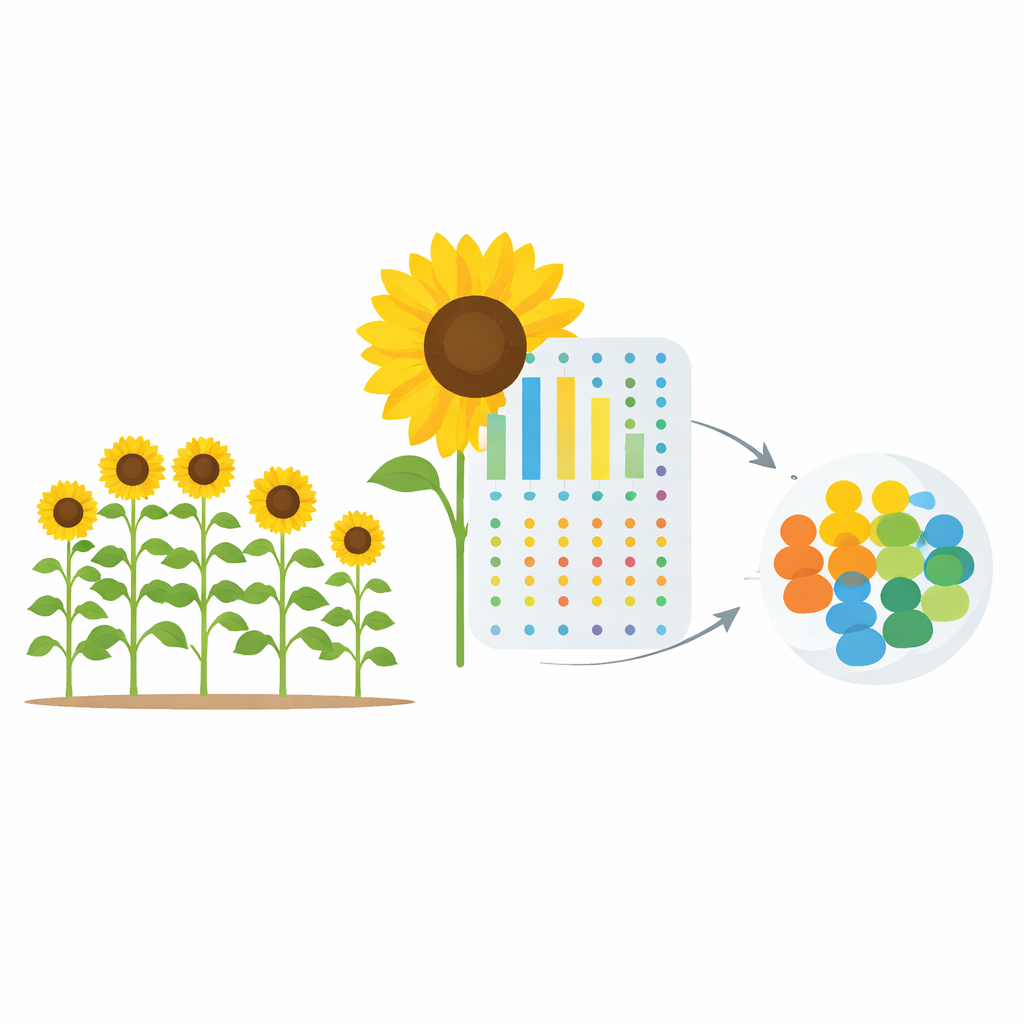
Patterns of variation across the sunflower genome
The study showed that these genetic signposts are not sprinkled evenly across the genome. They cluster more densely near the ends of chromosomes—regions known to be rich in genes and prone to DNA reshuffling—while central stretches are comparatively quieter. Most of the DNA differences were of a common type known to occur naturally and repeatedly in plant genomes, reassuring the team that they were seeing true biological variation rather than technical noise. Overall, the level of diversity was moderate to high: the vast majority of DNA sites examined were variable among the lines, indicating plenty of raw material for breeders to work with.
Two main genetic families emerge
By examining how all these DNA markers varied together, the researchers asked whether the 94 lines naturally fall into genetic “families.” Using several complementary methods, they consistently found two main genetic groups, plus a few lines with mixed ancestry. One group contained many French breeding lines with a shared genetic background, while the other included several U.S. and some Iranian lines. Statistical tests confirmed that about one-sixth of the total genetic differences in this panel lie between these two groups, with the rest occurring within them. This pattern reflects both intentional inbreeding—in sunflower, lines are made highly uniform on purpose—and the distinct histories and goals of different breeding programs. 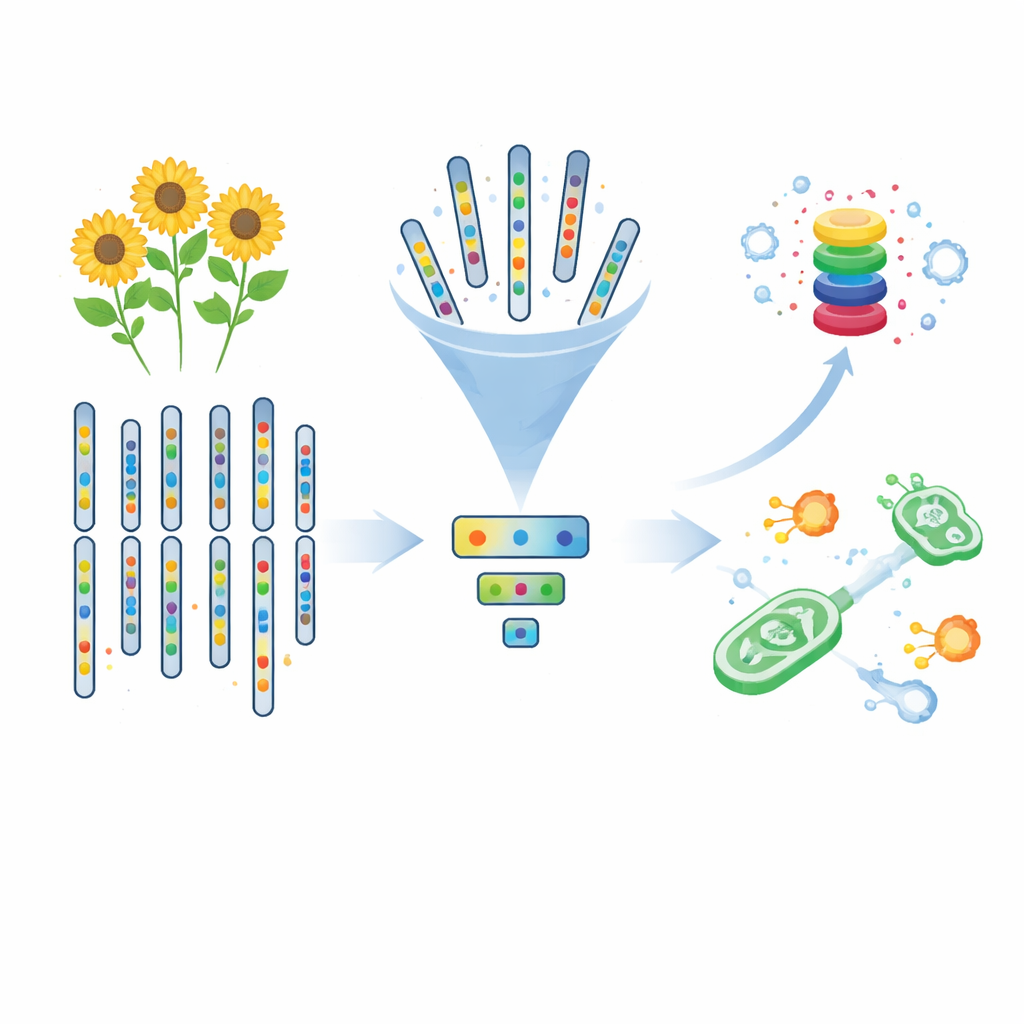
Tracing the fingerprints of past selection
The team then searched for places in the genome where the two groups differ more sharply than expected by chance. Such hotspots can carry “fingerprints” of natural or breeder-driven selection, where particular versions of genes were favored for traits like stress tolerance or yield. Using a statistic called Fst to flag strongly differentiated regions, they uncovered 285 genomic stretches associated with 283 candidate genes. When these genes were grouped by biological function, two cellular pathways clearly stood out: the proteasome, which helps break down and recycle proteins, and pyruvate metabolism, a core energy and carbon-processing hub that is especially important during seed filling and oil formation.
What this means for future sunflower crops
For non-specialists, the key message is that today’s elite sunflower lines still harbor substantial, well-mapped genetic diversity, organized into a few broad families and shaped by past selection on core growth, stress, and energy pathways. By pinpointing which genome regions and cellular processes differ between breeding groups, this work offers breeders a more precise roadmap for combining favorable genes, safeguarding resilience, and fine-tuning oil quality. In practical terms, the study shows that dense DNA marker tools can both reveal the hidden structure of breeding materials and highlight the molecular “levers” that have driven sunflower adaptation—information that can now be harnessed to develop the next generation of productive, hardy sunflower varieties.
Citation: Darvishzadeh, R., Alipour, H., Türkoğlu, A. et al. Genome-wide assessment of genetic diversity and selective signatures in sunflower (Helianthus annuus L.) using a 10 K SNP array. Sci Rep 16, 9439 (2026). https://doi.org/10.1038/s41598-026-40372-2
Keywords: sunflower genetics, crop breeding, genetic diversity, selection signatures, molecular markers