Clear Sky Science · en
Fathers’ involvement in child feeding and associated factors among fathers of children aged 6–24 months in Chena District, Southwest Ethiopia: a community-based cross-sectional study
Why Fathers at the Dinner Table Matter
When we think about feeding young children, we often picture mothers preparing meals and making sure little ones eat enough. Yet growing evidence shows that when fathers roll up their sleeves and share this responsibility, children grow healthier and stronger. This study from rural Southwest Ethiopia looks closely at how often fathers help feed their 6–24‑month‑old children, what encourages or holds them back, and why their involvement could be a powerful, but underused, tool against child undernutrition.
Everyday Life in a Rural Community
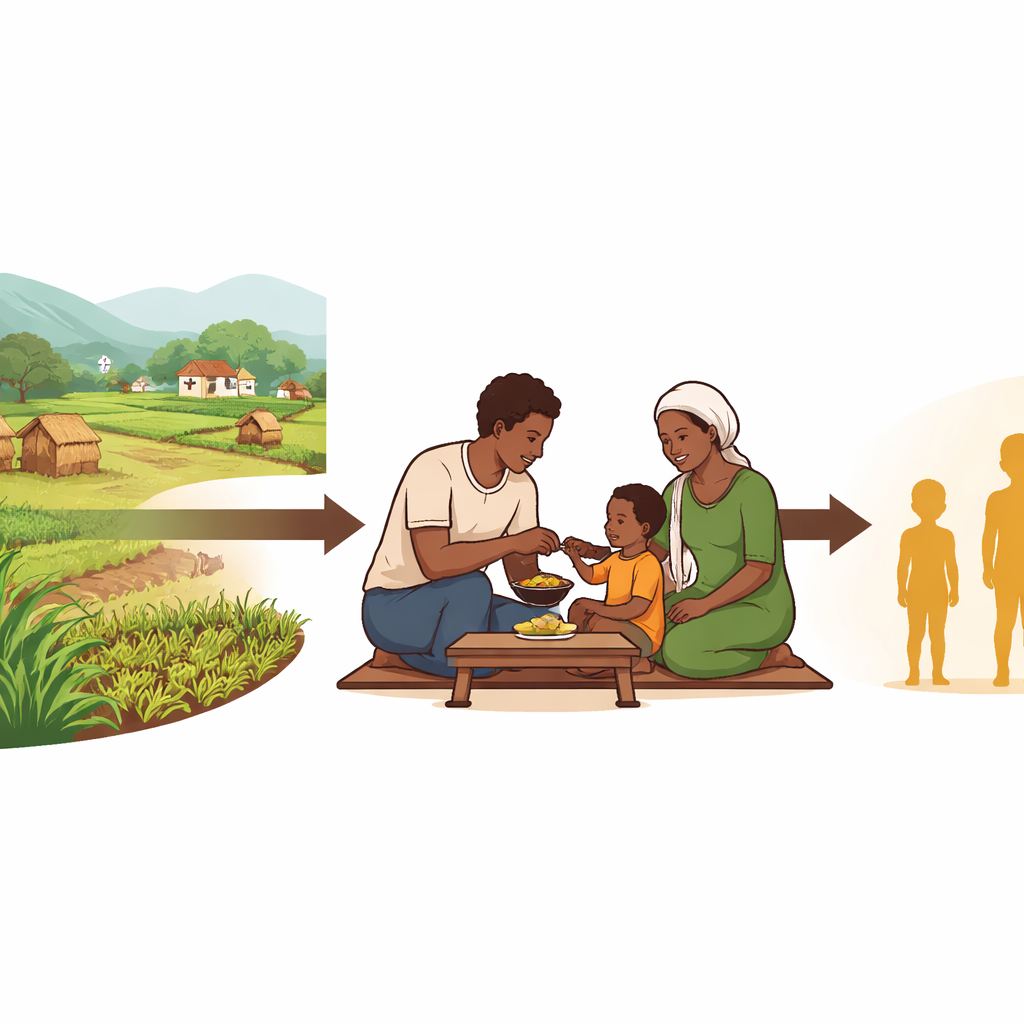
In Chena District, most families live in small farming communities, where workdays are long and resources are limited. Childhood undernutrition is common in this region and remains a major cause of illness and early death. For babies and toddlers between six months and two years of age, this is a crucial window: they still need breast milk, but also regular, varied foods to grow well. The researchers wanted to understand how much fathers in this setting take part in feeding—through actions like helping decide what the child eats, sharing household tasks, providing food and money, and offering emotional support to mothers.
Measuring Fathers’ Hands-On Help
The team visited eight randomly chosen neighborhoods and interviewed 622 fathers who lived with the child’s mother and had a child aged 6–24 months. Using a detailed questionnaire, they scored fathers on how often they shared decisions about feeding, offered physical and emotional help, contributed money or food, and helped with household chores related to child care. Fathers were also tested on their knowledge of good feeding practices, their attitudes toward being involved, and whether local customs encouraged or discouraged their participation.
What the Study Found
The results revealed that fewer than half of fathers in Chena District were actively involved in feeding: only about four in ten reached the threshold for “good” involvement. At the same time, six in ten fathers showed good knowledge of child feeding, just over four in ten expressed positive attitudes toward helping, and a little more than half reported cultural beliefs that supported fathers’ participation. This suggests a mixed picture: many fathers understand the basics of feeding and feel generally supportive, but a majority still are not deeply engaged in daily feeding tasks.
Education, Work, Beliefs, and Time at Home
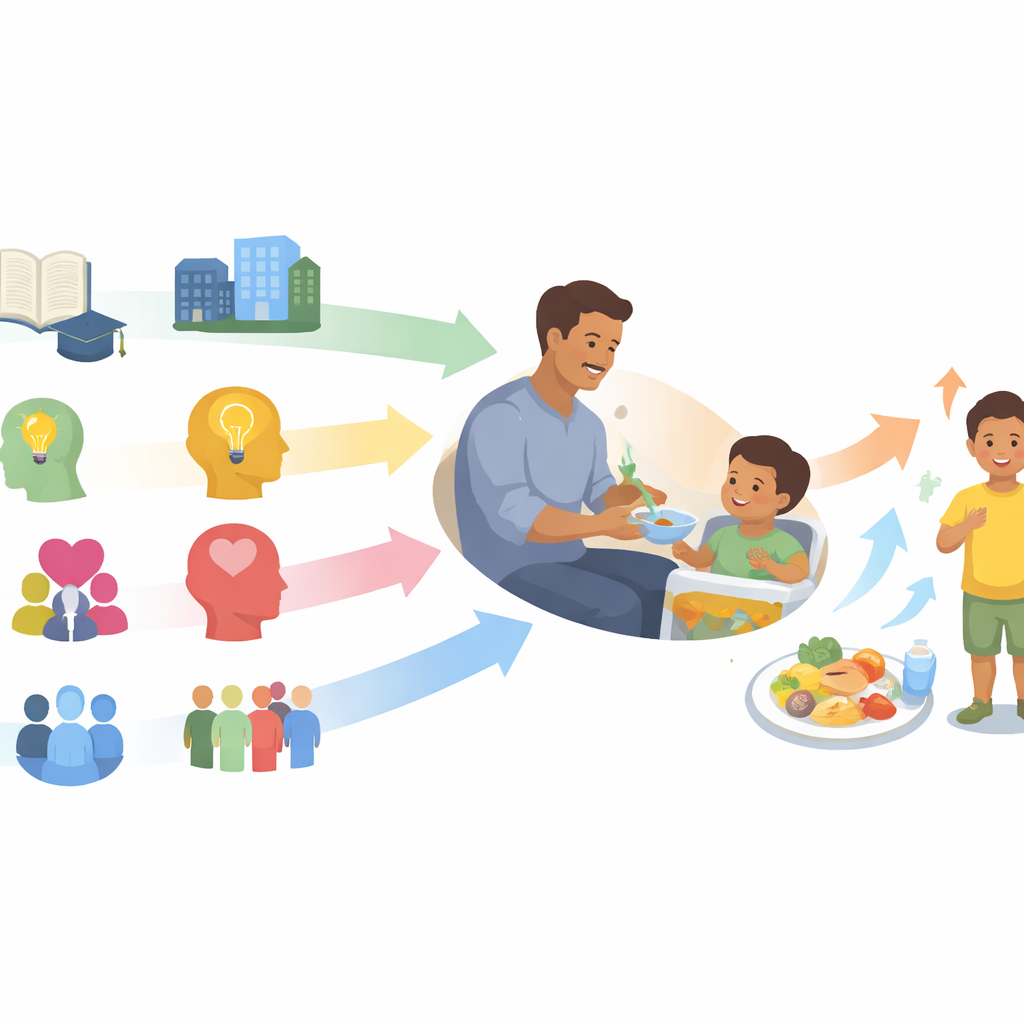
To uncover what makes a difference, the researchers compared fathers who were highly involved with those who were not. Education stood out strongly: fathers with college-level schooling or higher were far more likely to be engaged in feeding than those who had never attended school. Practical circumstances also mattered. Men whose jobs kept them far from home, especially those often away at night, were much less likely to help feed their children. Just as important were inner factors: fathers who understood child nutrition well, felt positively about taking part, and lived in communities where cultural beliefs favored father involvement were roughly two to four times more likely to be active in feeding. These links held even after accounting for age, income, and other background differences.
What This Means for Families and Communities
For families in Chena and similar rural areas, the study’s message is both sobering and hopeful. On one hand, fathers’ involvement in feeding is still low, reflecting long-standing traditions that place childcare mainly on mothers and push men toward work away from home. On the other hand, the factors that boost fathers’ participation—education, knowledge, supportive attitudes, nearby work, and encouraging community norms—are all things that can be strengthened through smart policy and local programs. By including fathers in nutrition counseling, tailoring messages to challenge unhelpful customs, and finding ways to support men who spend much of their time away, health services can help bring more fathers to the table. In doing so, they may improve what and how often young children eat, giving them a better chance at healthy growth and survival.
Citation: Eshetu, D.M., Molla, M.G. & Ambaw, Z. Fathers’ involvement in child feeding and associated factors among fathers of children aged 6–24 months in Chena District, Southwest Ethiopia: a community-based cross-sectional study. Sci Rep 16, 9142 (2026). https://doi.org/10.1038/s41598-026-40365-1
Keywords: father involvement, child feeding, infant nutrition, Ethiopia, gender roles