Clear Sky Science · en
Association of body mass index and cardiovascular risk profile with ménière’s disease: A case-control study
Why weight and circulation matter to dizzy spells
Menière’s disease is a chronic inner ear condition that can cause sudden spinning attacks, ringing in the ears, and gradual hearing loss. For people living with these frightening episodes, a natural question is what makes them more likely to develop the disease in the first place—and whether everyday factors like body weight and heart health play a role. This study set out to untangle how body mass index (BMI), common cardiovascular risks such as diabetes and high cholesterol, and certain heart medicines relate to Menière’s disease.
Looking at patients and their healthy counterparts
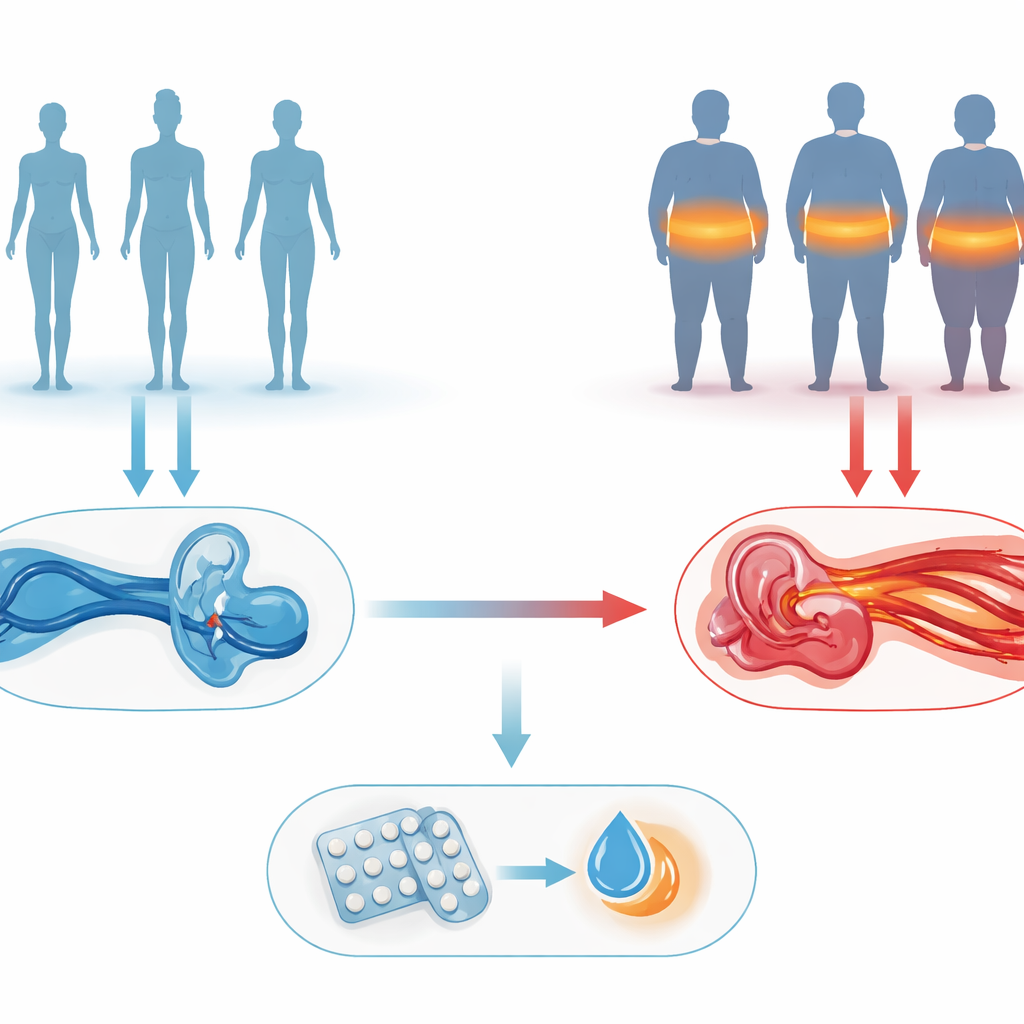
The researchers performed a case–control study, comparing 100 adults diagnosed with definite Menière’s disease to 100 similar adults without the condition. The two groups were matched for age and sex, and people with other ear problems, migraine, or major systemic illnesses were excluded. Everyone underwent a detailed medical review, including measurements of blood pressure, blood sugar, blood fats, smoking status, and body weight and height. The team also carefully recorded use of common cardiovascular medications, such as drugs for high blood pressure, cholesterol-lowering statins, antiplatelet drugs like aspirin, and blood thinners such as warfarin. Hearing tests confirmed that the Menière’s group had the expected, much higher hearing thresholds compared with controls.
Excess weight stands out from the crowd
When the investigators compared metabolic risk factors, many were more frequent in people with Menière’s disease: diabetes, abnormal blood lipids, and especially higher BMI. In raw comparisons, those with the disease had higher fasting blood sugar and more often met criteria for high cholesterol and triglycerides. However, the key question was which of these links would hold up after adjusting for all the others. Using multivariable statistical models that accounted for age, sex, BMI category, diabetes, high blood pressure, abnormal lipids, smoking, and medications, being overweight emerged as the most robust and consistent factor. Overweight individuals had nearly four times the odds of having Menière’s disease compared to people of normal weight, even after all these corrections. Obesity showed a weaker, statistically uncertain increase in risk, suggesting that the threshold between normal weight and overweight may already be important for the inner ear.
Heart risks add up, but some lose their punch
The study also looked at the combined burden of metabolic problems. By counting how many components each person had—overweight, diabetes, abnormal lipids, and high blood pressure—the researchers found a clear “dose–response” pattern. Compared with people who had none of these issues, those with one, two, or three or more components had progressively higher odds of Menière’s disease, with the highest category showing more than a tenfold increase. Among patients, having more components also tracked with more advanced stages of hearing loss. Yet when each factor was examined on its own in the full statistical model, the apparent links between diabetes or abnormal lipids and Menière’s disease faded and were no longer significant. This suggests that their raw associations may largely reflect their overlap with excess weight rather than acting as independent drivers.
A surprising hint from a common blood thinner
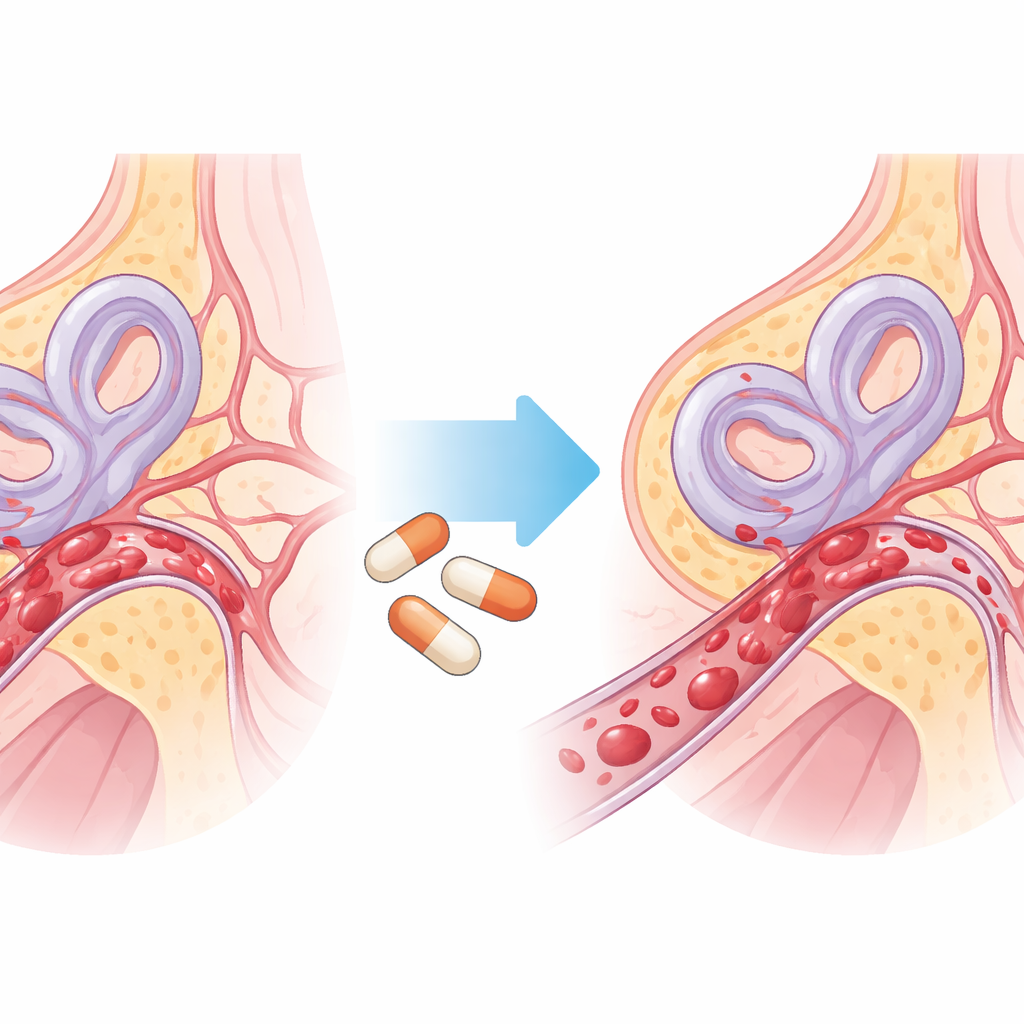
One of the most intriguing findings concerned medication use. People taking warfarin, a long-used anticoagulant that reduces blood clotting, were less likely to be in the Menière’s group. Even after adjusting for other cardiovascular risks and treatments, warfarin use was associated with roughly one‑third the odds of having the disease. Because the inner ear depends on tiny, easily disturbed blood vessels, the authors propose that improving microcirculation and preventing small clots might protect against the processes thought to underlie Menière’s attacks. In contrast, statins, blood pressure medicines, aspirin, and smoking status did not show clear protective or harmful independent effects once confounding factors were taken into account.
What this means for people living with balance and hearing problems
In everyday terms, this work supports the idea that extra body weight and overall metabolic strain can make the delicate structures of the inner ear more vulnerable, likely through subtle changes in blood flow and inflammation. While the study cannot prove cause and effect, it points to overweight—rather than diabetes or cholesterol on their own—as a key, modifiable feature linked to Menière’s disease. It also raises the possibility that improving blood fluidity, as warfarin does, could offer protection, though this needs careful testing and is not a recommendation to start such drugs. For now, the clearest takeaway for patients and clinicians is that thoughtful weight management and attention to general cardiovascular health may be important parts of caring for Menière’s disease and possibly lowering the odds of its onset.
Citation: Nemati, S., Saberi, A., Reyhani, Y. et al. Association of body mass index and cardiovascular risk profile with ménière’s disease: A case-control study. Sci Rep 16, 10067 (2026). https://doi.org/10.1038/s41598-026-40363-3
Keywords: Meniere’s disease, body weight, inner ear, cardiovascular risk, hearing loss