Clear Sky Science · en
Enhancing encoding through repeated study affects retrieval related pupil dilation during cued recall, but not during recognition
Why our pupils reveal more than meets the eye
When you wrestle with a tough question or try to remember a name on the tip of your tongue, your pupils quietly signal how hard your brain is working. This study explores whether those small changes in pupil size can tell us how strongly something is stored in memory—and whether that depends on the kind of memory test we take. The findings matter for education, brain research, and any future tools that hope to “read” mental effort from the eyes.
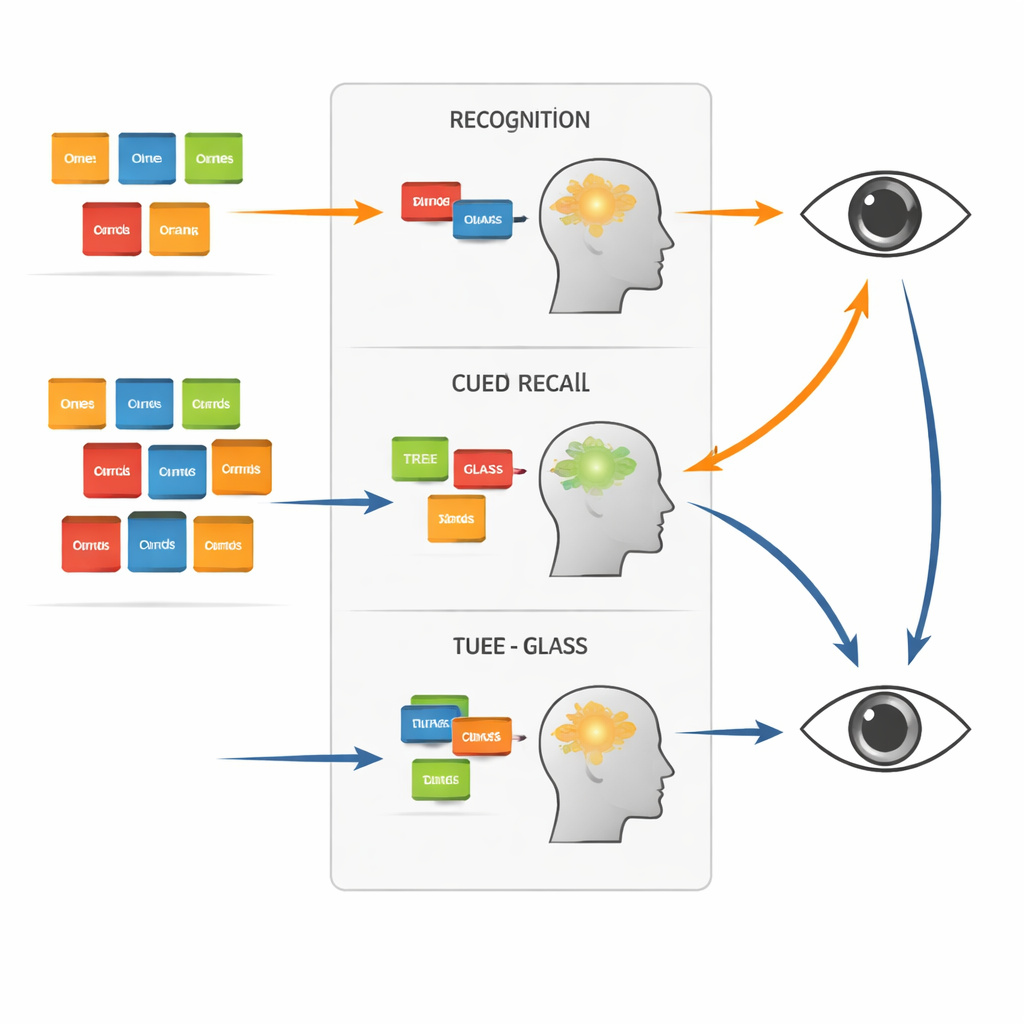
Two ways of testing memory
We do not always remember in the same way. Sometimes we simply decide whether we have seen a word or picture before; other times we must actively bring a missing piece to mind. The researchers focused on two common forms of testing. In a recognition task, people saw single words and had to decide whether each word was old (studied before) or new. In a cued recall task, people saw the first word of a previously studied pair and had to recall its partner. Recognition leans more on a sense of familiarity, while cued recall demands a deliberate search through memory.
Strengthening memories with repeated study
To vary how well information was learned, the team asked university students to memorize pairs of unrelated words, like “stone–window.” Some pairs appeared only once, while others appeared twice during the learning phase. Seeing a pair twice was expected to build a stronger memory trace. Later, one group first took the recognition test, where the second words from the pairs were mixed with new words. Another group first took the cued recall test, where the first words served as prompts to recall their partners. Throughout these tests, an eye-tracker recorded tiny changes in pupil size while room lighting and display brightness were carefully controlled.
Better learning boosts performance—but not always pupil size
As expected, repeating word pairs made memories more reliable. Items that had been shown twice were recognized and recalled more accurately and more quickly than items shown only once, in both types of test. The intriguing part came from the pupils. During the demanding cued recall task, retrieving strongly learned pairs led to smaller pupil dilation than retrieving weakly learned pairs. In other words, when the memory was stronger, the brain seemed to work less hard to pull the missing word into awareness. In contrast, during recognition, pupils did not differ between weak and strong items, even though behavior clearly showed that repeated study helped people perform better.
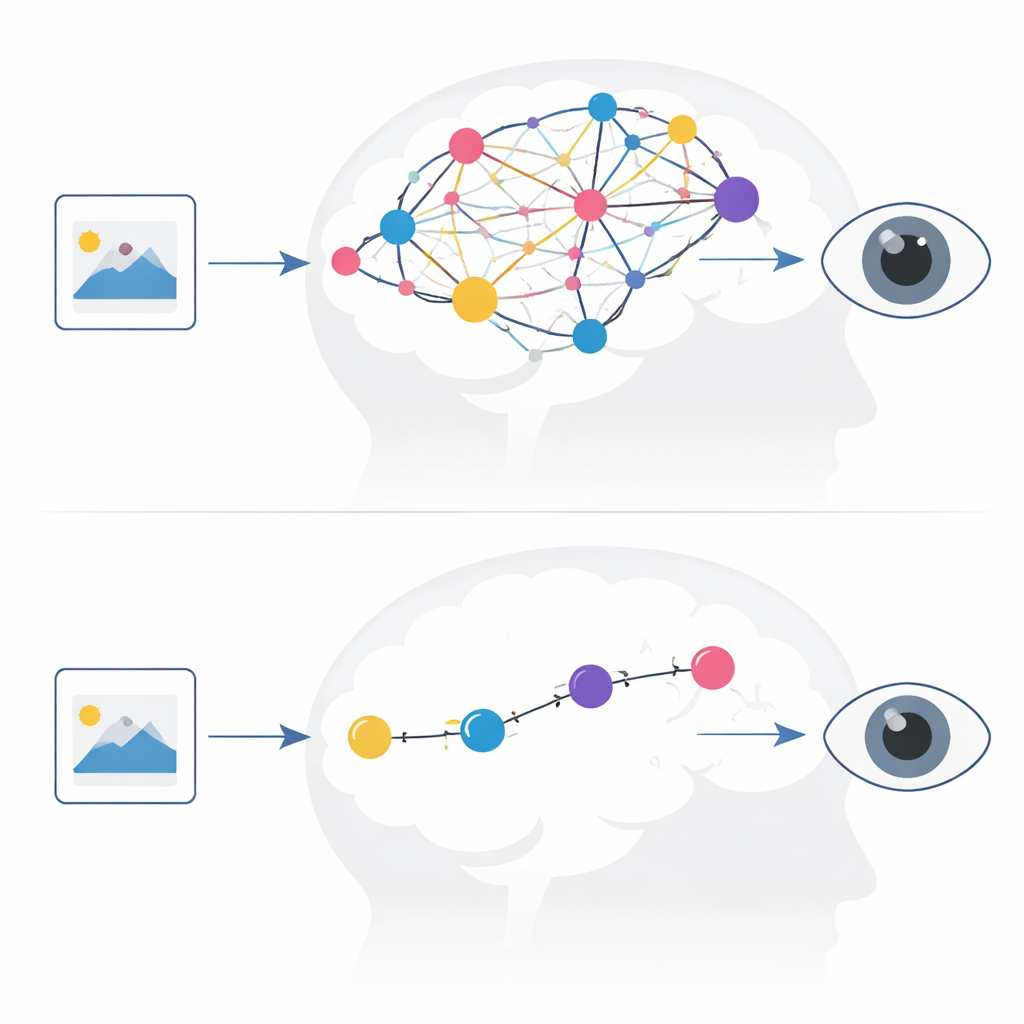
What recognition pupils really reflect
Why did the eyes behave differently in the two tests? Earlier work has shown a “pupil old/new effect”: pupils typically dilate more when people correctly say an item is old than when they correctly say it is new. This study replicated that pattern. But a closer look suggested that, in recognition, pupil size tracked the subjective feeling that something was old rather than how strong the memory really was. Pupil responses were similar for truly studied items that were called “old” and for new items that were mistakenly judged as old. At the same time, pupils stayed smaller when studied items were incorrectly judged as new. This points to recognition-related pupil changes as signals of the experience of remembering, not of how firmly the memory is anchored.
Why this matters for reading memory from the eyes
The study shows that pupil size can reveal memory strength—but only in the right context. When people must actively retrieve missing information, as in cued recall, stronger memories go hand in hand with smaller pupil dilation, reflecting less mental effort. In simple recognition decisions, however, pupils mainly mirror the feeling of familiarity, not how robust the memory trace is. For teachers, clinicians, and designers of brain-monitoring tools, the message is clear: pupil signals cannot be interpreted in isolation. To understand what the eyes are telling us about memory, we must also consider exactly how people are being asked to remember.
Citation: Albi, Á., Pajkossy, P. Enhancing encoding through repeated study affects retrieval related pupil dilation during cued recall, but not during recognition. Sci Rep 16, 9425 (2026). https://doi.org/10.1038/s41598-026-40350-8
Keywords: episodic memory, pupil dilation, cued recall, recognition memory, mental effort