Clear Sky Science · en
Validation and fine mapping of qVmunBr6.2 locus reveal a gene encoding hevamine-A, a defense protein with chitinase activity, is associated with bruchid (Callosobruchus maculatus) resistance in black gram (Vigna mungo)
Protecting a Humble Bean from Hidden Invaders
Black gram, a small black bean widely eaten across Asia, faces a stealthy enemy after harvest: tiny beetles that sneak into stored seeds and quietly destroy entire grain stocks. This study uncovers how wild black gram plants naturally protect their seeds from these pests and pinpoints a single gene that likely arms the seed coat with a potent built‑in defense. Understanding this natural shield could help breeders develop safer, longer‑lasting bean varieties without relying on chemical fumigation.
A Silent Threat in the Granary
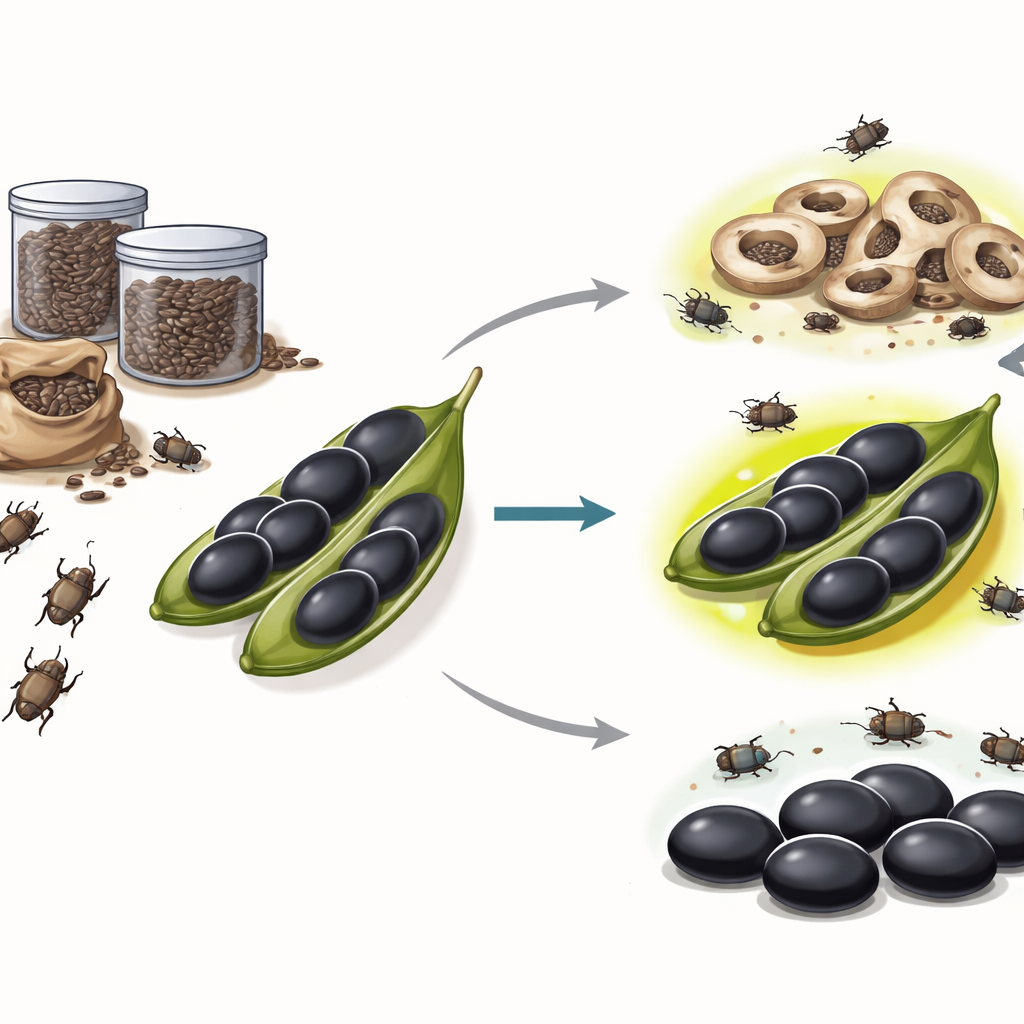
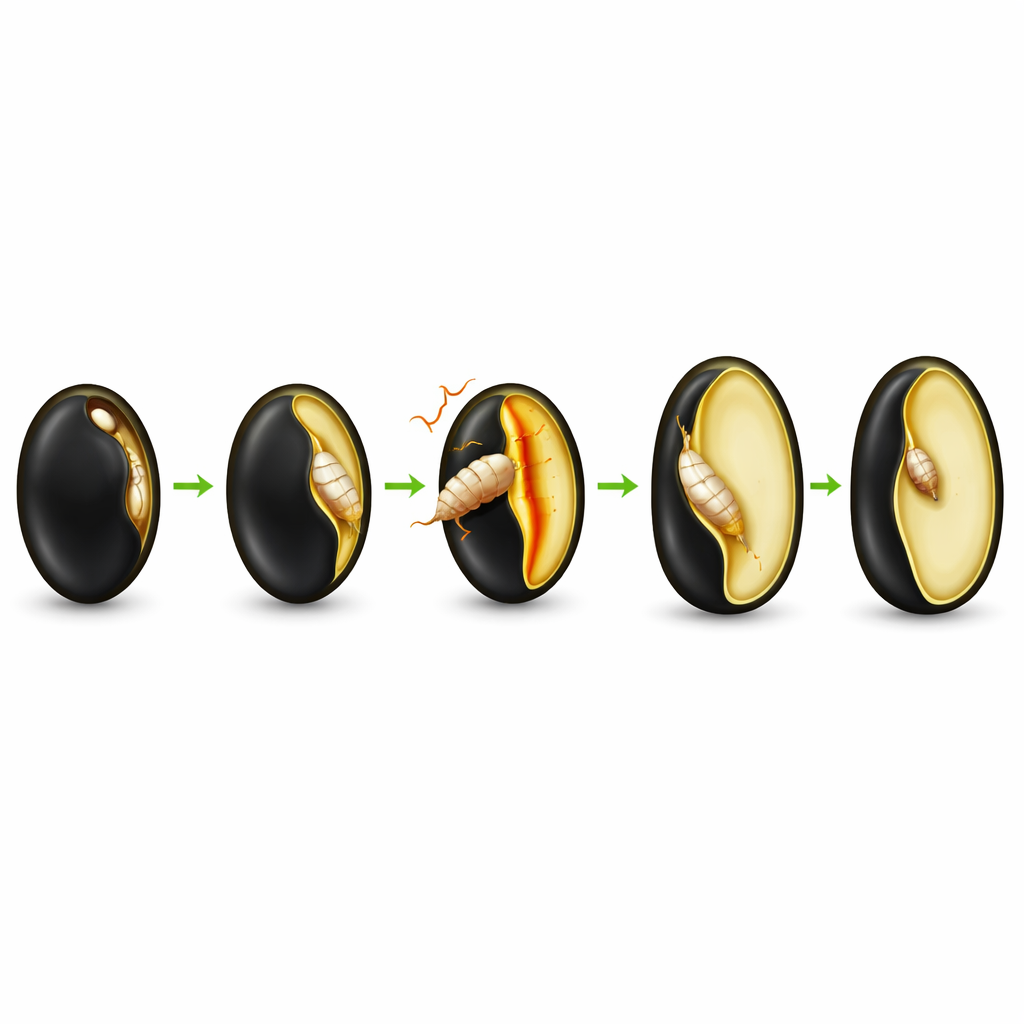
Seed‑eating beetles known as bruchids lay their eggs on developing pods in the field. Once the eggs hatch, the larvae tunnel through the pod wall and into the young seeds, where they feed out of sight. After harvest, new adults emerge from the seeds and quickly reinfest stored grain, sometimes ruining a whole lot within a few months. Farmers often turn to phosphine fumigation to save their harvest, but this approach is costly, leaves chemical residues, and is not environmentally friendly. A more sustainable solution is to grow crop varieties whose seeds are naturally unappealing or deadly to the beetles.
Wild Relatives with Built‑In Protection
Cultivated black gram varieties are highly vulnerable to the cowpea weevil, Callosobruchus maculatus, while their wild ancestors can withstand attack from this species and a related one. Earlier genetic studies had mapped broad regions of the black gram genome linked to resistance, but these regions were too large and gene‑rich to identify the precise cause. In this work, researchers crossed a susceptible cultivated variety, called Chai Nat 80, with a resistant wild accession known as TVNu1076. By following how seed damage appeared in thousands of offspring and how DNA markers were inherited, they confirmed that a previously described resistance region, named qVmunBr6.2, also controls resistance in this separate wild source.
Zooming In on a Tiny Genomic Neighborhood
Armed with a high‑quality reference genome and a large follow‑up population, the team dramatically narrowed the resistance region from more than half a million DNA letters down to a stretch of just 9.27 thousand. Within this tiny neighborhood sat only two genes. One encoded a routine energy‑related enzyme, while the other encoded a defense protein called hevamine‑A, known in other plants for cutting up chitin—a tough sugar‑based material that forms part of insect shells and the protective lining of their guts. Because chitin‑degrading enzymes in seeds are already known to slow or kill beetle larvae in other legumes, the hevamine‑A gene, dubbed VmunHev, emerged as the prime suspect behind black gram’s natural resistance.
A Seed Coat Armed with a Molecular Blade
The researchers sequenced VmunHev from the resistant wild plant and from several susceptible cultivated varieties. They found small DNA differences that changed two amino acids in the hevamine‑A protein, hinting that the wild version might act more effectively against the beetle. They also measured where and when the gene is switched on. At seed maturity, the resistant wild seeds produced much more VmunHev in their outer coat than the susceptible seeds did, while making less inside the seed’s food‑rich interior. This pattern suggests a smart defense strategy: pack the seed coat with a chitin‑cutting protein that can attack larvae as soon as they try to chew their way in, stopping them before they reach the nutritious tissue the plant needs for germination.
From Gene Discovery to Better Beans
Together, the fine‑scale mapping, sequence comparisons, and expression patterns strongly support VmunHev as the key gene behind one major resistance region in wild black gram. The study also provides closely linked DNA markers that breeders can use to track this trait in breeding programs, speeding selection compared with labor‑intensive insect tests. For everyday consumers and farmers, the implications are clear: by borrowing this sharpened molecular tool from wild relatives, future black gram varieties could better protect themselves from storage pests, reducing food losses, lowering reliance on chemical fumigants, and helping keep a staple protein source safe from hidden beetle attacks.
Citation: Amkul, K., Laosatit, K., Chaisaen, P. et al. Validation and fine mapping of qVmunBr6.2 locus reveal a gene encoding hevamine-A, a defense protein with chitinase activity, is associated with bruchid (Callosobruchus maculatus) resistance in black gram (Vigna mungo). Sci Rep 16, 9500 (2026). https://doi.org/10.1038/s41598-026-40341-9
Keywords: black gram, bruchid resistance, seed beetles, plant defense proteins, chitinase