Clear Sky Science · en
Molecular adsorption mechanism of methylene blue dye on ulexite
Why cleaning blue water matters
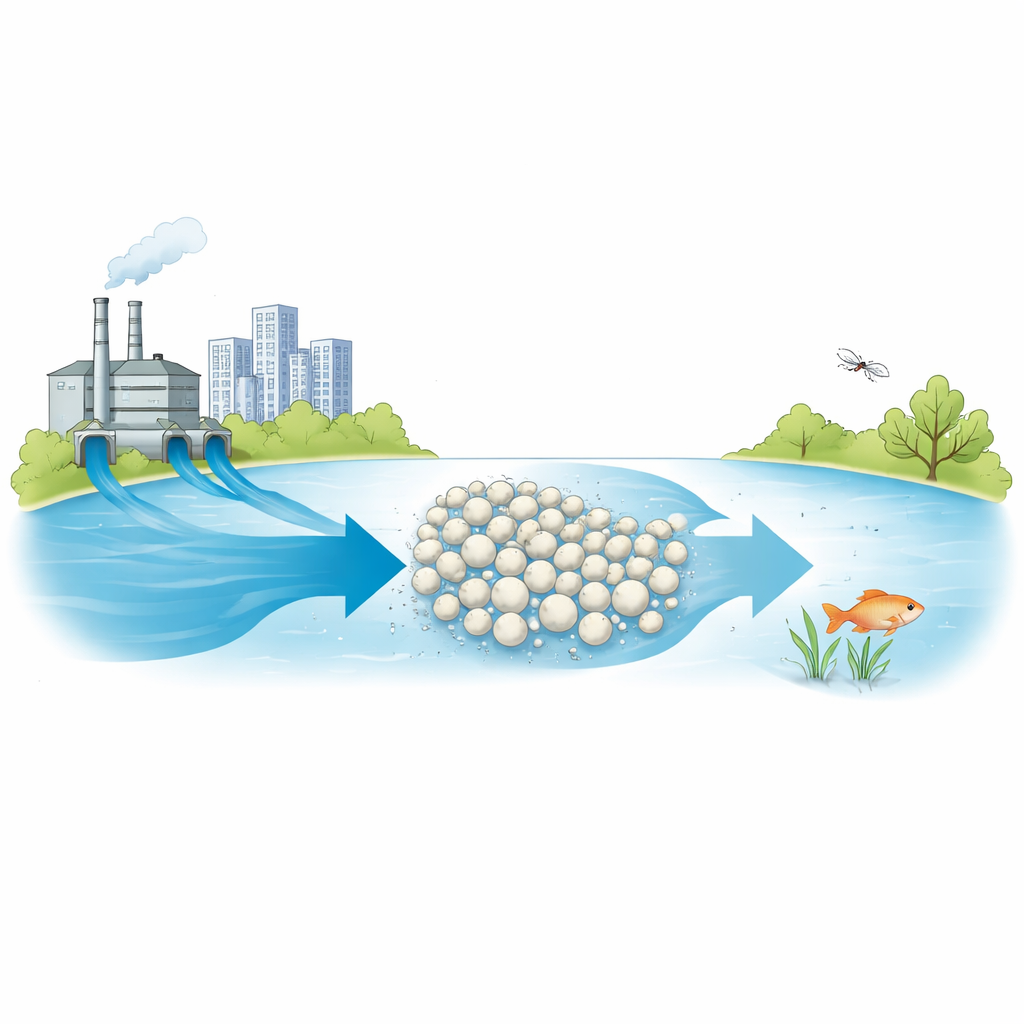
Bright synthetic dyes make our clothes vivid and our medicines easier to spot, but once they wash down the drain they can become a serious problem. One common dye, methylene blue, is widely used in industry and medicine and is difficult to break down in nature. If it is not removed from wastewater, it can irritate skin and eyes, affect blood pressure, and harm aquatic life. This study explores whether a naturally occurring boron mineral called ulexite can act as a powerful, low‑cost sponge to pull methylene blue out of water before it reaches the environment.
A natural mineral as a dye sponge
Ulexite is a soft, white mineral that contains sodium, calcium, boron and water in its crystal structure. It is already mined in large quantities, which makes it an attractive candidate for treating polluted water if it works well enough. In this research, finely ground ulexite was simply used as‑is, without any chemical modification. The author prepared solutions of methylene blue in water and mixed in small amounts of ulexite under controlled conditions, then measured how much dye remained in the water. By changing how long the mineral stayed in contact with the solution, how much mineral was added, how concentrated the dye was, and the temperature, the study mapped out how efficiently ulexite can clean the water.
How much dye can ulexite hold?
The tests showed that ulexite can capture an unusually large amount of methylene blue. At high dye concentrations, the mineral reached an experimental loading of about 1189 milligrams of dye per gram of ulexite—far higher than many other natural or engineered materials reported in the scientific literature. Longer contact times slowly increased both the amount of dye attached to the mineral and the percentage removed from the water, reaching roughly 97% removal after five hours. Adding more ulexite improved the percentage of dye removed but lowered the amount held per gram of mineral, because the available dye was then shared across more particles.
Following the path of dye molecules
To understand how the process unfolds, the study compared the measurements with common models that describe how substances stick to surfaces and how fast this happens. The way the dye uptake changed over time matched a "second‑order" pattern, which in plain terms means the rate is closely tied to how many empty spots are still available on the mineral surface. Analysis of how much dye could fit on the mineral under different conditions indicated that a model emphasizing filling of tiny pores inside the particles was the best description. Additional calculations showed that the process is spontaneous—it tends to happen on its own—and slightly favors higher temperatures, meaning it is gently heat‑absorbing rather than heat‑releasing.
What happens at the tiny scale
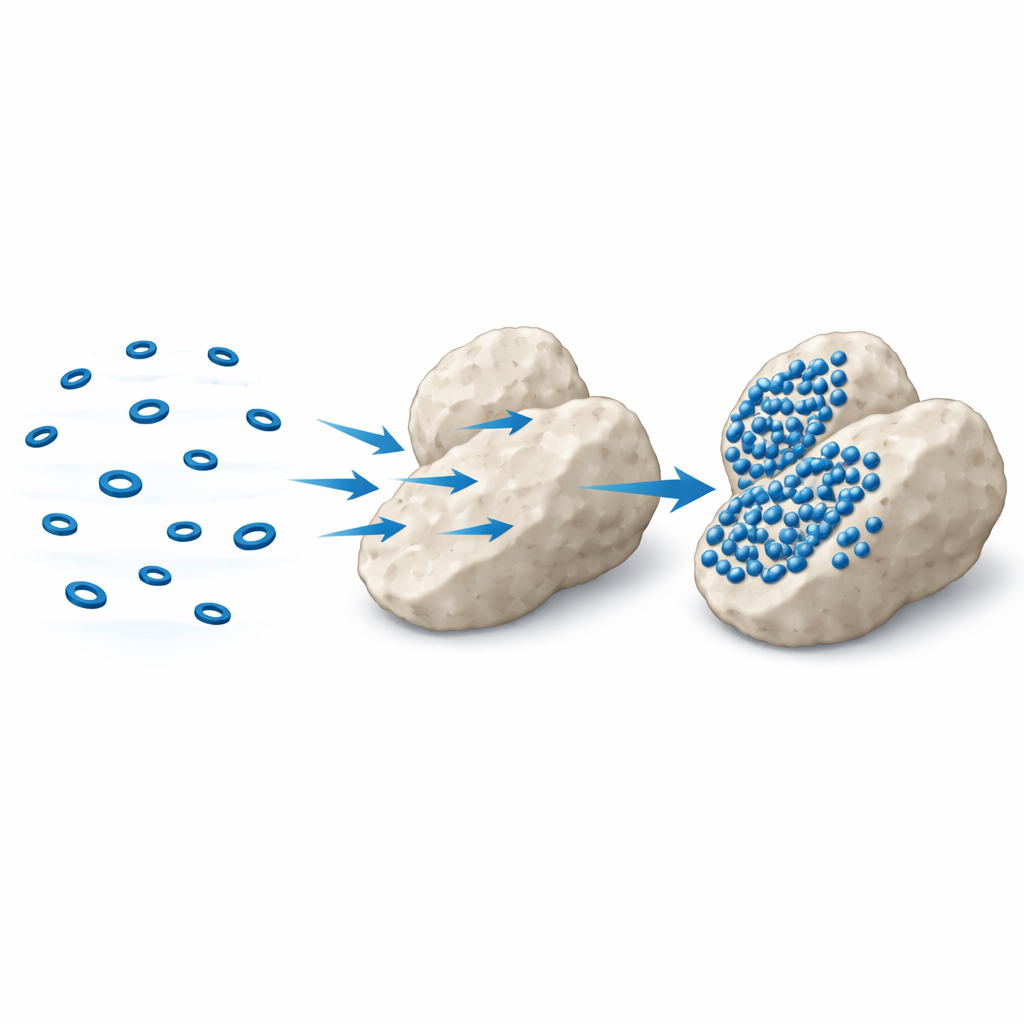
The author then zoomed in on the molecular level using measurements of surface charge and infrared light absorption. At the working water acidity, ulexite particles carry a negative electrical charge, while methylene blue molecules are positively charged. This sets up a natural electrostatic attraction, much like tiny opposite magnets snapping together. The pores in ulexite are wide enough for the dye molecules to slip inside, where they can pack densely. Spectroscopic signatures showed that the boron‑oxygen framework of ulexite and the ring system of methylene blue interact through shared electrons, strengthening the attachment. The overall picture is one where dye molecules are pulled toward the mineral’s surface by charge attraction, drawn into its pores, and held in place by a combination of physical forces and subtle bonding.
From lab result to cleaner water
Put simply, this work reveals that an abundant, unmodified mineral can act as a remarkably effective mop for a troublesome industrial dye. Because ulexite can hold so much methylene blue and grabs it quickly and spontaneously from water, it could become a practical and affordable material for wastewater treatment, especially in regions that already mine boron minerals. While full‑scale applications would still need engineering and safety assessments, the study demonstrates that nature’s own minerals can sometimes outperform complex synthetic materials in cleaning up human‑made pollution.
Citation: Bayça, F. Molecular adsorption mechanism of methylene blue dye on ulexite. Sci Rep 16, 9749 (2026). https://doi.org/10.1038/s41598-026-40340-w
Keywords: wastewater treatment, dye removal, methylene blue, ulexite, adsorption