Clear Sky Science · en
Allergenic potential of ornamental Cupressales species and its consequences for urban planting
Why City Trees Can Make Noses Run
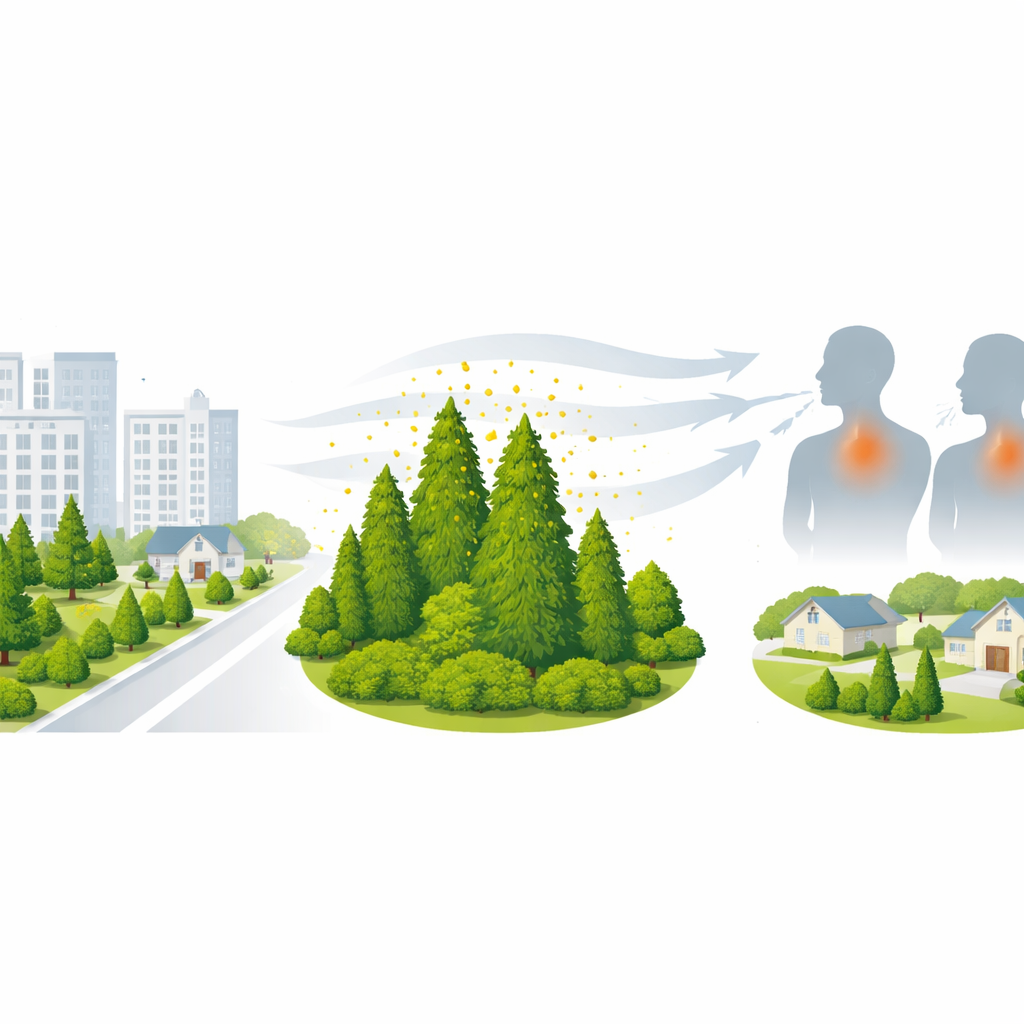
Many people welcome evergreen hedges and decorative conifers as a promise of greenery all year round. Yet the same trees that frame our streets and gardens can quietly fill city air with pollen that triggers sneezing, itchy eyes, and asthma. This study looks closely at a popular group of ornamental conifers, the Cupressales, to find out which species are the worst offenders for allergies, and how smarter planting choices could make urban life more comfortable for sensitive residents.
Evergreens That Shape City Air
Cupressales include familiar trees and shrubs such as junipers, cypresses, thujas, and yews. They are hardy, tolerate pruning, and stay green year-round, which has made them favorites for hedges, screens, and park plantings across Europe and beyond. But their pollen is also a major cause of winter and early spring allergies, responsible for a growing share of hay fever cases from the Mediterranean to Japan and North America. Because the pollen grains of different Cupressales look very similar under a microscope, routine air monitoring usually lumps them together, making it hard to know which exact species are driving allergy problems at any given time.
Following Flowering and Pollen in a Modern City
The researchers tracked ten common ornamental Cupressales species in Poznań, Poland, during the 2023 and 2024 pollen seasons. They watched how the trees flowered through late winter and spring, measured daily pollen levels in the city air with a rooftop sampler, and collected pollen directly from trees. The team then used a laboratory test to measure how much of a key allergenic protein—related to a well-known cypress allergen called Cup a 1—was present in pollen grains from each species. By combining flowering calendars, airborne pollen counts, and allergen content per grain, they could estimate how strongly each species contributed to the overall allergy risk.
Not All Pollen Grains Are Equally Potent
The results revealed a clear split between heavy pollen producers with low allergen content and species whose grains packed a much stronger punch. Yew (Taxus baccata) and two thujas (Thuja occidentalis and Thuja plicata) released large amounts of pollen and dominated the early part of the season, yet their pollen contained only trace amounts of the measured allergenic protein. In contrast, several junipers and the Nootka cypress (Callitropsis nootkatensis) produced pollen with very high allergen levels, even though they did not always release as many grains. This means that periods when these high-potency species are flowering can generate sharp spikes in allergen exposure, out of proportion to their share of the total pollen cloud.
How Flowering Seasons Stretch Allergy Time
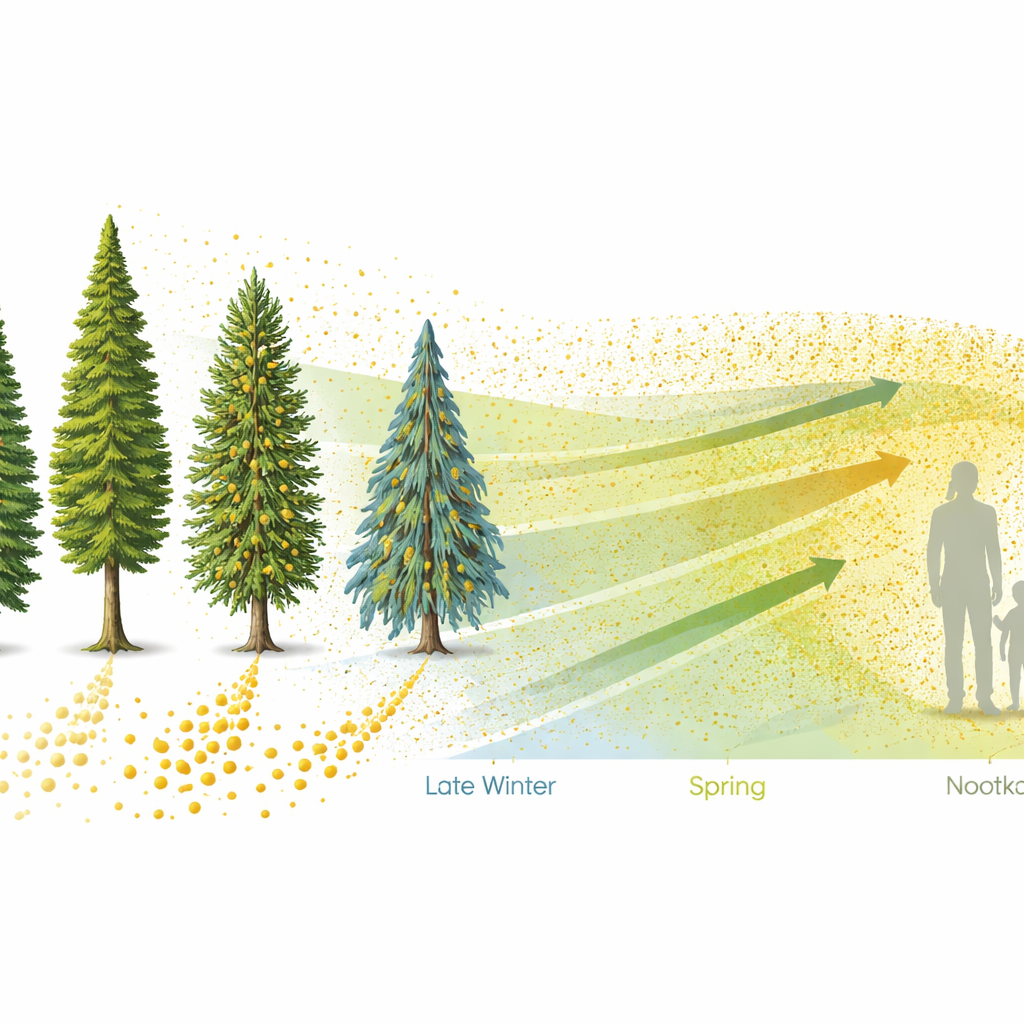
The study also showed how the timing of flowering extends and shapes the allergy season. In both years, the city’s Cupressales pollen season lasted about two months, starting in February and ending in April or May. Early-season peaks were linked mainly to yew and thuja, while later peaks matched the flowering of junipers and Nootka cypress. Some species, such as common juniper, contributed relatively little pollen overall but prolonged the tail end of the season. Because most of the highest-allergen species are popular ornamentals rather than native forest trees, their abundance in parks, gardens, and hedges can create neighborhood-level “hotspots” of allergy risk that standard regional pollen forecasts may underestimate.
Planting for Healthier Streets
For city planners, landscape designers, and homeowners, the study’s main message is that the allergy impact of ornamental trees depends not just on how much pollen they release, but also on how allergenic each grain is and when it is shed. Choosing species like yews and thujas, which showed very low levels of the tested allergenic protein, may help reduce winter and early spring exposure—especially if female plants are favored in species that separate sexes, since they do not produce pollen. At the same time, planting large numbers of highly allergenic junipers or Nootka cypress in dense hedges can amplify local problems. By factoring allergenicity into plant selection and avoiding monocultures of high-risk species, cities can enjoy evergreen landscapes while easing the seasonal burden on allergy sufferers.
Citation: Wieczorek, O., Frątczak, A. & Grewling, Ł. Allergenic potential of ornamental Cupressales species and its consequences for urban planting. Sci Rep 16, 8887 (2026). https://doi.org/10.1038/s41598-026-40332-w
Keywords: pollen allergy, urban trees, juniper pollen, airborne allergens, urban planning