Clear Sky Science · en
Fall-related deaths and acute healthcare utilisation in the last year of life among older adults in Latvia
Why this matters for families and communities
As people live longer, more families are watching parents and grandparents struggle with frailty, balance problems, and frightening falls. This study from Latvia looks closely at what happens in the final year of life for older adults who die because of a fall. By tracing their use of ambulances and hospital care, it reveals a hidden story of repeated emergencies, frequent hospital stays, and a growing reliance on hospital-based care at the end of life.
Growing older in a rapidly ageing country
Latvia, like many European countries, is ageing quickly: more people are living into their eighties and beyond, often with several long-term health problems. Falls are already the second leading cause of injury deaths in older Latvians, and they are several times more common than in younger adults. Against this backdrop, the researchers set out to answer two simple but crucial questions: who is dying from falls, and how often do they rely on acute care services such as ambulances and hospitals in their final year?
Who is most affected by fatal falls
The team analysed national records for every person aged 65 or older in Latvia who died with a fall listed as a main or contributing cause between 2019 and 2023, a total of 549 people. Most were very old, with a median age of 83, and women made up slightly more than half of the deaths. The oldest age groups were hit hardest: people aged 75 to 84, and especially those 85 and older, were much more likely to die in hospital after a fall than younger seniors in their late sixties. Hip and thigh injuries and head injuries were the most common serious harms, reflecting the well-known dangers of broken hips and blows to the head in frail bodies.
Intense use of ambulances and hospital beds
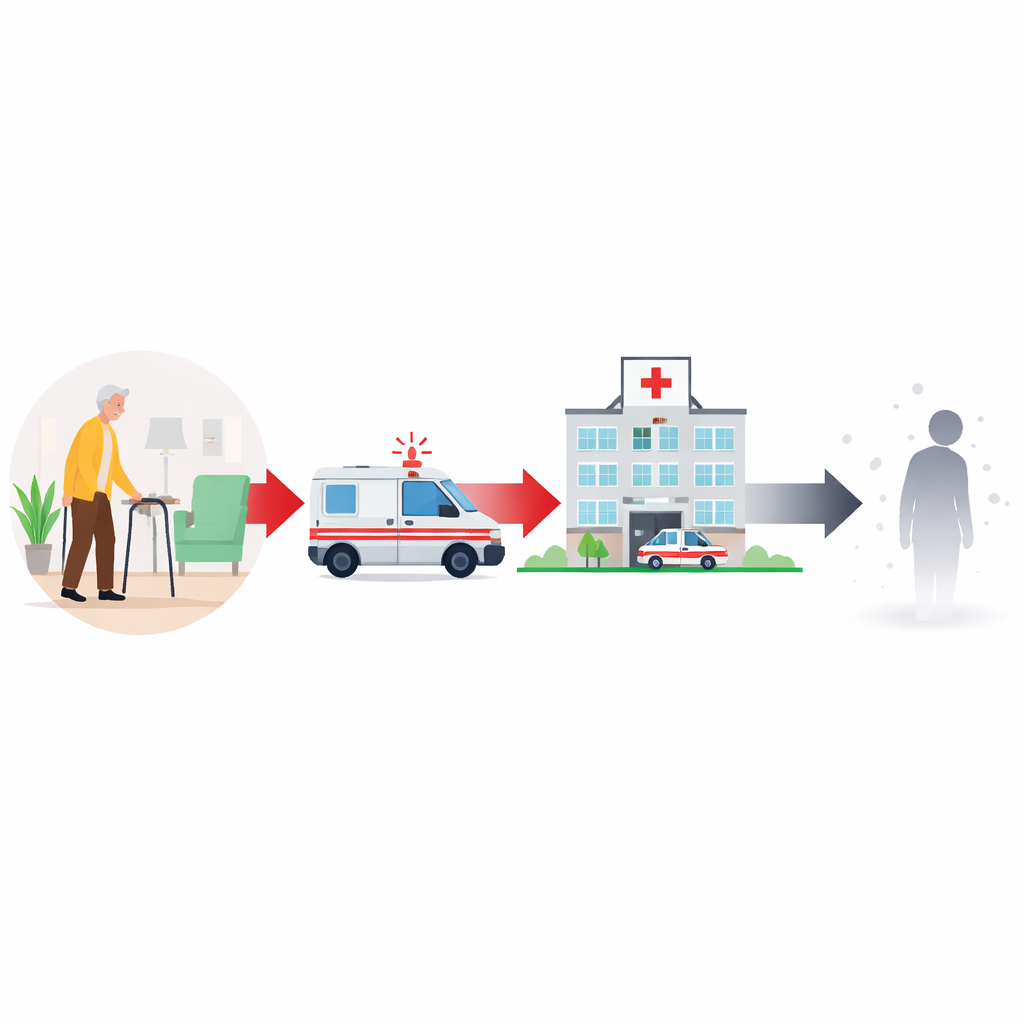
What stands out is how intensively these older adults used emergency and hospital care in the year before they died. More than nine in ten had at least one hospital stay during that year, and about a third were admitted two or more times. Over four in five had called an ambulance at least once, and many had multiple emergency calls. When the researchers looked specifically at care for injuries, they still found high use: most had at least one injury-related hospitalisation or ambulance call. A small but striking group had as many as a dozen hospital stays or dozens of emergency calls, suggesting repeated crises and unstable health.
Why deaths are increasingly happening in hospital
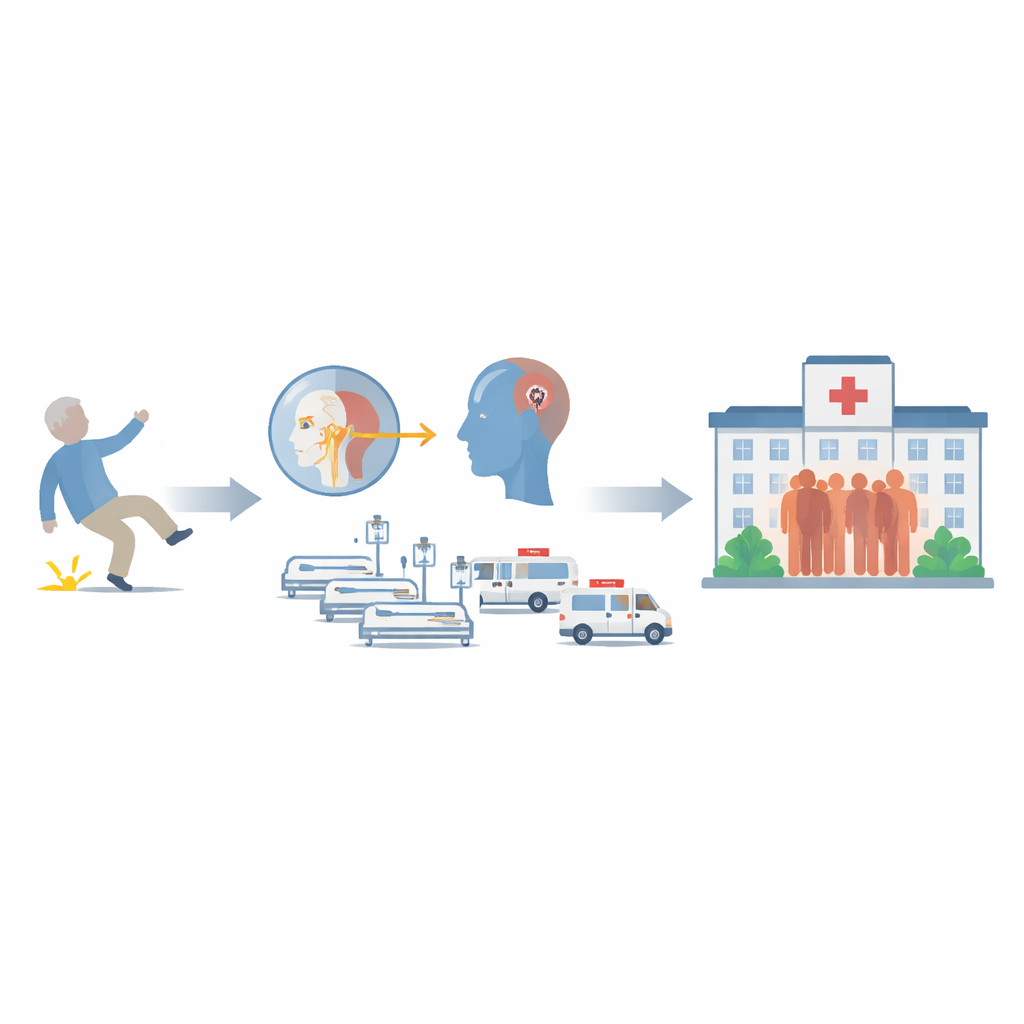
Three out of four fall-related deaths in this study occurred in hospital, and that share grew over the five-year period. Older age, recent hospitalisation for an injury, and recent ambulance calls for an injury all made a hospital death more likely. Head injuries were especially important: people whose last admission involved a head injury were more than three times as likely to die in hospital compared with those admitted for non-injury reasons. These patterns likely reflect both the severity of such injuries and how the health system in Latvia is organised, with strict rules for rapid ambulance response and a strong emphasis on hospital care for serious cases. At the same time, the frequent returns to hospital hint at gaps in follow-up, home support, and community-based care after a first serious fall.
What this means for preventing tragic endings
For families and policymakers alike, the message is clear: by the time a fatal fall occurs, many warning signs have often appeared in the form of earlier injuries, ambulance calls, and hospital stays. The authors argue that better-connected care—linking hospitals, primary care doctors, social services, and community support—could help break this cycle. Identifying frail older adults who have already fallen, monitoring their strength, balance, thinking, and medicines, and offering practical help at home could all reduce the chances of another, more serious fall. In essence, the study shows that fall-related deaths are not sudden, isolated events but the end point of a long, visible path of risk. Intervening earlier on that path may save lives and reduce the heavy burden on emergency and hospital services.
Citation: Bukova-Žideļūna, A., Strukčinskienė, B. & Villeruša, A. Fall-related deaths and acute healthcare utilisation in the last year of life among older adults in Latvia. Sci Rep 16, 9303 (2026). https://doi.org/10.1038/s41598-026-40328-6
Keywords: older adults, falls, emergency care, hospitalisation, Latvia