Clear Sky Science · en
A step-up DC-DC converter with high voltage gain and soft switched capability and minimum phase characteristic
Why boosting low voltages matters
From rooftop solar panels to electric cars and tiny electronics, many modern systems start with a low, often fluctuating DC voltage that must be raised cleanly and efficiently to a much higher level. Doing this with today’s step-up “boost” converters is trickier than it sounds: when the voltage is pushed very high, the circuit can become hard to control, waste power as heat, and respond sluggishly to changes. This paper introduces a new way to build a step-up DC–DC converter that delivers large voltage increases with high efficiency while also behaving in a more predictable, easy‑to‑control manner.
Turning small into big without the usual headaches
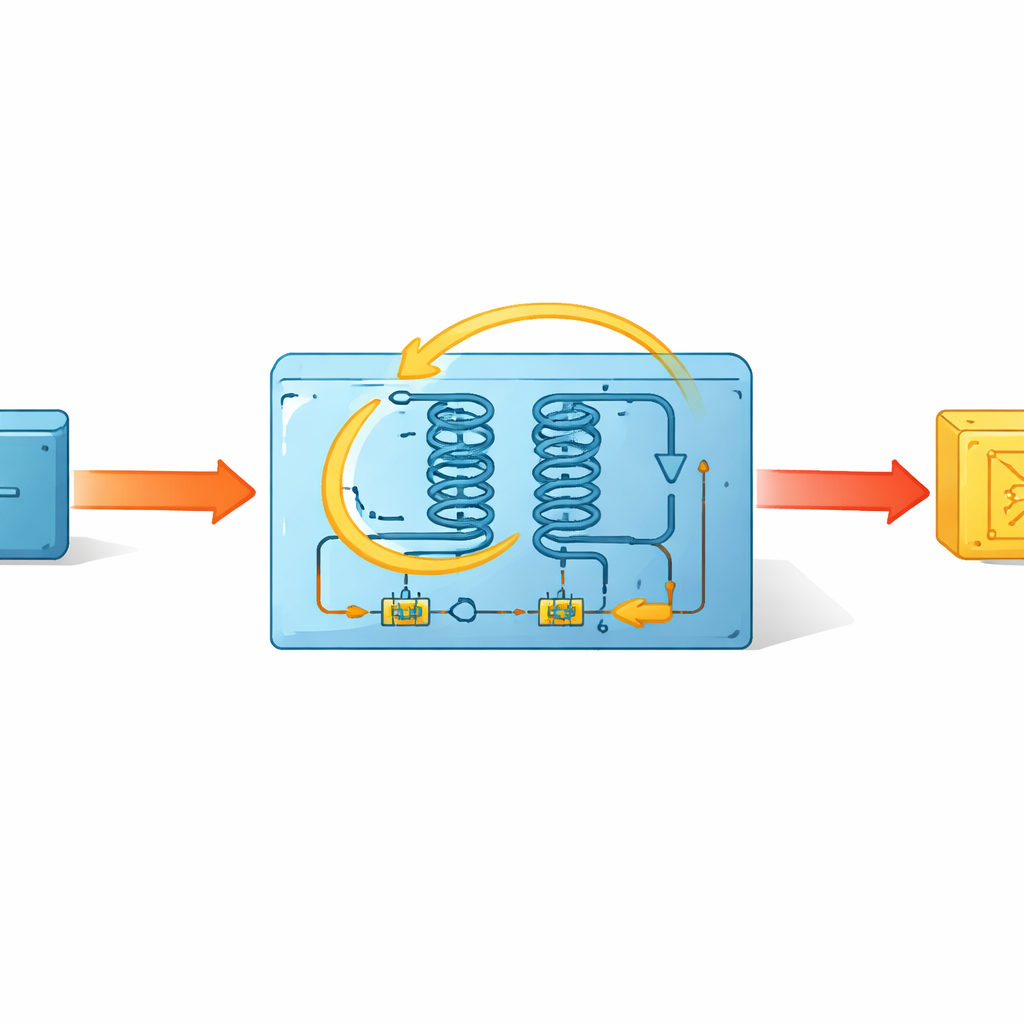
Conventional boost converters are workhorses of power electronics, but at high gain they suffer from an awkward quirk in their dynamics known as a non‑minimum‑phase response. In everyday terms, when you ask the output voltage to go up, it briefly dips in the wrong direction before recovering, which slows down control and can destabilize sensitive systems. To overcome this, the authors design a new converter topology that combines several ideas: magnetic components whose windings are deliberately coupled together, an active switched‑inductor network that shapes how current flows, and a forward energy path that sends part of the input energy directly to the output during the switch‑on period. Together, these features allow the converter to raise a 24‑volt input to about 400 volts while avoiding the usual control complications.
Smoother switching for lower losses
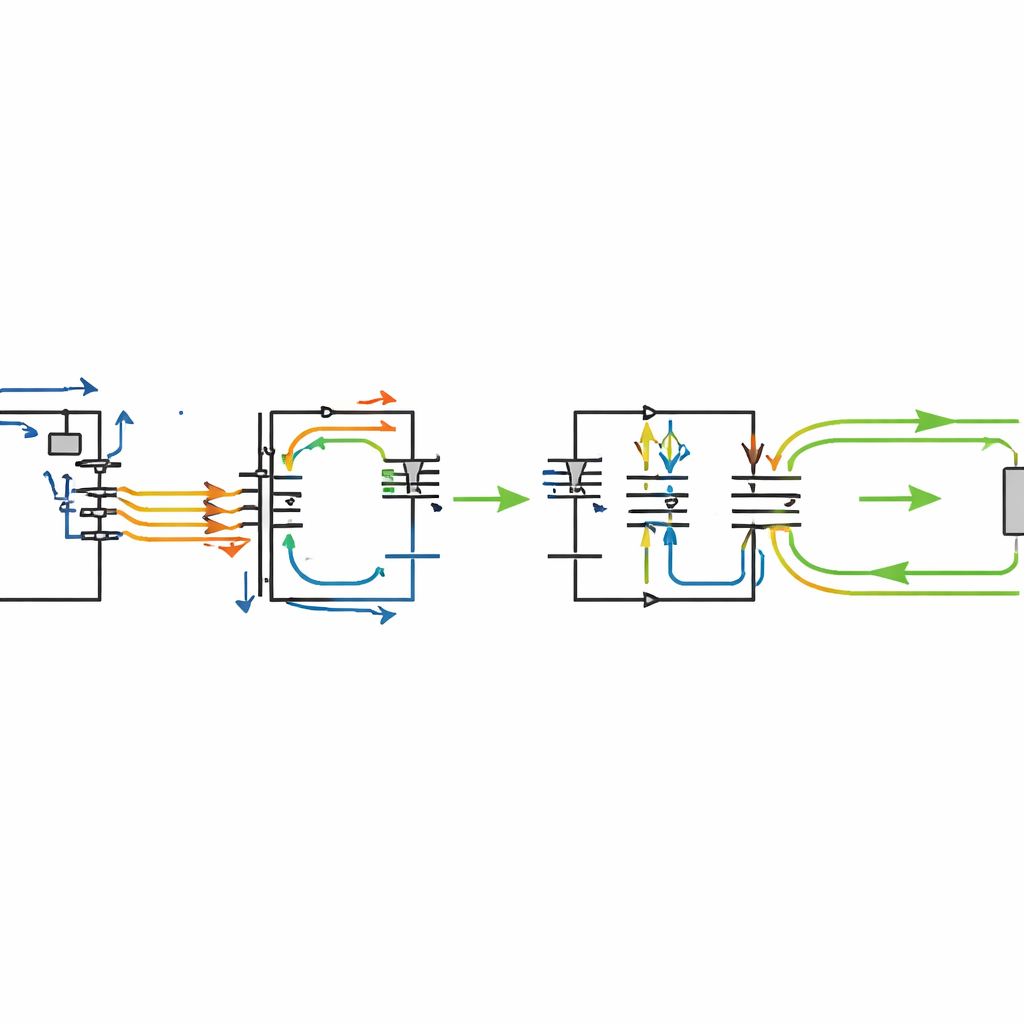
Every time a power transistor or diode turns on or off, it can briefly carry high current and high voltage at the same time, wasting energy as heat and stressing the device. The proposed circuit is arranged so that its two main switches turn on when their current is essentially zero, and its diodes turn off under similarly gentle conditions. This "soft switching" is achieved by carefully choosing the sizes of the magnetic elements and by using a small amount of controlled leakage inductance to slow down current transitions. As a result, switching losses are sharply reduced and the heat generated in each component is spread more evenly, improving thermal behavior and allowing the use of smaller, cheaper parts.
High voltage gain without punishing the hardware
Beyond the qualitative idea, the authors carry out a full steady‑state analysis, calculating how voltages and currents distribute across capacitors, inductors, switches, and diodes. They show that the output voltage can be expressed as a simple function of the duty cycle (how long the switches stay on each cycle) and the turns ratio of the coupled inductor. For reasonable design choices, the converter achieves a very high step‑up ratio at moderate duty cycles, which is useful for battery‑ or panel‑powered systems. Crucially, the voltage across the active switches remains only a small fraction of the output voltage, so the devices experience much less electrical stress than in many rival designs. This not only boosts reliability but also enables higher overall efficiency, measured at about 96.6 percent at full load in laboratory tests.
A calmer, more cooperative response to change
To understand how the converter behaves when conditions change, the authors build a mathematical small‑signal model that captures how the output voltage responds to adjustments in the duty cycle. In familiar systems, undesirable “right‑half‑plane zeros” in this response are what cause the initial wrong‑way voltage dip. Here, by using magnetic coupling and a forward energy path, those problematic features are shifted to the safe side of the complex plane, giving the circuit a minimum‑phase character. In practice, this means the output responds in the expected direction immediately, so designers can use simpler controllers with higher bandwidth. Simulations and experiments confirm that when the load or voltage reference is suddenly stepped, the output voltage overshoots or dips only slightly and settles quickly, while a conventional boost converter shows a pronounced temporary sag.
How this helps future energy systems
Putting all these elements together, the proposed converter offers a rare combination: very high voltage gain, gentle electrical stress on components, and fast, predictable response to changes. For readers outside power electronics, the key message is that the authors have found a way to turn low, variable DC sources into high, stable voltages more cleanly and efficiently than before. Such circuits could make renewable energy interfaces, electric vehicles, and compact power supplies more reliable, smaller, and cooler‑running, helping the electronics inside modern energy systems work closer to their ideal behavior.
Citation: Salehi, S.M., Varjani, A.Y. A step-up DC-DC converter with high voltage gain and soft switched capability and minimum phase characteristic. Sci Rep 16, 9763 (2026). https://doi.org/10.1038/s41598-026-40326-8
Keywords: DC-DC converter, high voltage gain, soft switching, coupled inductor, power electronics control