Clear Sky Science · en
Transcriptomic insights into polyketides and toxin biosynthesis genes in freshwater dinoflagellates
Hidden chemistry in everyday lakes
Most of us think of toxic algal blooms as an ocean problem, but many lakes and reservoirs are home to microscopic drifters called dinoflagellates that may quietly shape freshwater health. This study peeks inside three such freshwater species to look for genetic machinery that can build powerful chemical compounds. By reading which genes are switched on, the authors show that these humble lake dwellers harbor an unexpected toolkit for making complex molecules, some related to notorious marine toxins, with possible implications for water quality, wildlife, and even future medicines.
Tiny lake drifters with big chemical talents
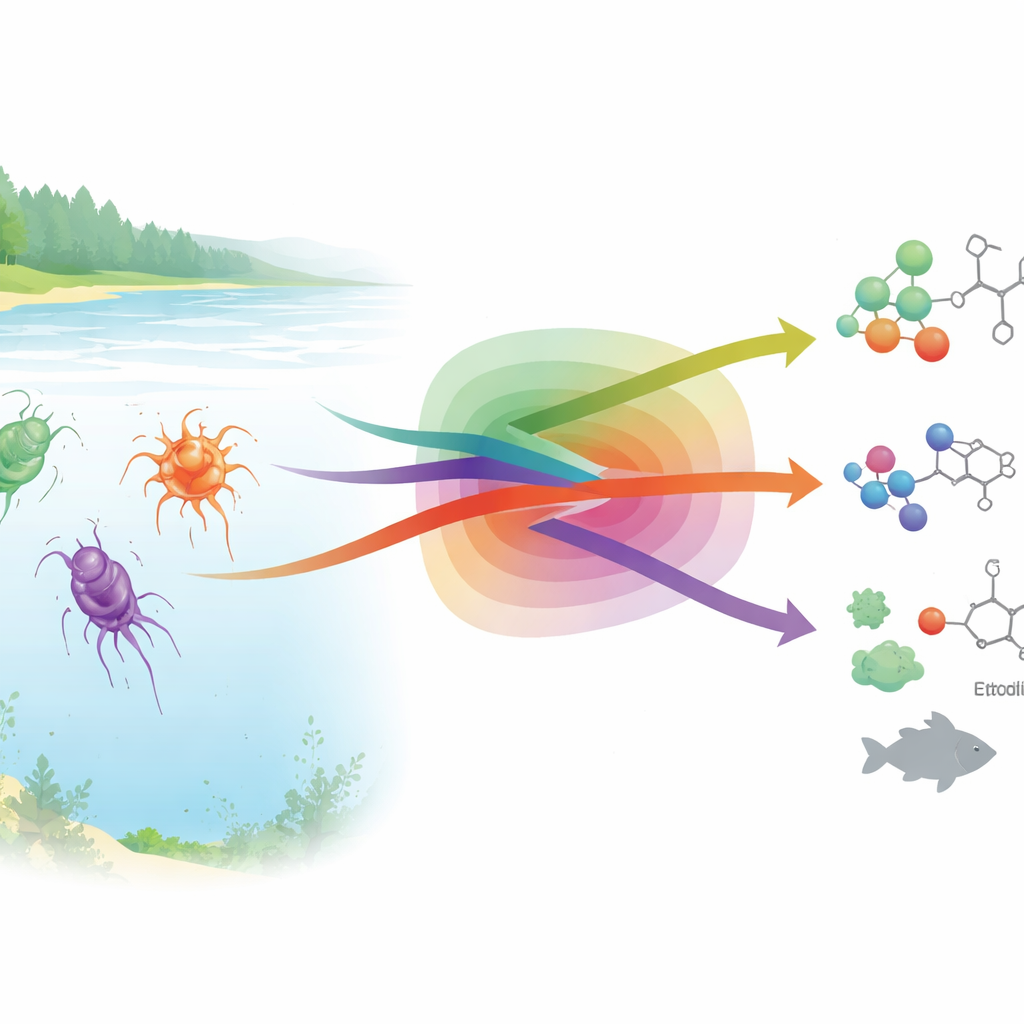
Dinoflagellates are single-celled organisms that help form the base of aquatic food webs. In the sea, some species produce strong toxins that sicken people and animals, but their freshwater relatives have been considered mostly harmless. The researchers focused on three freshwater bloom-forming species—Palatinus apiculatus, Peridinium bipes, and Ceratium furcoides—to see whether they carry genes tied to the same kinds of complex chemicals. They generated a full catalog of active genes in P. apiculatus and re-analyzed existing gene data for the other two species, searching specifically for genetic blueprints of polyketide synthases (PKS), fatty acid synthases (FAS), and saxitoxin-related genes known from marine algae and cyanobacteria.
Gene toolkits for building complex molecules
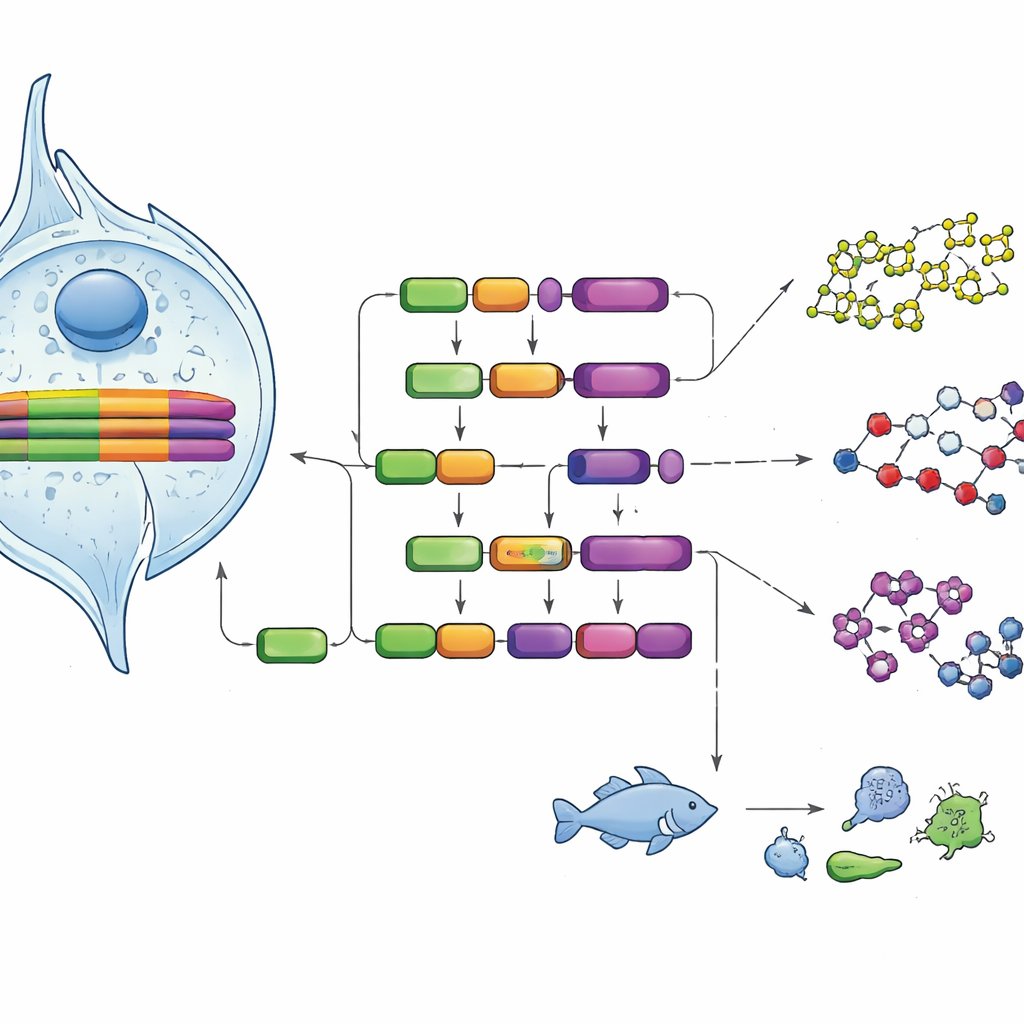
The team uncovered dozens of PKS-related gene fragments in each species, including simple single-part enzymes, larger multi-part “assembly line” versions, and hybrids that mix PKS with another major chemical-building system. PKS enzymes are famous for constructing elaborate molecules that can become either powerful drugs or potent poisons. The freshwater dinoflagellates also carried a full suite of type II FAS genes, which are responsible for making fatty acids that form cell membranes and energy stores. When the authors compared key regions of these enzymes across many organisms, they found that freshwater dinoflagellate FAS genes looked distinct from those of plants and bacteria but shared strongly conserved active sites, suggesting they work in much the same way despite their evolutionary distance.
A freshwater spin on toxin-related genes
One of the most striking findings concerns saxitoxin, the nerve poison behind paralytic shellfish poisoning in the sea. The classic saxitoxin pathway relies on a core set of genes, including several segments of a master starter gene called sxtA. The researchers could not find the full core saxitoxin gene set in any of the freshwater species, which matches the fact that these dinoflagellates are not known to produce the toxin. However, they did detect multiple genes associated with parts of the pathway, including the sxtA4 segment in two species and several accessory genes involved in tailoring and transport. When they built evolutionary trees of the sxtA4 segment, freshwater sequences clustered in their own branch, clearly separated from toxic marine algae and saxitoxin-producing cyanobacteria, yet they preserved the same critical active and binding sites. This pattern hints that these genes may have been repurposed for other, still-unknown chemical roles.
Unique genetic fingerprints in lake species
Looking more closely at the PKS machinery, the authors found that ketosynthase (KS) domains—key working parts of PKS enzymes—fall into several distinct families across life. Freshwater dinoflagellate sequences formed their own new KS branch that has not been seen in marine species, while other KS versions from the same lake species mingled with known marine lineages. This mix of shared and freshwater-only variants suggests that these organisms have both inherited and independently reworked their chemical toolkits as they adapted to lakes and reservoirs. The arrangement of multi-part PKS systems also differed: freshwater species generally showed shorter module chains than highly toxic marine relatives, possibly reflecting simpler products or incomplete capture of very long genes, but still revealing a surprising variety of potential chemical outputs.
Why these findings matter beyond the lab
Taken together, the results show that freshwater dinoflagellates are far from chemically simple. They carry rich sets of PKS, FAS, and toxin-related genes, including a previously unrecognized freshwater-only family of KS domains and saxitoxin-linked genes with conserved “active hardware” but likely altered functions. While these lake species do not appear to make classic marine neurotoxins, their genetic capacity suggests they could produce other bioactive compounds that affect competitors, predators, and perhaps drinking-water safety. At the same time, this hidden chemistry may offer a new source of unusual molecules for biotechnology and drug discovery. The work turns what were once thought to be quiet lake algae into intriguing players in both ecosystem dynamics and the search for useful natural products.
Citation: Muhammad, B.L., Bui, Q.T.N., Kim, HS. et al. Transcriptomic insights into polyketides and toxin biosynthesis genes in freshwater dinoflagellates. Sci Rep 16, 9472 (2026). https://doi.org/10.1038/s41598-026-40315-x
Keywords: freshwater dinoflagellates, polyketide synthase, saxitoxin genes, algal blooms, aquatic toxins