Clear Sky Science · en
Explainable machine learning for risk prediction of acute cardiac tamponade during atrial fibrillation ablation
Why this heart procedure needs a smarter safety net
Atrial fibrillation, a common heart rhythm problem, is often treated with a procedure called catheter ablation that can greatly improve patients’ lives. Yet in rare cases, this treatment can trigger a dangerous complication called cardiac tamponade, in which fluid rapidly builds up around the heart and can be life‑threatening. Because this event is both uncommon and sudden, doctors have struggled to identify which patients are most at risk. This study describes how researchers used explainable machine learning to build a risk prediction tool that could warn clinicians before the procedure and help them tailor care to keep patients safer.
A rare but serious danger during heart rhythm repair
Catheter ablation for atrial fibrillation involves threading thin wires through blood vessels into the heart and applying energy to reset faulty electrical circuits. The technique is widely recommended and used across the world, but it is done without direct sight of the heart wall. In a small fraction of cases, the catheter can perforate the heart muscle, causing blood to leak into the surrounding sac. This sudden pressure on the heart—cardiac tamponade—can lead to collapse and even death if not treated immediately. Although it occurs in less than 1% of procedures, the growing number of ablations worldwide means more patients face this risk, and those who develop tamponade often need emergency drainage, surgery, longer hospital stays, and face higher chances of dying.
Turning hospital data into a predictive safety tool
To tackle this problem, the research team drew on 10 years of real‑world data from a large hospital in Nanjing, China. They studied 13,215 people who underwent atrial fibrillation ablation between 2015 and 2024 and focused on 91 who developed tamponade, comparing them with 1,390 similar patients who did not. For each person, they collected 37 pieces of information covering age, existing illnesses, blood‑thinning drugs, blood tests, heart scan measurements, and details of how the procedure was done, including the operator’s experience. Statistical methods were used to narrow this list down to 17 of the most informative features, helping to avoid models that fit the past data too closely but fail on new patients. 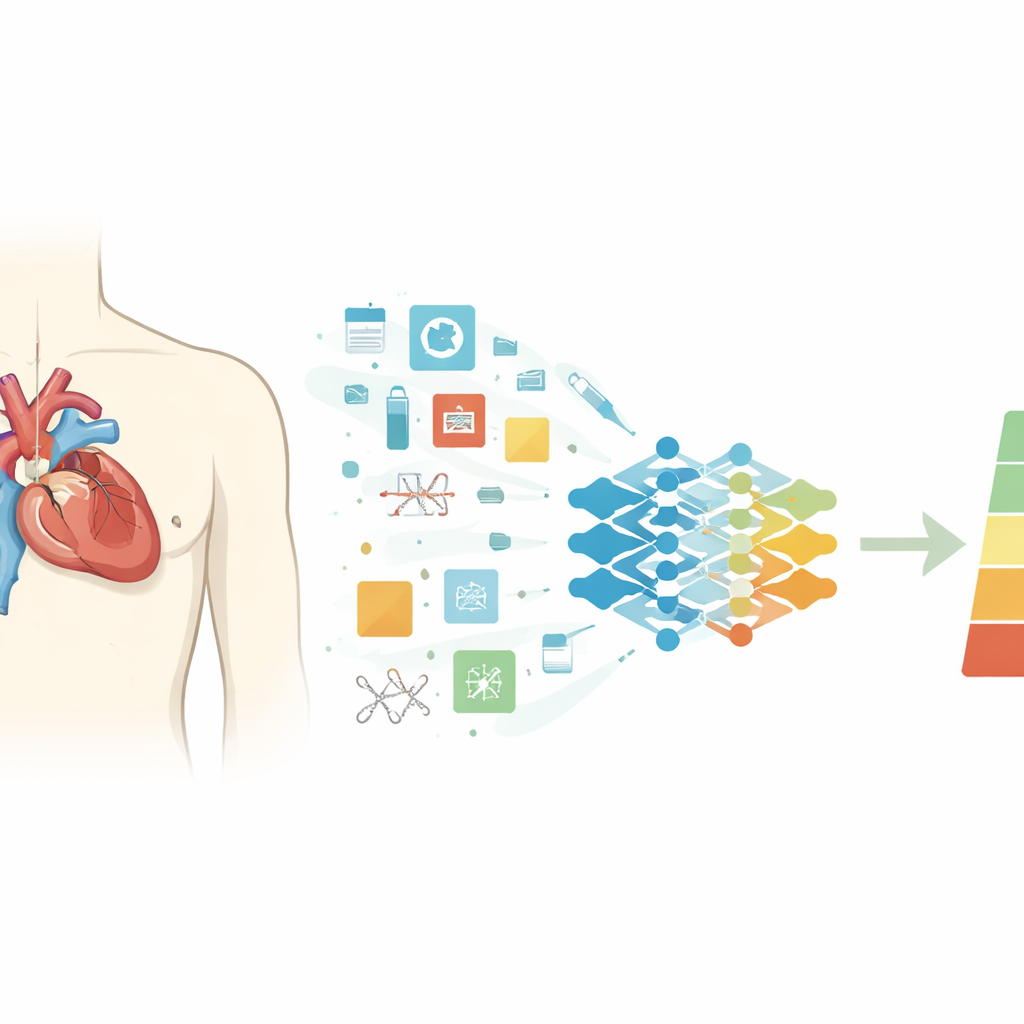
Testing different learning machines against each other
The investigators then trained eight different machine learning models, such as random forests, support vector machines, and a powerful technique known as XGBoost. They used a rigorous cross‑validation strategy, repeatedly splitting the data into training and testing sets to check how well each model could distinguish between patients who did and did not go on to develop tamponade. Several models performed strongly, but XGBoost offered the best balance of accuracy, reliability of probability estimates, and potential clinical usefulness. In internal testing, it correctly separated high‑ and low‑risk patients with an area under the curve of 0.908, a level considered excellent for prediction tools in medicine.
Opening the black box of prediction
Because doctors need to understand why a model makes a particular call before trusting it, the team applied a technique called SHAP, which breaks down each prediction into contributions from individual factors. This revealed five major predictors that shaped the model’s decisions: the operator’s years of experience, the blood marker D‑dimer, the total amount of heparin (a blood thinner) given during the procedure, the type of atrial fibrillation (persistent versus intermittent), and the size of the left upper heart chamber. Less‑experienced operators, higher D‑dimer levels, certain patterns of atrial fibrillation, smaller left atria, and particular heparin dosing patterns all pushed the model toward a higher risk estimate, while the opposite patterns tended to be protective. Importantly, most of these factors can be assessed before the procedure, giving the care team time to adjust their plans. 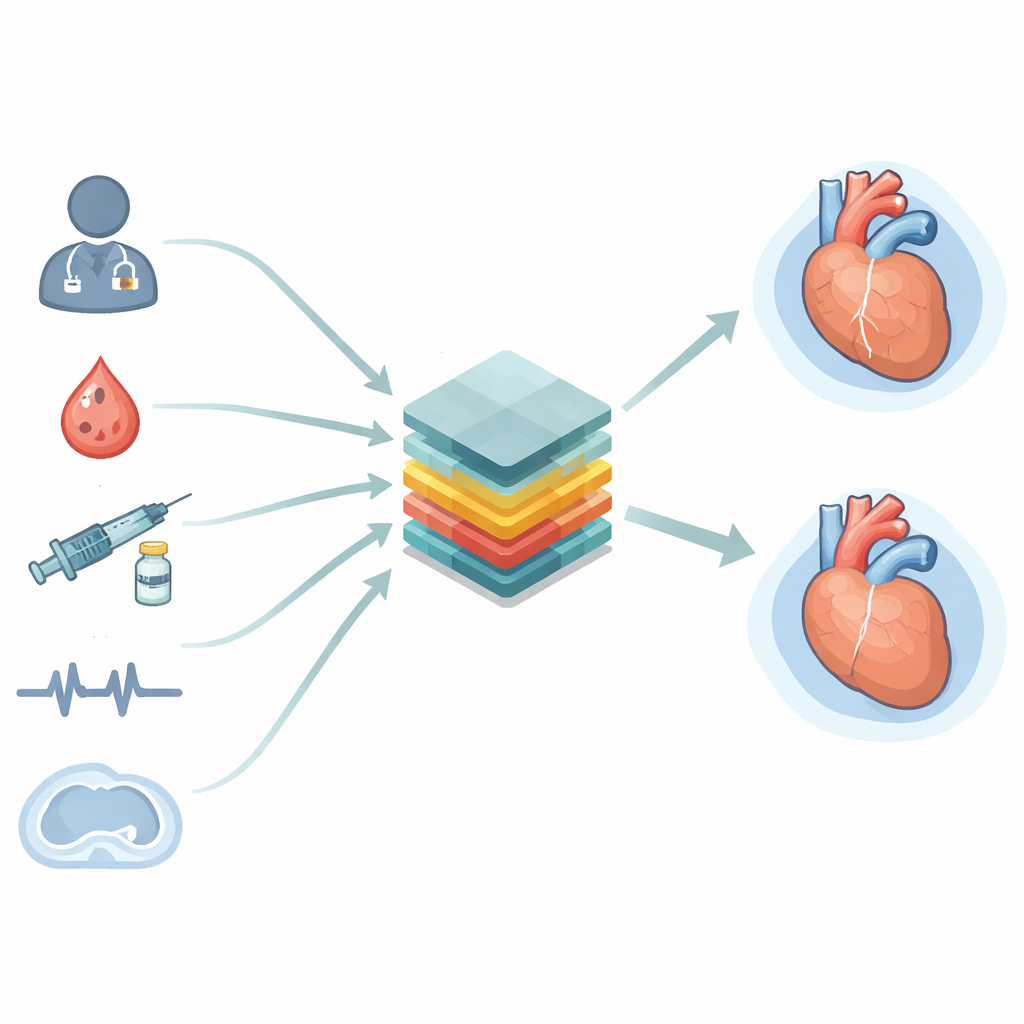
What this could mean for patients and doctors
In plain terms, this work shows that computers can learn from thousands of past ablation cases to flag which future patients are more likely to develop a dangerous fluid build‑up around the heart. The model does not replace medical judgment, but it can support it by combining many subtle clues—from blood tests to operator experience—into a single, easy‑to‑use risk estimate. High‑risk patients might be scheduled with more seasoned operators, monitored more closely, or managed with more personalized blood‑thinning strategies. While the tool still needs to be tested in other hospitals and with more patients before it can be widely adopted, it offers a promising step toward making a common heart procedure safer through transparent, data‑driven prediction.
Citation: Zhou, L., Zhao, Y., Song, W. et al. Explainable machine learning for risk prediction of acute cardiac tamponade during atrial fibrillation ablation. Sci Rep 16, 9476 (2026). https://doi.org/10.1038/s41598-026-40302-2
Keywords: atrial fibrillation ablation, cardiac tamponade, machine learning, risk prediction, patient safety