Clear Sky Science · en
A lethal incident during an intergroup encounter in bonobos
A rare and troubling moment among “peaceful” apes
Bonobos are often portrayed as the gentle cousins of chimpanzees, known more for cooperation than conflict. This study describes a striking exception: a lethal incident that unfolded when two neighboring bonobo communities met in the forests of the Democratic Republic of Congo. By following the individuals involved hour by hour, the researchers reveal how an apparently routine gathering for food turned into coalitionary aggression, the loss of a tiny infant, and an unusual case of adoption and corpse-carrying by an unrelated female. The episode forces scientists to revisit simple stories about peaceful bonobos and hostile chimpanzees, and to think more deeply about how empathy and aggression can coexist in our closest living relatives. 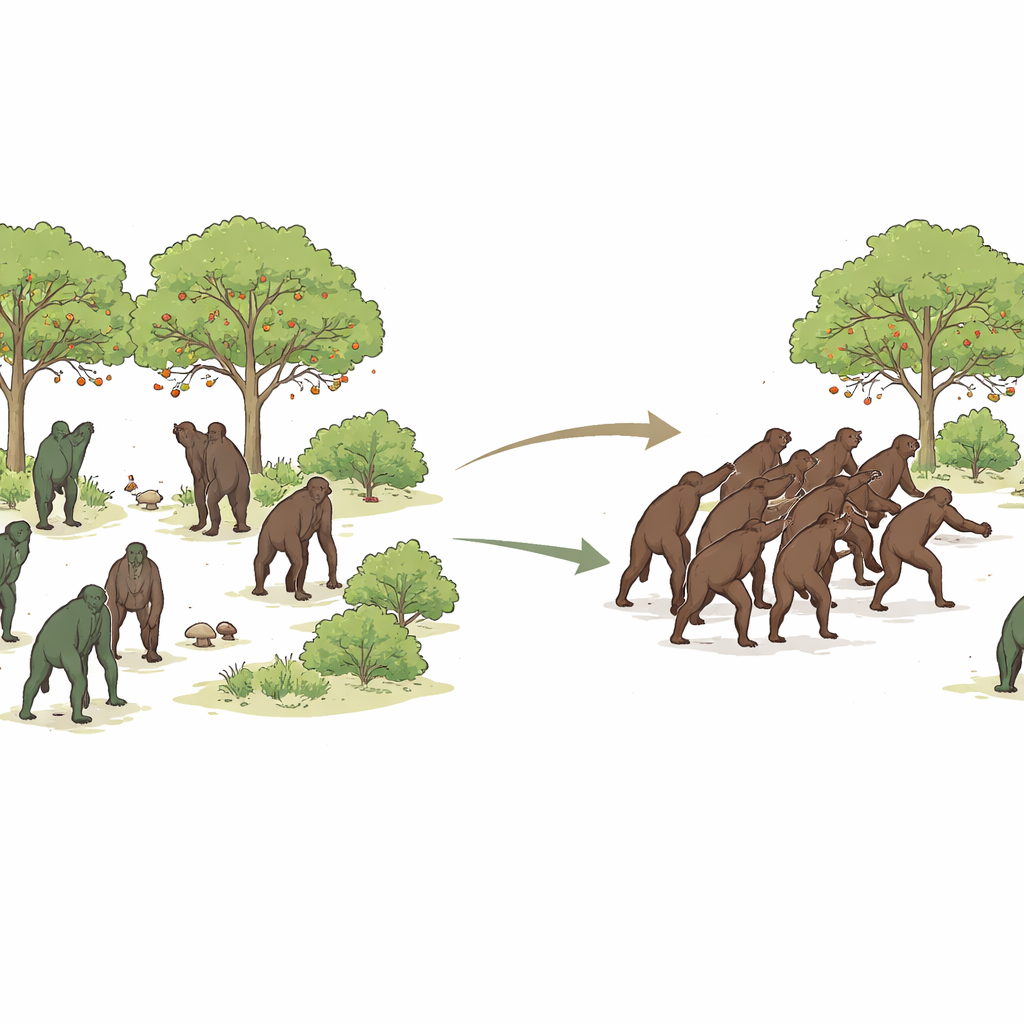
When friendly neighbors turn into attackers
The events took place at the Kokolopori Bonobo Reserve, where two well-studied communities, Ekalakala and Kokoalongo, often forage side by side. On August 6, 2024, individuals from both groups were feeding at a fruiting vine, a valuable seasonal food source. At first, this looked like many other encounters in which bonobos from different communities travel together and even share food. But just before 11 a.m., observers heard and then partly saw a coordinated attack in the trees: one male and four high-ranking females from Kokoalongo chased and assaulted Rose, an adult female from the neighboring Ekalakala group. After the attack, Rose disappeared from view and later reappeared without her 52‑day‑old daughter, Rouille, who had been with her earlier that morning.
A vulnerable infant passed from hand to hand
Minutes after the aggression against Rose, observers saw a young Kokoalongo juvenile named Curtis carrying Rouille. At that time, the tiny infant clung normally and showed no clear signs of distress. Soon Curtis’s adolescent brother, Cobain, took the infant and began handling her roughly—carrying her upside down, dropping her from several meters, dragging her along the ground, and swinging her by an arm. Rouille screamed during some of these episodes, but there was no clear, targeted attempt to kill her, and later examination revealed only a small wound to her hand. Throughout the day, members of both communities continued to mingle in the same general area, and Rose and the Kokoalongo carriers were occasionally recorded in the same party. Yet Rose never tried to retrieve her infant, even when Rouille was vocalizing nearby, a striking contrast to typical motherly responses in bonobos.
Adoption across community lines and care after death
By early afternoon, Curtis and Cobain’s mother, Chapman, a high-ranking Kokoalongo female, had taken over carrying Rouille. Chapman supported the infant carefully against her body on the ground and in the trees, using her arms and thighs in a way that resembled normal maternal care. She continued to carry Rouille through the night as both communities nested near one another. The next day, Chapman still held the infant close, even gently moving Rouille’s head as if encouraging nursing, though Chapman likely could not provide milk. As the hours passed, Rouille became limp and stopped moving; by mid-afternoon, observers confirmed that she had died. Even then, Chapman did not abandon the body. For two more days she transported the small corpse, held it to her chest or in her lap while resting and feeding, and tolerated inspection and licking of the body by other community members, including her own juvenile daughter.
Why this case does not fit neat labels
Scientists compared this episode to better-known patterns of infanticide, kidnapping, and adoption in other primates. In many species, including chimpanzees, killing infants can bring reproductive advantages, especially to males, and often involves direct, deliberate attacks on babies. Here, however, the coalition targeted the mother, not the infant; the first carriers were juveniles; and the adult adopter behaved in a caring, protective way rather than as a killer or cannibal. The authors argue that this case does not neatly match classic infanticide or simple kidnapping. Instead, it looks more like an out-group adoption that followed a violent separation of mother and infant, with the infant’s death likely resulting from rough handling and the challenges of survival away from its mother, rather than from an intentional killing.
What this tells us about bonobo minds and human roots
This single, tragic case has broad implications. It shows that even in a species famous for tolerance, intergroup encounters can involve intense, coalition-based aggression with fatal outcomes, especially when competition over rich food sources is high. At the same time, an unrelated adult female rapidly extended maternal-style care to a foreign infant and then to its corpse, echoing how biological mothers in many primate species continue to hold and transport their dead young. These intertwined themes of group-based hostility, cross-group adoption, and prolonged care after death suggest that bonobo social life, like our own, cannot be captured by simple labels such as “peaceful” or “violent.” Instead, their behavior reflects a flexible mix of attachment, curiosity, fear, and in-group bias—factors that likely also shaped the deep evolutionary roots of human intergroup relations. 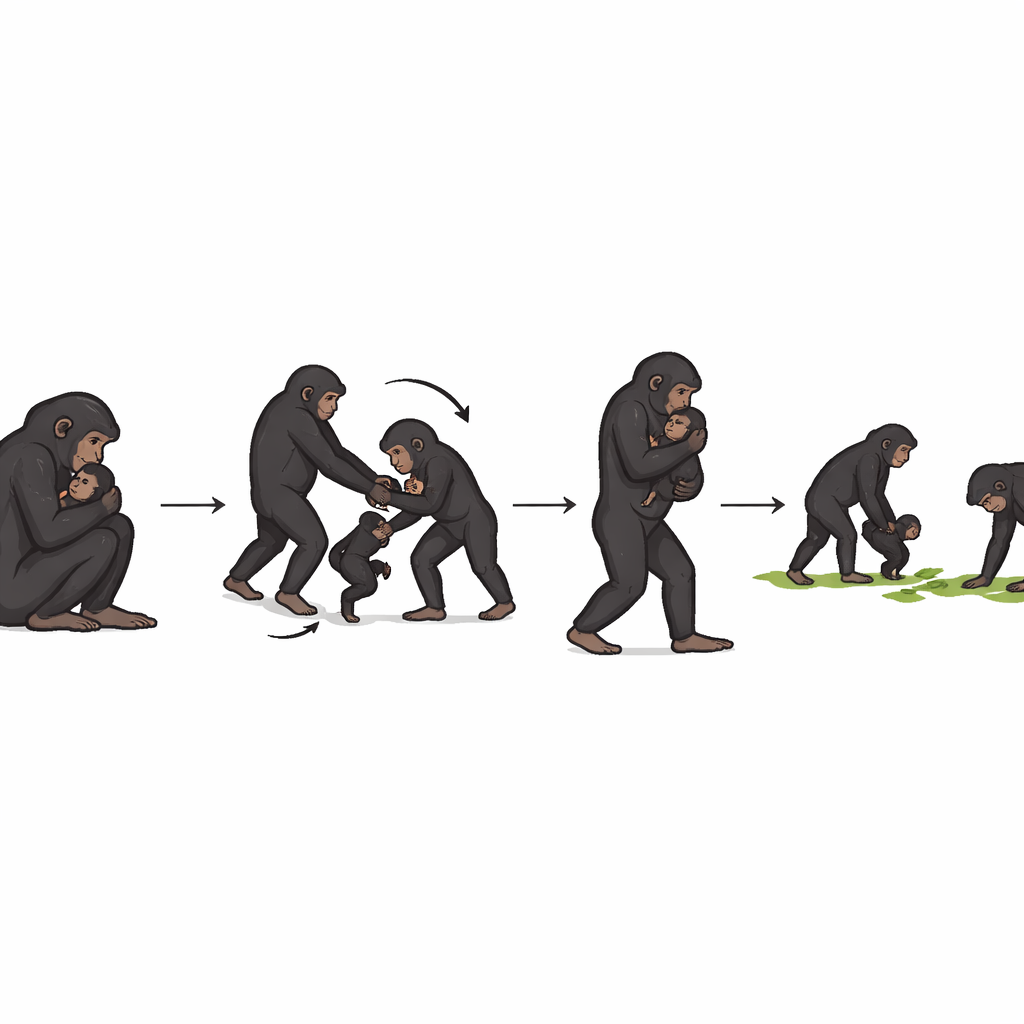
Citation: Gareta García, M., Fornof, L.J., Sabbi, K.H. et al. A lethal incident during an intergroup encounter in bonobos. Sci Rep 16, 9550 (2026). https://doi.org/10.1038/s41598-026-40297-w
Keywords: bonobos, intergroup aggression, infant adoption, primate behavior, evolution of conflict