Clear Sky Science · en
A randomized controlled study on the clinical application of ‘Flying Needle’ painless phlebotomy technology
A gentler way to get your blood drawn
For many people, a routine blood test is anything but routine: the sight of a needle and the sting of the puncture can trigger real fear and even fainting. This study describes a new blood-drawing technique called the “Flying Needle,” designed to make venipuncture faster and less painful while still providing high‑quality samples for medical tests. By comparing this method with standard blood draws in hundreds of patients, the researchers asked a simple question that matters to anyone who has ever dreaded a blood test: can we draw blood with less pain and worry, without sacrificing safety or accuracy?
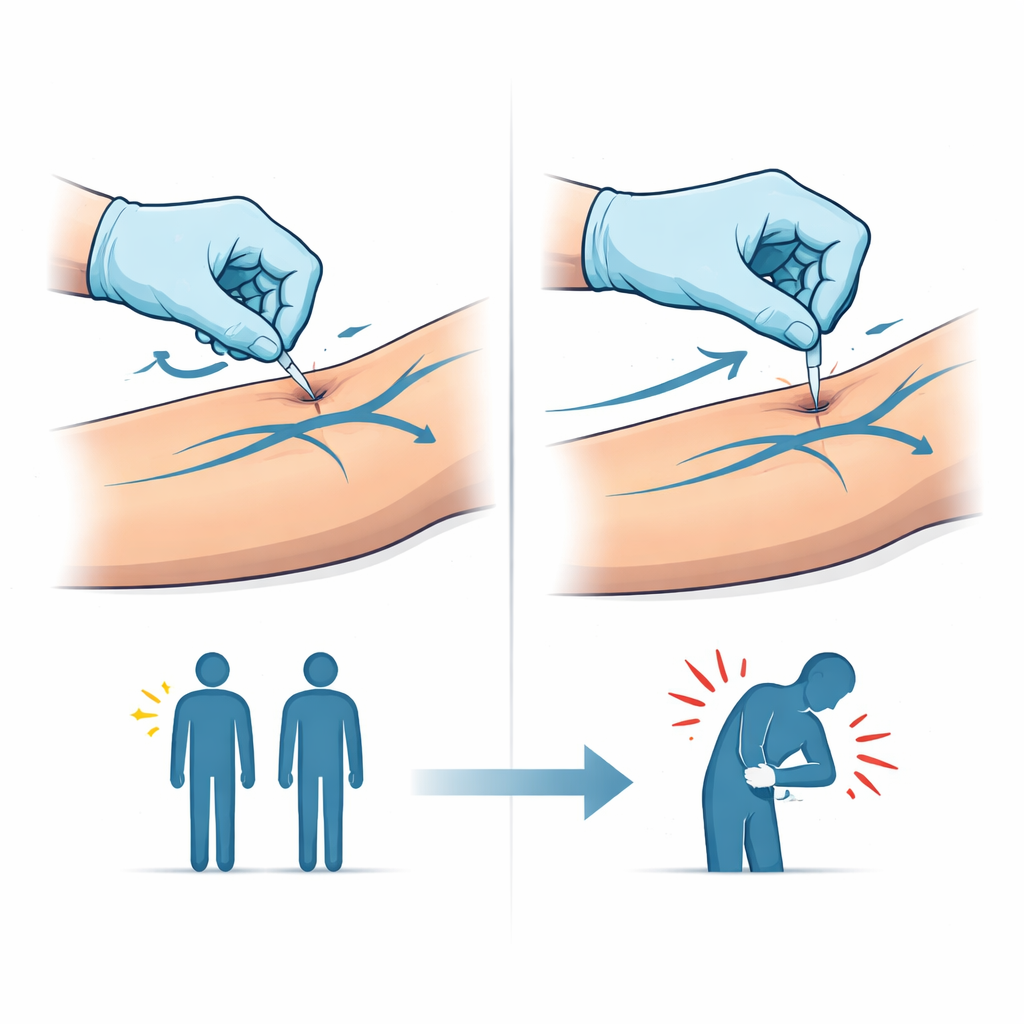
Why blood draws matter to everyday health
Blood tests underpin modern medicine, guiding diagnoses, treatment choices, and follow‑up care. To run these tests, clinicians must puncture a vein in the arm and collect several tubes of blood. While the procedure is quick, many patients experience significant pain, anxiety, or needle phobia. These reactions can lead to fainting, resistance to care, or delays in important testing. Standard practice focuses strongly on getting the sample right—using the right tubes, tourniquets, and order of draw—but pays less attention to how the experience feels to the patient. The Flying Needle approach emerged from a busy hospital laboratory that wanted to maintain technical quality while improving comfort and cooperation during blood collection.
What makes the “Flying Needle” different
The Flying Needle technique builds on ordinary venipuncture but changes how the needle actually enters the vein. Instead of slowly pushing the needle through the skin, a trained technician holds a butterfly needle by its small plastic “wings” and flicks it into the vein in a single, very rapid motion. High‑speed video showed that this puncture takes roughly hundredths of a second, far faster than the nearly full second typically seen with a standard approach. Because the needle passes through the pain‑sensing layer of skin so quickly, it stimulates nerve endings less and shortens the time a tourniquet must be applied, which may also help keep certain blood test results more accurate. Mastering the method requires special training and practice, and in this study only staff who had passed a structured training program used the technique.
How the study tested the new approach
To rigorously evaluate the Flying Needle, the team conducted a randomized controlled trial with 600 adult and adolescent outpatients who needed routine blood tests. Each person was randomly assigned to either the Flying Needle group or a standard blood‑draw group, and the same type of needles and tubes were used in both. After their blood was taken, patients rated how much pain they felt during the puncture and how fearful they felt before and after. Trained assessors also noted any problems such as bruising, hematoma, or fainting, and checked the blood samples for hemolysis, a form of red‑cell damage that can distort lab results. The success of getting blood on the first attempt and overall satisfaction with the experience were also recorded.
What the researchers found in patients’ experience
Patients who received the Flying Needle reported clearly lower pain scores than those who had a standard blood draw, even though both groups had almost identical success rates on the first attempt. Fear levels before the procedure were similar across groups, but after the draw, people in the Flying Needle group felt less fear than those in the control group—and less fear than they themselves had reported beforehand. Adverse reactions such as bruising and other local problems were also milder in the Flying Needle group. Importantly, the rate of hemolysis in blood samples and the percentage of successful first sticks were comparable between the two techniques, indicating that the gains in comfort did not come at the cost of sample quality or reliability. Overall satisfaction was strikingly higher among patients who experienced the Flying Needle approach.
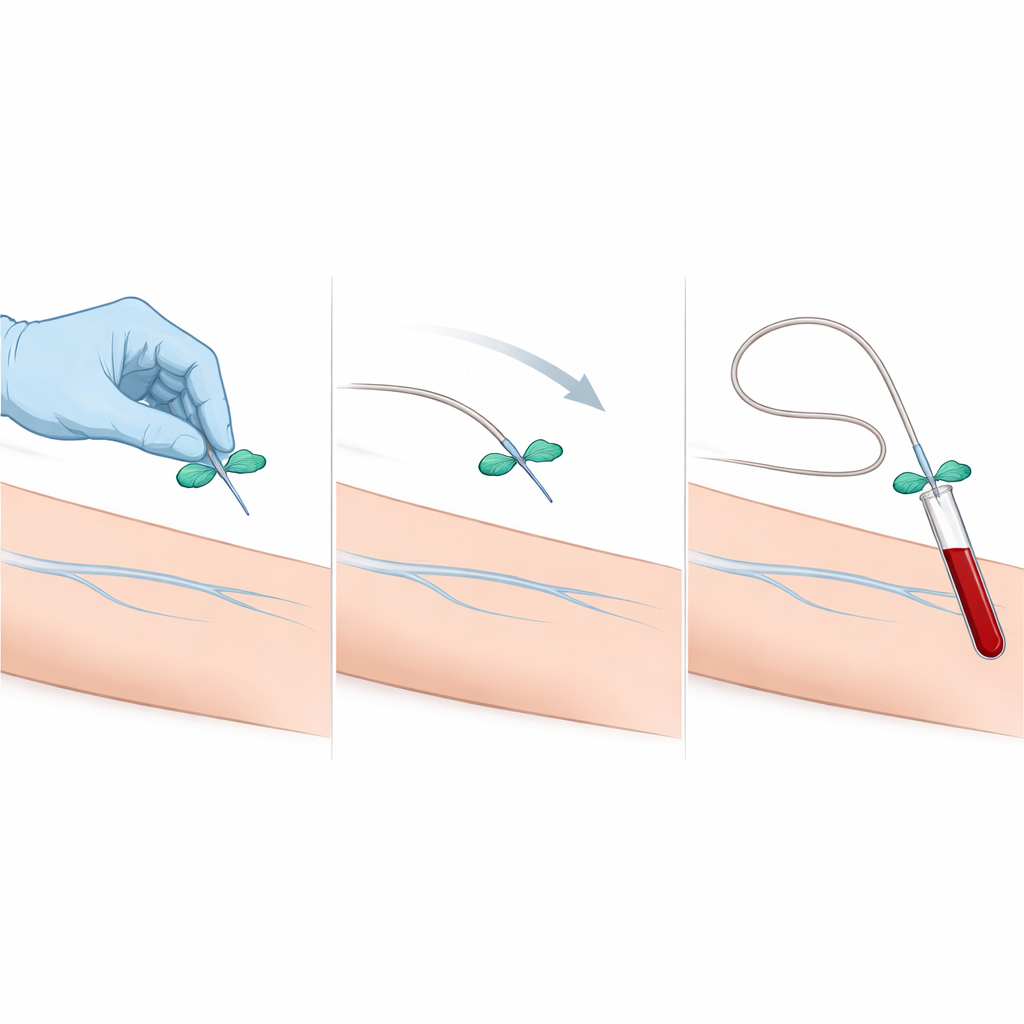
What this could mean for everyday care
To a layperson, the bottom line is straightforward: when performed by trained staff, the Flying Needle technique appears to make blood draws noticeably less painful and less frightening, while still producing blood samples that work just as well for laboratory testing. Patients are more satisfied, yet the chance of needing a second needle stick or getting a poor‑quality sample does not increase. Although the study was done in a single hospital and only looked at short‑term outcomes, the results suggest that with proper training this rapid‑entry method could be especially valuable for children, older adults, and anyone who fears needles. If adopted more widely, it could turn an experience many people dread into one that is quicker, gentler, and easier to accept.
Citation: Zhang, R., Lin, Y., Chen, S. et al. A randomized controlled study on the clinical application of ‘Flying Needle’ painless phlebotomy technology. Sci Rep 16, 10042 (2026). https://doi.org/10.1038/s41598-026-40294-z
Keywords: painless blood draw, venipuncture, needle fear, patient comfort, Flying Needle technique