Clear Sky Science · en
Hydrodistillation, comparative analysis and optimization of essential oils from Thymus schimperi R, Thymus serrulatus R, and Ocimum lamiifolium Hochst ex Benth
Why these fragrant plants matter
From kitchen herbs to aromatherapy diffusers, essential oils are part of everyday life. But behind each tiny bottle lies a surprisingly complex question: how do we get the most useful oil from plants in a reliable, efficient way? This study looks at three medicinal herbs widely used in Ethiopia and explores how simple choices in the extraction process—how finely the leaves are ground and how long they are boiled in water—can dramatically change how much essential oil we obtain. The findings could help make natural, plant-based antimicrobials more accessible in a world that urgently needs new tools against drug-resistant infections.
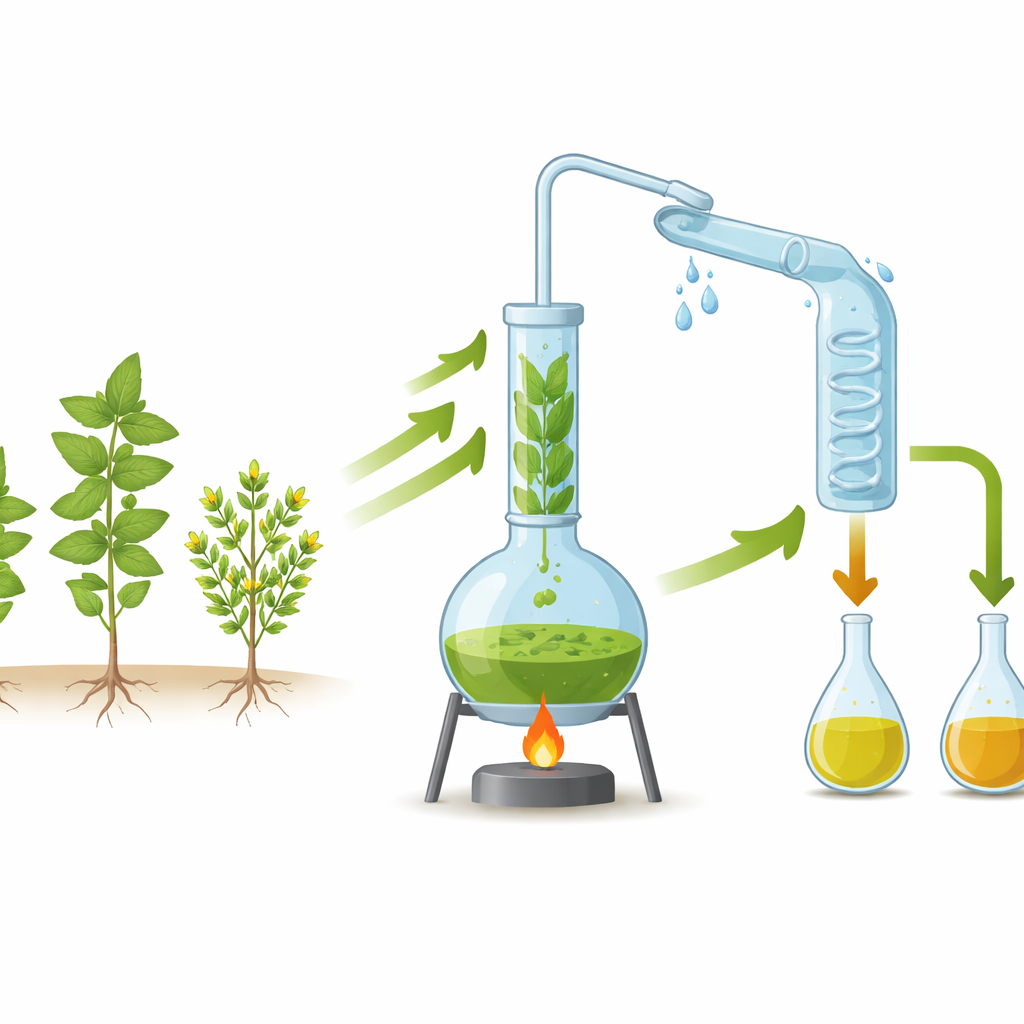
Healing scents from traditional herbs
The researchers focused on three aromatic plants in the mint family: two thyme species (Thymus schimperi and Thymus serrulatus) that grow only in Ethiopia, and Ocimum lamiifolium, a basil-like herb commonly used there to treat stomach, breathing, and inflammatory problems. These plants are known to contain essential oils rich in compounds like thymol and carvacrol, which can fight bacteria, fungi, and biofilms—sticky microbial communities that make infections hard to treat. As antibiotic resistance rises worldwide, such plant-derived oils are attracting attention as potential natural preservatives and supportive treatments.
A simple boiling method under the microscope
To extract the oils, the team used hydrodistillation, a classic method in which dried leaves are boiled in water and the rising vapors are condensed to separate out the oil. This technique is inexpensive, uses only water as a solvent, and works well in modestly equipped laboratories or small-scale production settings. However, it can be wasteful if not carefully tuned: some oil may never leave the plant material, while other portions can be lost or damaged by too much heat. The study set out to fine-tune two controllable settings—leaf particle size and boiling time—while keeping temperature, water volume, and plant amount constant.
Testing leaf size and boiling time
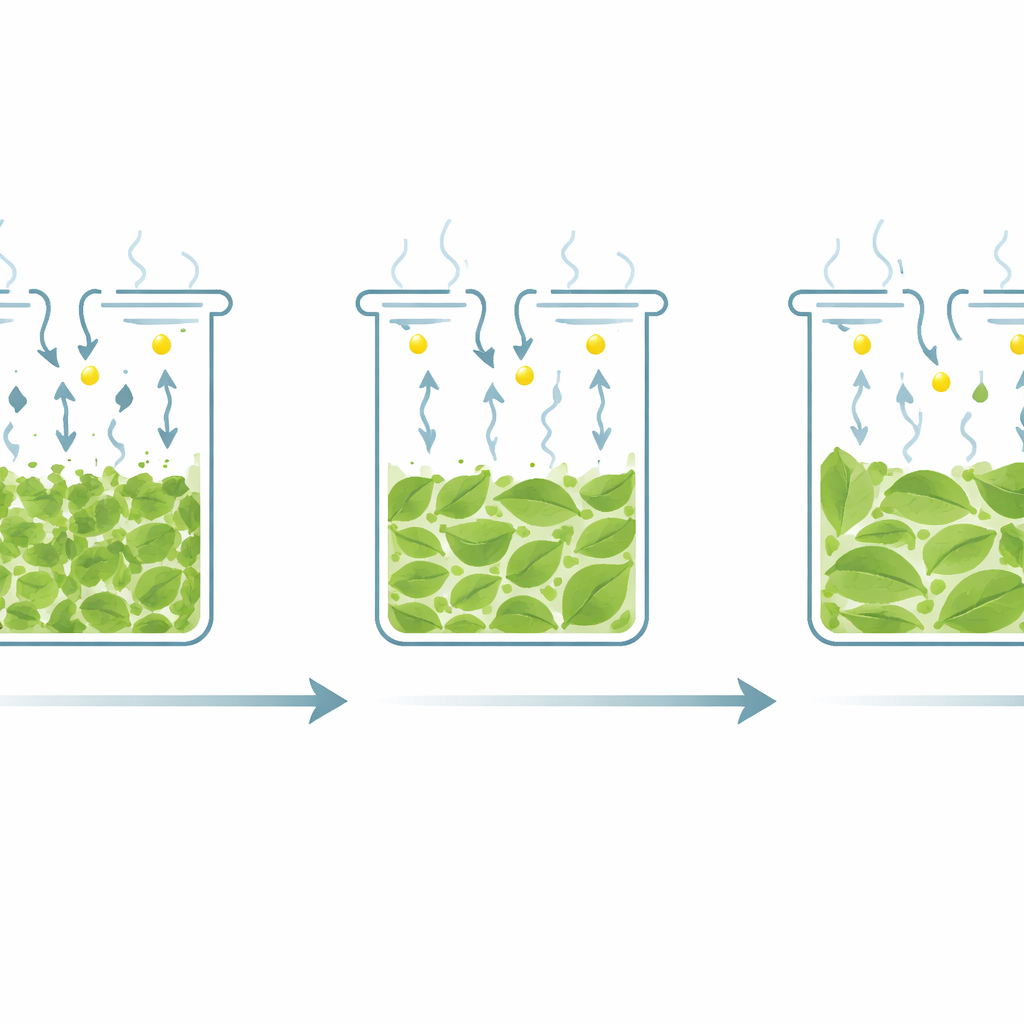
The scientists compared three leaf sizes: very fine particles (about the texture of powder), medium pieces, and coarse fragments. They also tested three boiling times—half an hour, one hour, and two hours—using a standardized setup and repeating each trial three times. To do this efficiently, they applied a statistical framework known as the Taguchi method, which lets researchers explore many combinations of conditions with a limited number of carefully chosen experiments. They then analyzed the data using standard statistical tests to see which factors truly mattered and which changes were just random noise.
What worked best in practice
The clearest message from the results was that leaf size matters a lot. Across all three species, the finest powder produced the lowest oil yields. The researchers suggest that these tiny particles pack together too tightly, blocking the flow of steam and trapping the oil. Medium and coarse pieces allowed steam to move more freely through the plant tissue, helping the oil escape without being overly exposed to heat and air. For Thymus schimperi, this optimization raised the oil yield to about 3% of the leaf weight, noticeably higher than many earlier reports. Time, by contrast, played a weaker role: yields often peaked around 60 minutes of boiling and then leveled off or even declined, probably because some volatile ingredients gradually evaporated or broke down.
What this means for everyday use
The study shows that getting more essential oil is not simply a matter of grinding plants as finely as possible or boiling them for as long as you can. Instead, there is a sweet spot: moderately sized leaf pieces and about an hour of distillation at a steady temperature. Under these conditions, the three Ethiopian herbs produced relatively high amounts of oil in a short period, with less waste of energy and plant material. For communities, small producers, and researchers who rely on these medicinal plants, such practical guidance can support more consistent, scalable extraction of promising natural antimicrobials and preservatives—turning traditional knowledge into better, more reliable herbal products.
Citation: Mebrate, S.B., Alemu, A.F., Tegegne, A.M. et al. Hydrodistillation, comparative analysis and optimization of essential oils from Thymus schimperi R, Thymus serrulatus R, and Ocimum lamiifolium Hochst ex Benth. Sci Rep 16, 9426 (2026). https://doi.org/10.1038/s41598-026-40286-z
Keywords: essential oils, thyme, hydrodistillation, medicinal plants, antimicrobial resistance