Clear Sky Science · en
Genome-wide analysis of conserved and novel miRNAs in mango mesocarp reveals early regulatory networks involved in postharvest heat stress response
Why mango lovers should care
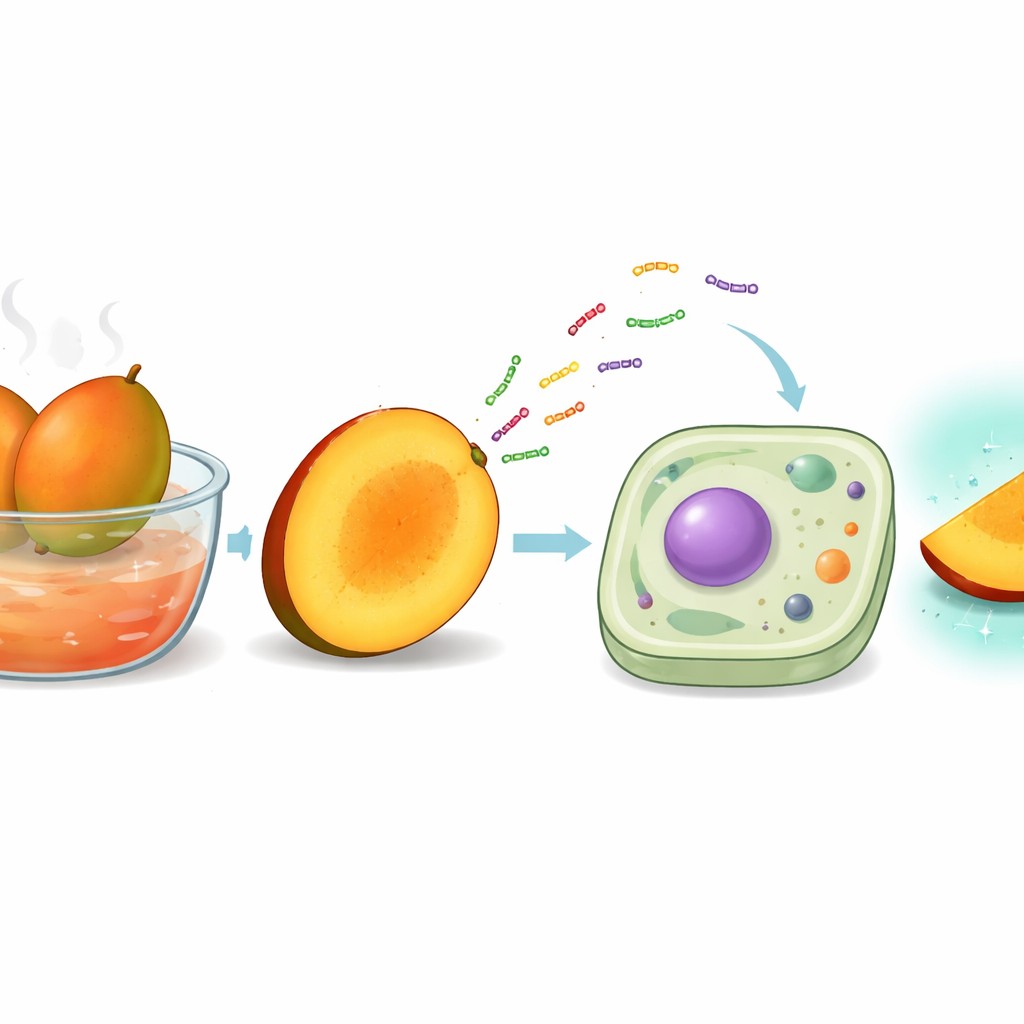
Mangoes that travel long distances often take a hot bath before reaching your fruit bowl. This hot water treatment protects against insect pests, but it also stresses the fruit, sometimes speeding up ripening and shortening shelf life. This study looks inside mango flesh to see how tiny RNA molecules act like emergency managers, switching genes on and off to help the fruit cope with heat. Understanding these hidden signals could lead to gentler treatments, longer-lasting fruit, and better flavor for consumers.
Tiny switches inside mango cells
Plants use very small pieces of RNA, called microRNAs, as molecular switches that fine-tune gene activity. These switches do not build proteins themselves; instead, they stick to specific messages inside the cell and either cut them or block their translation. In this work, researchers examined the soft edible part of mangoes after hot water treatment, tracking which microRNAs appeared and how strongly they were expressed over time. By sequencing millions of small RNA fragments, they cataloged 90 microRNAs belonging to 27 families, including both well-known plant regulators and previously unreported candidates in mango.
A family portrait of mango microRNAs
The team compared mango microRNA sequences with those from model plants like Arabidopsis and tomato. Many belonged to ancient, deeply conserved families that have guided plant development for millions of years. Others showed signs of branching and specialization, likely shaped by past whole-genome duplications in mango. Some microRNAs arose from regions between genes, others from within genes, and a few from long non-coding RNAs, hinting at a layered regulatory network. Despite this diversity, most of their predicted targets turned out to be transcription factors and other master regulators that sit high up in gene-control hierarchies.
How heat reshapes the molecular conversation
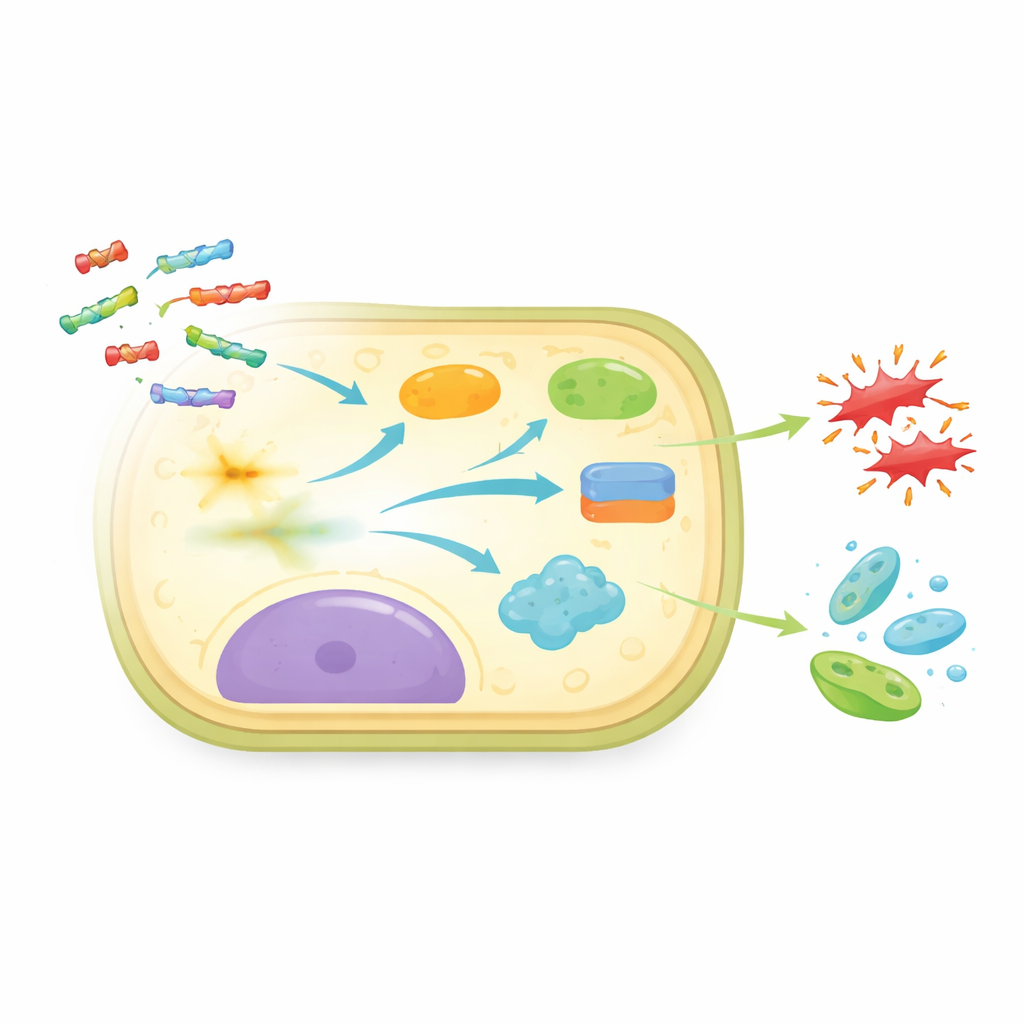
To see how hot water treatment alters these switches, the researchers compared microRNA levels at several times after heating: 1, 3, 6, and 24 hours. A handful of microRNAs stood out as early responders. miR168, miR319, and miR482 changed their activity as the fruit adjusted to heat. Laboratory tests confirmed that these microRNAs interacted with key partners: miR168 with AGO1, a core component of the gene-silencing machinery; miR319 with TCP4 and GAMYB, factors linked to growth and ripening; and miR482 with a long non-coding RNA that may give rise to further regulatory small RNAs. These interactions formed feedback loops that likely help the fruit avoid runaway stress responses while keeping damage in check.
A closer look at one regulatory circuit
One of the most revealing experiments used tobacco leaves as a stand-in testing ground. The scientists introduced the mango version of TCP4 into these leaves, along with miR319. When both were present, the level of TCP4 dropped sharply, but a mutated form of TCP4 that could no longer bind miR319 stayed high. This result showed directly that miR319 can silence mango TCP4 in living tissue. Because TCP4 has been tied to heat responses and to the control of reactive oxygen species—damaging molecules that build up under stress—this pairing hints at how mango fruit may protect its cells while enduring hot water treatment.
Linking tiny molecules to fruit quality
Together, the findings paint a picture of mango fruit using a compact toolkit of microRNAs to orchestrate an early, fine-tuned response to postharvest heat. Rather than flipping genes fully on or off, these molecules nudge multiple pathways at once, including those that manage gene-silencing machinery, hormone-related ripening signals, and the balance of reactive oxygen species. By mapping these circuits, the study lays a foundation for developing molecular markers or breeding strategies that select mango varieties better able to withstand quarantine treatments. For consumers, that could ultimately mean mangoes that travel farther, stay firm longer, and still taste like they were picked yesterday.
Citation: Dautt-Castro, M., Cruz-Mendívil, A., Ulloa-Álvarez, L. et al. Genome-wide analysis of conserved and novel miRNAs in mango mesocarp reveals early regulatory networks involved in postharvest heat stress response. Sci Rep 16, 9448 (2026). https://doi.org/10.1038/s41598-026-40278-z
Keywords: mango postharvest, heat stress, microRNA, fruit ripening, gene regulation