Clear Sky Science · en
Prevalence of stroke high-risk population and its associated factors in Neijiang
Why this study matters to everyday life
Stroke is one of the leading causes of death and long-term disability worldwide, and China carries a particularly heavy burden. Yet strokes rarely strike out of the blue: most happen in people who already have several silent risk factors, such as high blood pressure or abnormal blood fats. This study looks at adults over 40 in Neijiang, a city in Sichuan Province, to find out how many are already in a high‑risk group for stroke and which everyday conditions and habits put them there. Its findings offer a roadmap for who most needs prevention and which risk factors deserve the strongest attention.
Taking a citywide snapshot
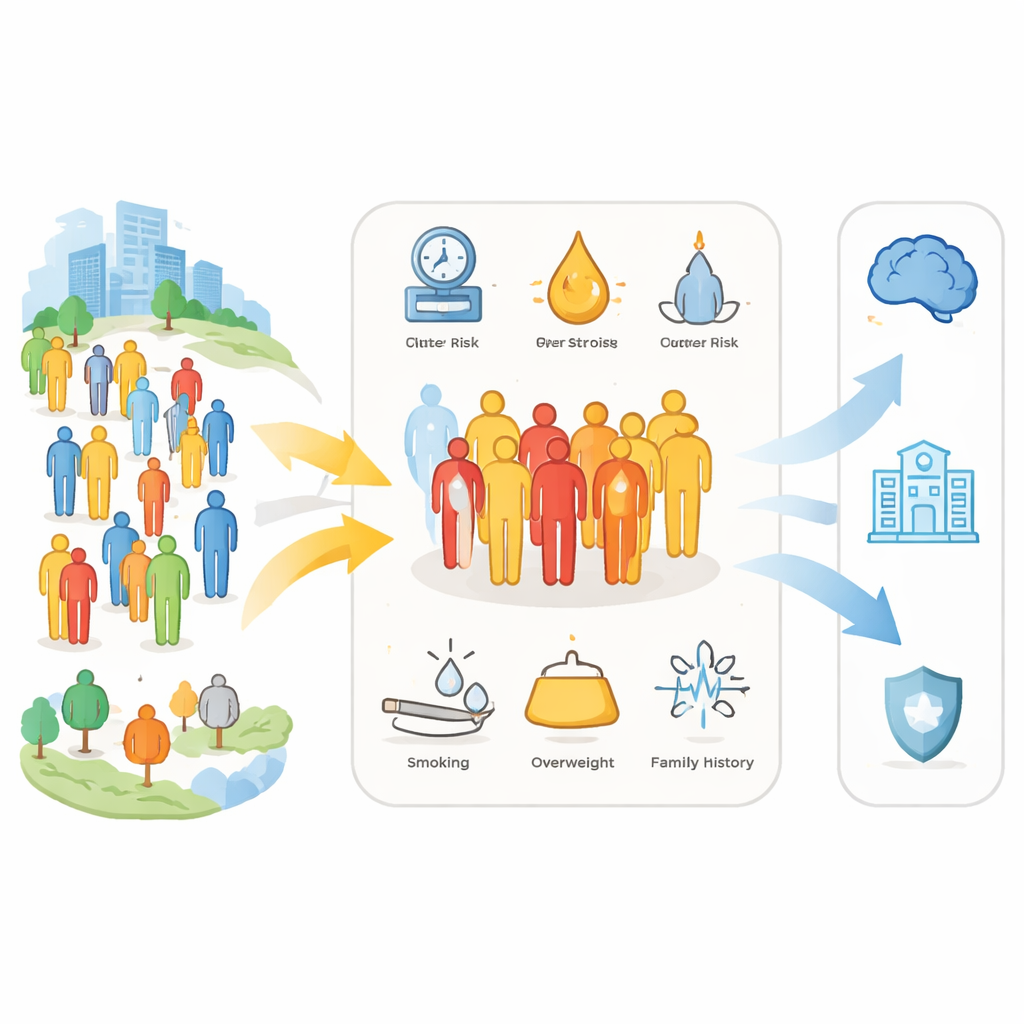
The researchers drew on China’s national stroke screening program, which offers free health checks to community residents aged 40 and above. Using simple random sampling, they enrolled 6,072 long‑term residents from urban neighborhoods and nearby rural townships in Neijiang between May 2023 and October 2024. Trained staff interviewed participants face‑to‑face, asking about lifestyle, medical history, and family history, and measuring blood pressure, weight, blood sugar, and blood fats. Residents were then sorted into two groups: “stroke high‑risk” if they had three or more major stroke risk factors, or a past stroke or mini‑stroke, and “non‑high‑risk” if they had fewer risk factors and no serious history.
How common high stroke risk really is
The results were striking: about one in four participants (24.5 percent) fell into the stroke high‑risk group. This proportion was higher than earlier estimates for Sichuan Province and higher than recent national averages, suggesting that Neijiang faces a particularly serious challenge. Men were more likely to be high‑risk than women, and the share of high‑risk individuals rose steadily with age. Rural residents, people with lower yearly income, those with less schooling, and those doing mainly physical labor also had higher high‑risk rates. Together, these patterns point to a mix of biological vulnerability and social disadvantage in shaping who is most at risk.
The main culprits behind stroke danger
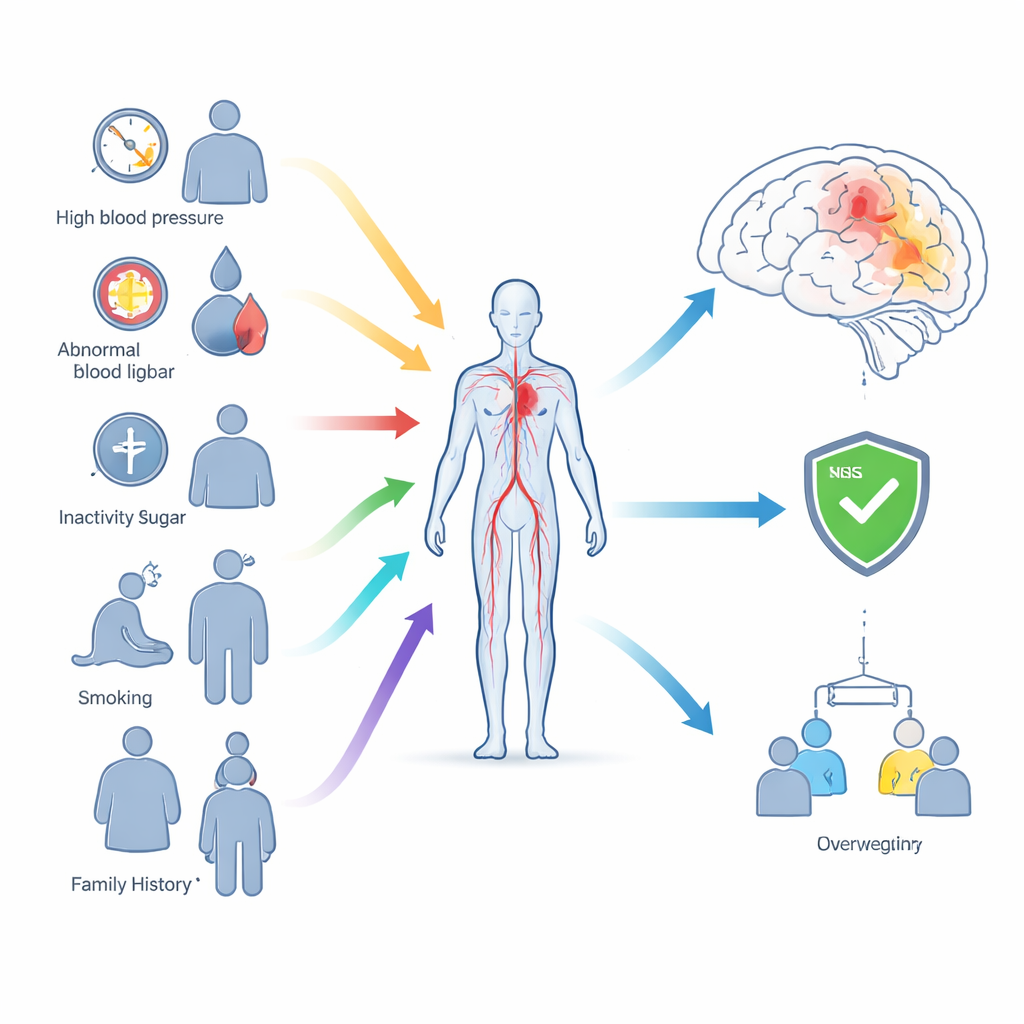
Among people classified as high‑risk, certain risk factors dominated. The most common was high blood pressure, present in more than four out of five high‑risk participants. Next came abnormal blood fats (dyslipidemia), affecting about 72 percent, and lack of regular exercise, affecting about 42 percent. Diabetes, excess body weight, smoking, a family history of stroke, and an irregular heart rhythm called atrial fibrillation were also frequent. When the researchers used statistical models to see which factors were most strongly linked to being in the high‑risk group, high blood pressure stood out as the single strongest driver, closely followed by physical inactivity and diabetes. Overweight, abnormal blood fats, smoking, family history, and atrial fibrillation all added substantial extra risk.
Unequal risks across society
The study highlights that stroke danger is not spread evenly. People living in rural areas, those earning less than 20,000 RMB per year, and those whose education stopped at primary school or below were more often in the high‑risk category. Physical laborers, such as farmers or manual workers, were also more affected than people in mental or lighter jobs. These groups may have less access to health information, blood pressure checks, and long‑term treatment for conditions like hypertension and diabetes. They may also face more stressful living conditions and have fewer opportunities for structured exercise or healthy diets. The authors argue that these social and economic gaps must be considered when planning prevention efforts.
What the findings mean for prevention
For lay readers, the study’s message is both alarming and hopeful. Alarming, because a large share of middle‑aged and older adults in Neijiang are already at high risk of stroke, often without clear symptoms. Hopeful, because the main factors lifting people into the high‑risk group—high blood pressure, lack of exercise, and diabetes—are all modifiable through better screening, daily habits, and medical care. The authors conclude that Neijiang urgently needs tailored prevention programs that focus on men, older adults, rural and low‑income residents, and physical laborers, with especially strong efforts to control blood pressure, encourage regular physical activity, and detect and manage diabetes. If these silent risks can be brought under control, many strokes—and the disability and loss they bring—could be prevented before they ever occur.
Citation: Liu, X., Wu, Y., Li, L. et al. Prevalence of stroke high-risk population and its associated factors in Neijiang. Sci Rep 16, 7940 (2026). https://doi.org/10.1038/s41598-026-40275-2
Keywords: stroke risk, hypertension, diabetes, physical inactivity, China population health