Clear Sky Science · en
Risk factors associated with false-positive fecal immunochemical test results in colorectal cancer screening
Why a stool test can give a scary but misleading alarm
Many people now screen for colon cancer using an at-home stool test that looks for hidden blood. A positive result can be frightening, yet a follow-up camera exam of the colon sometimes shows no serious growths at all. This study asked a simple but important question: when the stool test sounds the alarm but the colon looks clear, what else might be going on inside the digestive system?
How the modern stool test helps find colon cancer
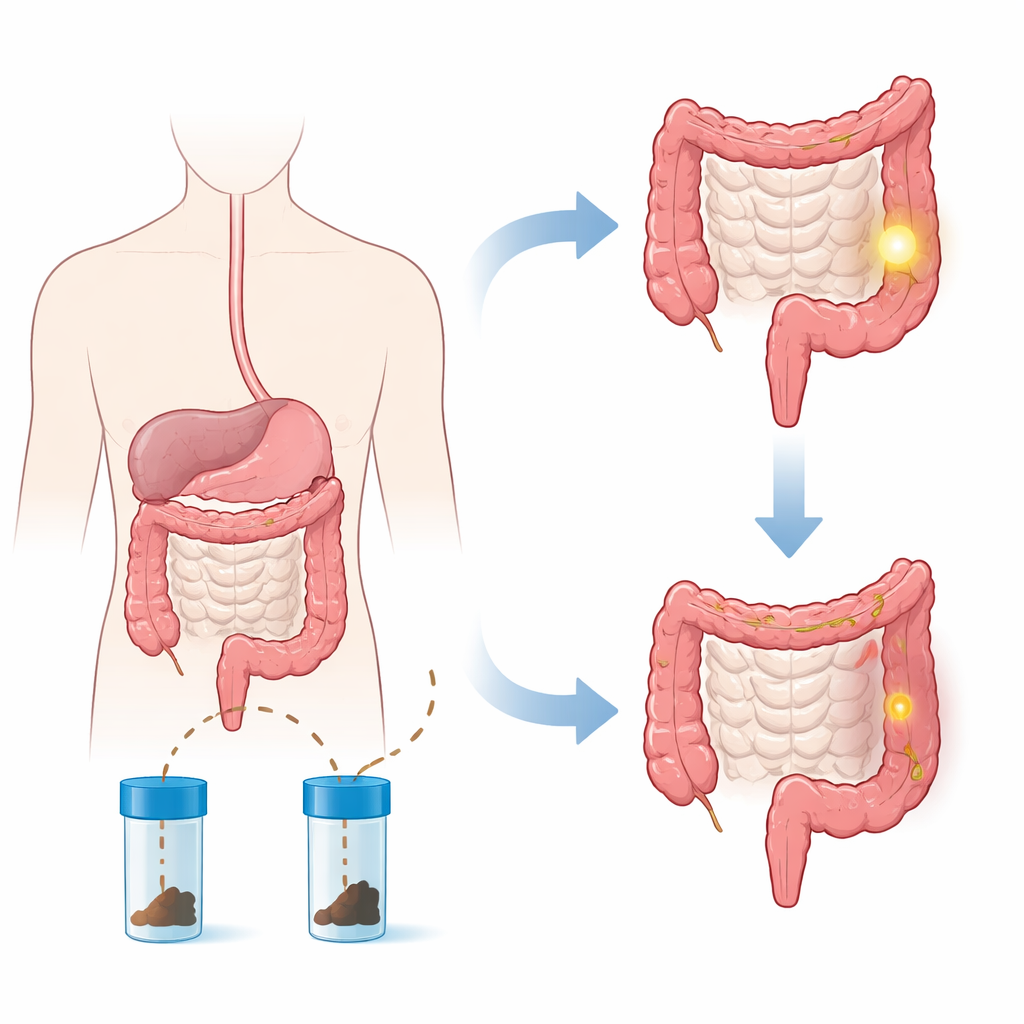
The researchers focused on a commonly used screening tool called the fecal immunochemical test, or FIT. This test checks stool samples for tiny amounts of human blood and is widely used to catch colon cancer and its precursors early, when treatment is most effective. In this study, 929 adults aged 50 to 75 at a Chinese hospital provided two stool samples and then underwent both colonoscopy and upper endoscopy, allowing doctors to inspect the entire visible digestive tract. A FIT result was called "positive" if blood was detected in either sample, and the colon exam served as the yardstick for whether an advanced colon growth was truly present.
When a positive test does not match the colon exam
Overall, about one in six participants had a positive FIT result. The test correctly flagged nearly two thirds of those with advanced colon growths (including cancers and large, high-risk polyps) and accurately reassured most people without such growths. However, its positive results were often misleading: only about three in ten positive FITs corresponded to advanced colon disease. To understand why, the team focused on the 864 people whose colonoscopy showed no advanced growths. Among them, 107 still had positive FIT results. These cases, where the test was positive but no advanced colon lesion was found, were labeled "false positives" for the purposes of colon cancer screening.
Who is more likely to have a false alarm?
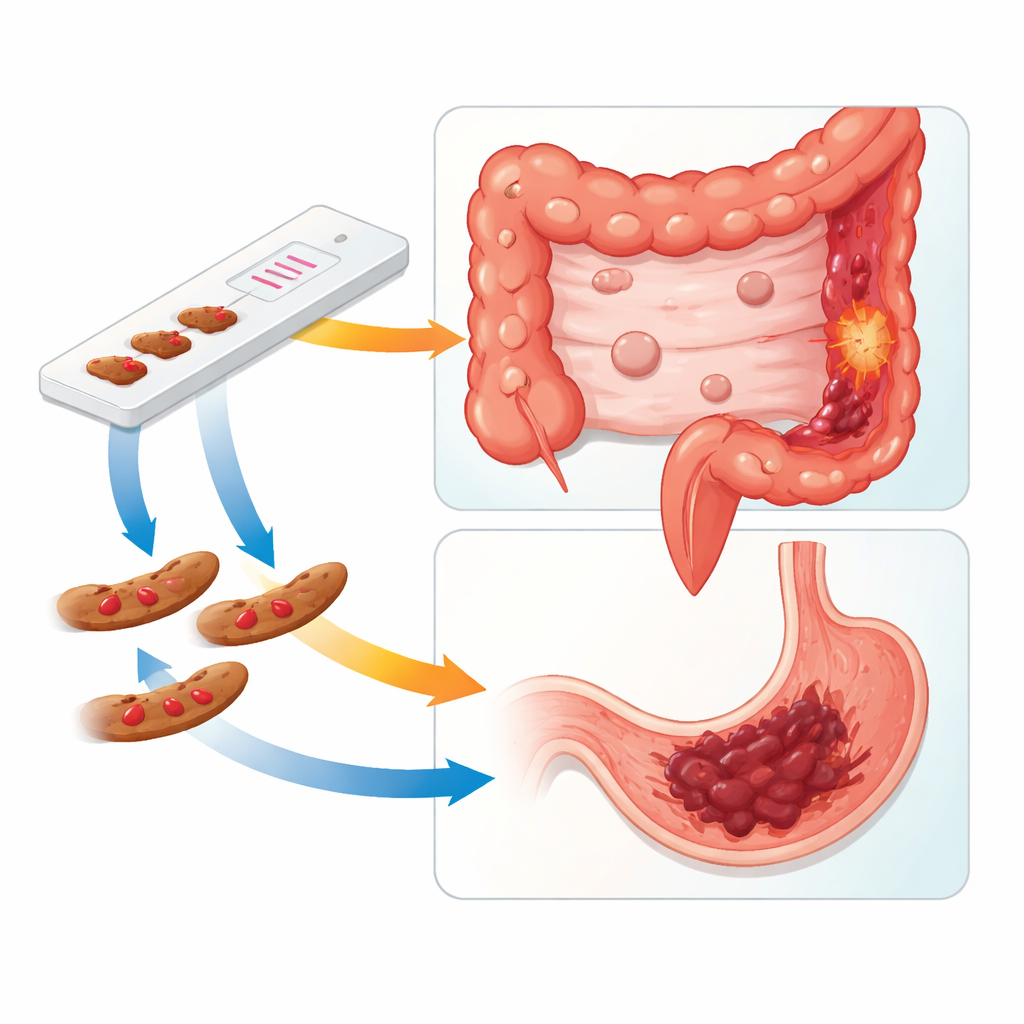
By comparing people with and without false-positive results, the researchers looked for patterns in lifestyle, basic health, and what doctors actually saw during endoscopy. After taking multiple factors into account, several stood out. Men were more likely than women to have a positive FIT despite a clear colon for advanced growths. Within the colon, mild inflammation—seen as reddened, swollen lining—and having three or more small, non-advanced polyps were both linked to false-positive results. These conditions may cause tiny amounts of bleeding that the test can pick up, even though they are not the dangerous tumors screening programs aim to detect.
Hidden problems higher up in the gut
The study also examined the upper part of the digestive tract—the esophagus, stomach, and upper small intestine—to see whether these could explain some positive stool tests. Most upper findings, such as mild reflux or small ulcers, were not clearly tied to false-positive FITs once other factors were considered. One striking exception was stomach cancer. People with gastric cancer were much more likely to have a positive FIT, even when their colon was free of advanced growths. This suggests that in some cases, a positive stool test may be picking up blood from a tumor in the stomach rather than from the colon.
What this means for patients and doctors
For patients, the key message is that a positive stool test followed by a colonoscopy that shows no major growths is not necessarily a sign that "nothing is wrong." The test may be detecting subtle bleeding from minor colon changes, such as small polyps or mild inflammation, or—less commonly—from a serious problem in the stomach. At the same time, the study does not support sending every such patient for routine upper endoscopy, which is more invasive and costly. Instead, the authors suggest that doctors weigh other clues, such as sex, the presence of colon inflammation or multiple small polyps, symptoms, local stomach cancer rates, and possibly the strength of the test signal, when deciding who might benefit from further investigation. In short, an apparently false alarm from a stool test can still be a useful warning that deserves thoughtful follow-up rather than dismissal.
Citation: Mirza, I.A., Meng, FY., Han, Z. et al. Risk factors associated with false-positive fecal immunochemical test results in colorectal cancer screening. Sci Rep 16, 9794 (2026). https://doi.org/10.1038/s41598-026-40251-w
Keywords: colorectal cancer screening, fecal immunochemical test, false positive results, gastric cancer, colon polyps