Clear Sky Science · en
AI-driven fault detection and classification in photovoltaic systems using deep learning techniques
Smarter Solar Power for Everyday Life
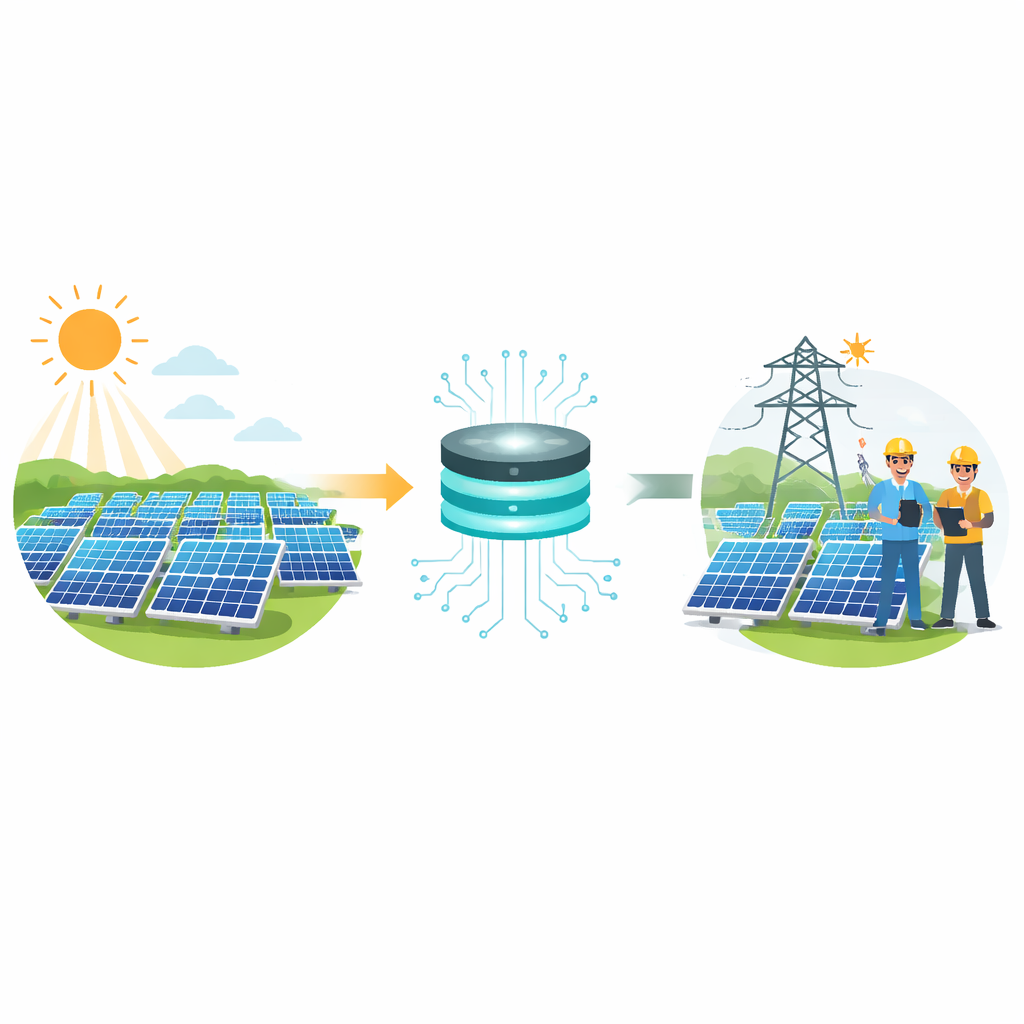
Solar panels promise clean energy, but like any technology, they can develop hidden flaws that quietly waste power and money. Tiny cracks, bad connections, or heat damage are often invisible to the naked eye, especially in the vast fields of panels that feed modern power grids. This study introduces PVDefectNet, an artificial intelligence system designed to spot those problems automatically and explain what it sees, helping keep solar energy reliable, efficient, and affordable.
Why Hidden Solar Problems Matter
The world’s demand for electricity is soaring, while traditional coal, oil, and gas are driving climate change and are ultimately finite. Solar farms are expected to supply a huge share of future power, but their performance depends on thousands of individual cells working properly. Faults caused by manufacturing issues, weather, dust, or aging can drag down output or, in extreme cases, damage equipment. Conventional checks rely on slow, manual inspections and electrical tests that are hard to scale across large installations.
Seeing Inside Panels with Special Cameras
To find hidden flaws, engineers use a technique called electroluminescence imaging, which makes solar cells glow in ways that reveal cracks, disconnected areas, and other defects. The authors built their system using a public collection of such images from 44 solar modules, covering 2,624 cells. Each cell was carefully labeled by experts as healthy, clearly defective, slightly flawed, or showing harmless surface marks. This gave the AI a realistic training ground that includes different panel types, lighting conditions, and defect severities.
How the AI Learns to Spot Trouble
PVDefectNet follows a five-step pipeline. First, it cleans and standardizes the images, resizing them and adjusting brightness while also creating varied copies by rotating and flipping them. These tweaks mimic real-world changes in camera angle and lighting, helping the system remain stable under varied conditions. Next, it uses a proven image-recognition backbone called ResNet to automatically learn patterns that distinguish healthy cells from damaged ones, without humans hand-crafting features. The model is then trained and fine-tuned, checked with standard measures of success, and finally analyzed to understand how and why it makes each decision.
Making the AI’s Decisions Visible
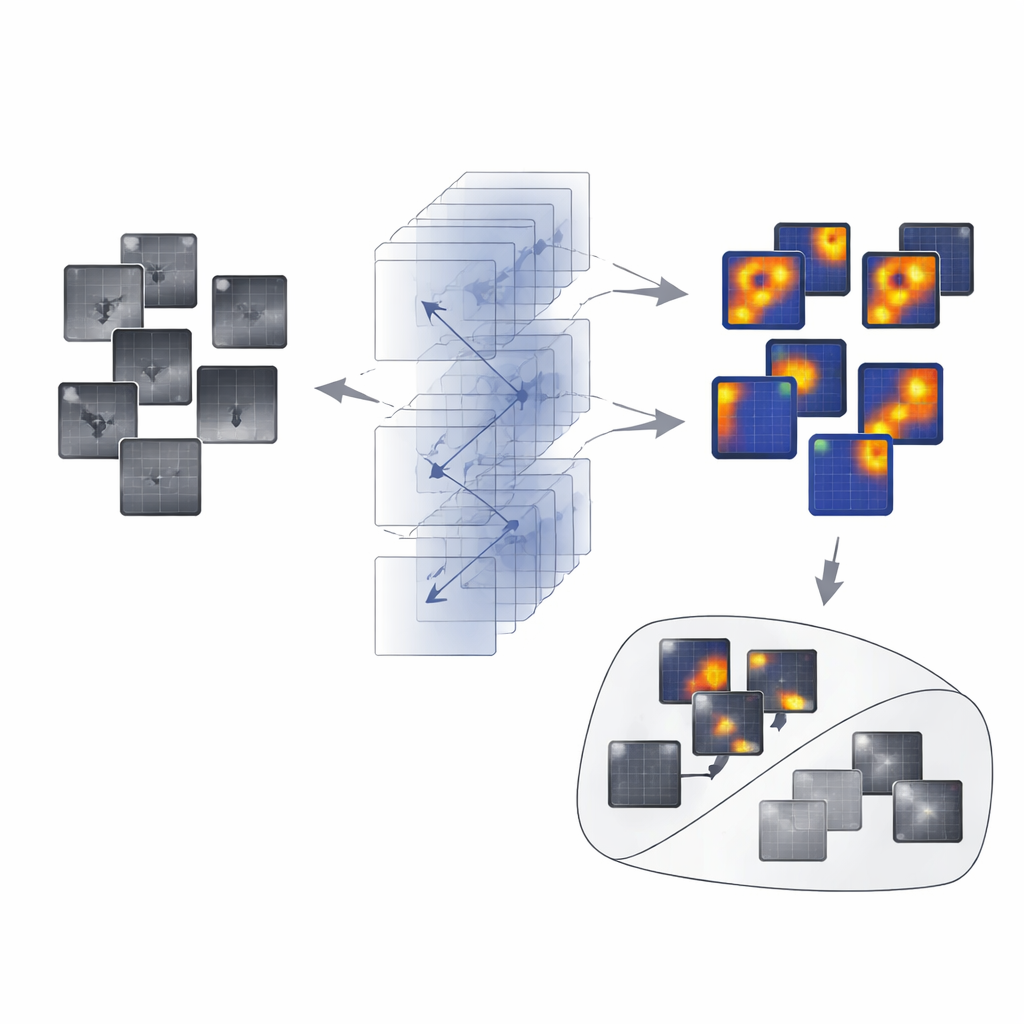
Many powerful AI systems work like black boxes: they produce an answer but do not show their reasoning. To tackle this, the authors add an "explainable" step using a technique called Grad-CAM. This generates heatmap-style overlays on each solar image, highlighting exactly where the model is focusing when it labels a cell as cracked or healthy. In successful cases, the bright regions match the physical defect areas confirmed by experts. This visual feedback helps engineers trust the system, verify its behavior, and use its output as a reliable guide for maintenance.
How Well the System Performs
Tested on unseen images, PVDefectNet correctly classified defects with about 98% overall accuracy, with similarly strong precision and recall scores. It worked reliably on both single-color and multi-color images and compared favorably against several recent methods that use more complex or less transparent architectures. Cross-checks against detailed physical inspections showed close agreement in nearly all cases. The authors note that the dataset is still limited and that performance in other climates and panel types must be validated, but the results indicate a robust and practical tool for day-to-day solar monitoring.
What This Means for the Future of Solar
For non-specialists, the key message is that AI can now act as an always-on inspector for solar farms, catching issues early and showing engineers where to look. PVDefectNet does not replace human experts or traditional safety systems, but it can help prioritize repairs, reduce wasted energy, and cut operating costs. With more diverse data and careful deployment, similar intelligent, explainable tools could become standard in the control rooms that manage our growing network of solar power plants.
Citation: Talaat, F.M., Salem, M. & Shaban, W.M. AI-driven fault detection and classification in photovoltaic systems using deep learning techniques. Sci Rep 16, 8727 (2026). https://doi.org/10.1038/s41598-026-40246-7
Keywords: solar panel faults, photovoltaic monitoring, deep learning, electroluminescence imaging, renewable energy maintenance