Clear Sky Science · en
Effectiveness of the coping and parental competence intervention on mental well-being in parents of preschool children with special educational needs: A randomized controlled trial
Why This Matters for Everyday Families
Raising a young child is demanding for any parent, but when a child has special educational needs, the emotional load can feel overwhelming. This study looks at a structured, seven-week group program designed to help these parents feel more capable and less weighed down by stress, anxiety, and low mood. Understanding whether such support truly works can guide schools, community centers, and health services in offering help that makes a real difference in family life. 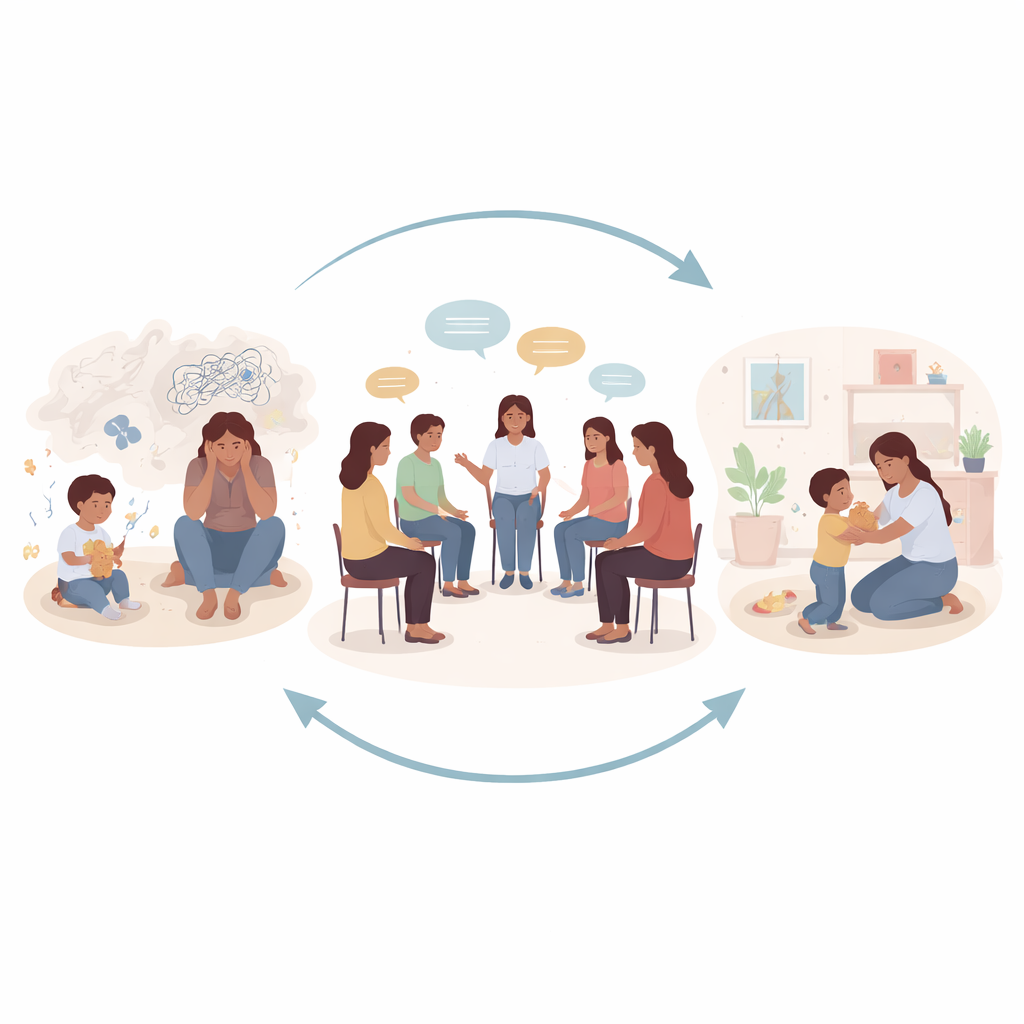
The Extra Strain on Parents of Young Children
Parents of preschoolers with special educational needs often face constant behavioral challenges, uncertainty about their child’s future, and intense hands-on care. Research shows they are more likely than other parents to experience stress, anxiety, and depression. This emotional strain can ripple through the whole family, affecting parent–child relationships and even children’s development over time. The authors argue that early, targeted support during the preschool years is crucial, because habits in parenting and coping formed at this stage can shape family well-being for years to come.
A Program Built Around Coping and Confidence
The team developed a group course called CPC-Early, adapted from an earlier program used with parents of older children. CPC-Early brings together several ideas: that parents’ belief in their own ability matters, that stress depends on how demands and coping resources balance out, and that practical skills and emotional tools can boost resilience. Over seven weekly two-hour sessions run by experienced social workers, parents learned about stress and coping, understood common developmental challenges, practised emotional regulation exercises, and explored ways to build closer, more responsive relationships with their children. Sessions mixed short body-and-mind exercises, group sharing, and concrete parenting strategies such as managing behavior, adjusting expectations, and strengthening communication.
Putting the Course to the Test
To see if CPC-Early truly helped, the researchers ran a randomized controlled trial with 83 parents of preschool children with special educational needs in Hong Kong. Parents were assigned either to attend the seven-week program or to continue with whatever usual services they already had access to. Everyone completed questionnaires on stress, anxiety, depression, and their own sense of parenting competence before the program, right after it ended, and again one month later. This design allowed the team to compare how parents in both groups changed over time and whether any improvements lasted beyond the final session. 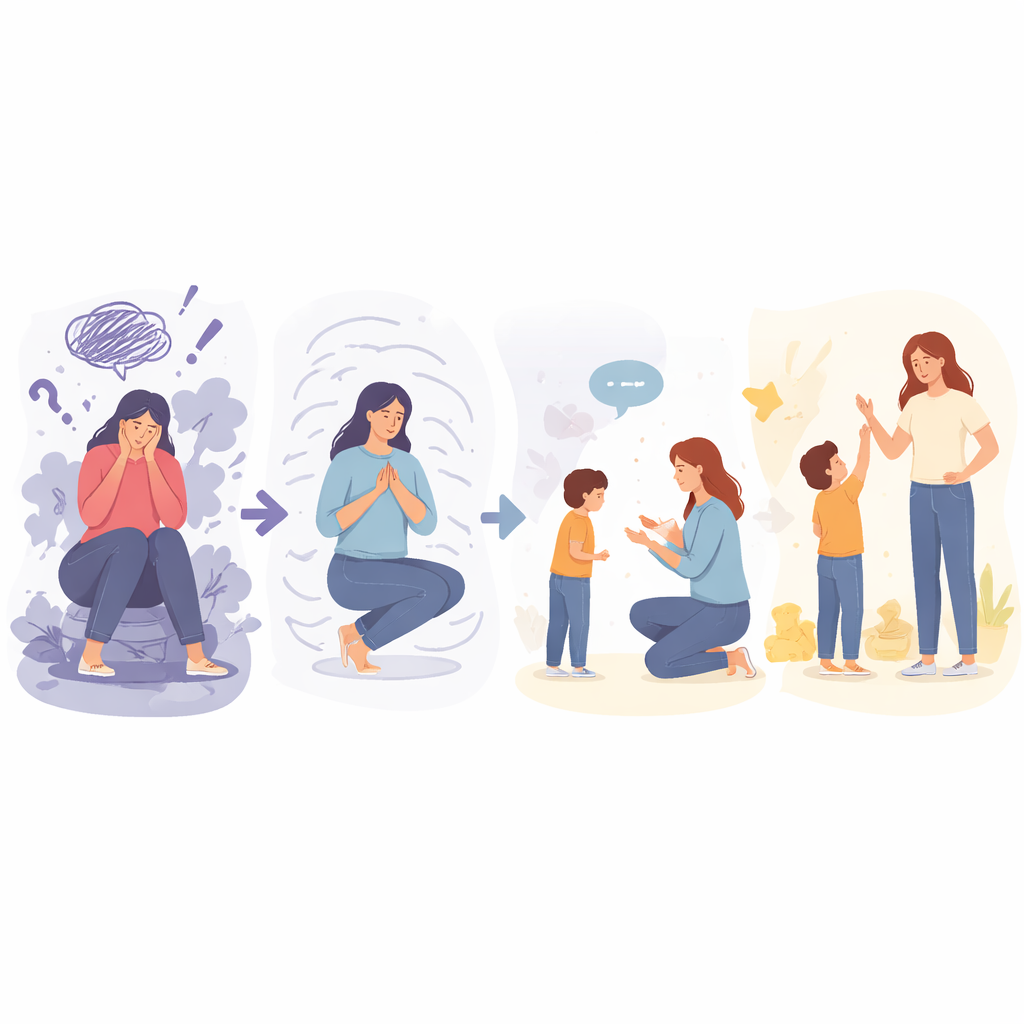
What Changed for Parents Who Took Part
Parents who completed CPC-Early showed clear improvements. Their reported anxiety and stress dropped noticeably from before the course to both the end of the program and the one-month follow-up. At the same time, they felt more competent and confident as parents, and this stronger sense of competence also remained one month later. In contrast, parents in the comparison group did not show meaningful changes in any of these areas over the same period. Although the direct impact on depression was weaker, across all parents in the study, those who reported bigger gains in parenting confidence also tended to report larger drops in depression, anxiety, and stress. This suggests that feeling more able and effective in the parenting role may itself act as a protective factor for mental health.
Limits and Next Steps for Support
The authors note that most participants were mothers, and families varied widely in their children’s specific diagnoses, so future work should look more closely at different caregiver groups and tailor content where needed. The overall size of the improvements was modest rather than dramatic, and the study followed parents only for a short period after the course. Even so, small reductions in stress and anxiety can translate into gentler daily interactions, better problem-solving at home, and more emotional energy for both parents and children. Strengthening opportunities to practise new skills, adding elements that more directly target depression, and offering the program to a broader range of caregivers could further enhance its impact.
What This Means for Families and Services
For lay readers, the key message is that well-designed parenting groups can do more than teach tips and tricks for managing behavior. By helping parents understand stress, tune into their emotions, and build confidence in their own abilities, programs like CPC-Early can lighten the emotional load of caring for a young child with special educational needs. The study shows that supporting parents’ sense of competence is not just a “nice extra” – it may be a central route to easing anxiety and stress and, indirectly, to improving mood. Investing in such early, group-based support could be a practical way for schools, community organizations, and policymakers to strengthen family resilience where the challenges are greatest.
Citation: Lau, W.KW., Poon, K., Wu, YX. et al. Effectiveness of the coping and parental competence intervention on mental well-being in parents of preschool children with special educational needs: A randomized controlled trial. Sci Rep 16, 9553 (2026). https://doi.org/10.1038/s41598-026-40244-9
Keywords: parenting stress, special educational needs, early intervention, parenting competence, caregiver mental health