Clear Sky Science · en
Extracts of sweet prayer leaf as corrosion inhibitors of mild steel in acidic medium: effects of extractants’ properties
Why rusting metal and rainforest leaves belong in the same story
When cars, pipelines, or storage tanks sit in harsh acids, their metal slowly dissolves away—an invisible problem that costs the world trillions of dollars each year. This study explores an unexpected ally against rust: the leaves of the sweet prayer plant, a common rainforest herb. By turning these leaves into simple liquid extracts, the researchers show how everyday plants could help protect steel in aggressive industrial environments, while avoiding some of the hazards of traditional chemical treatments.
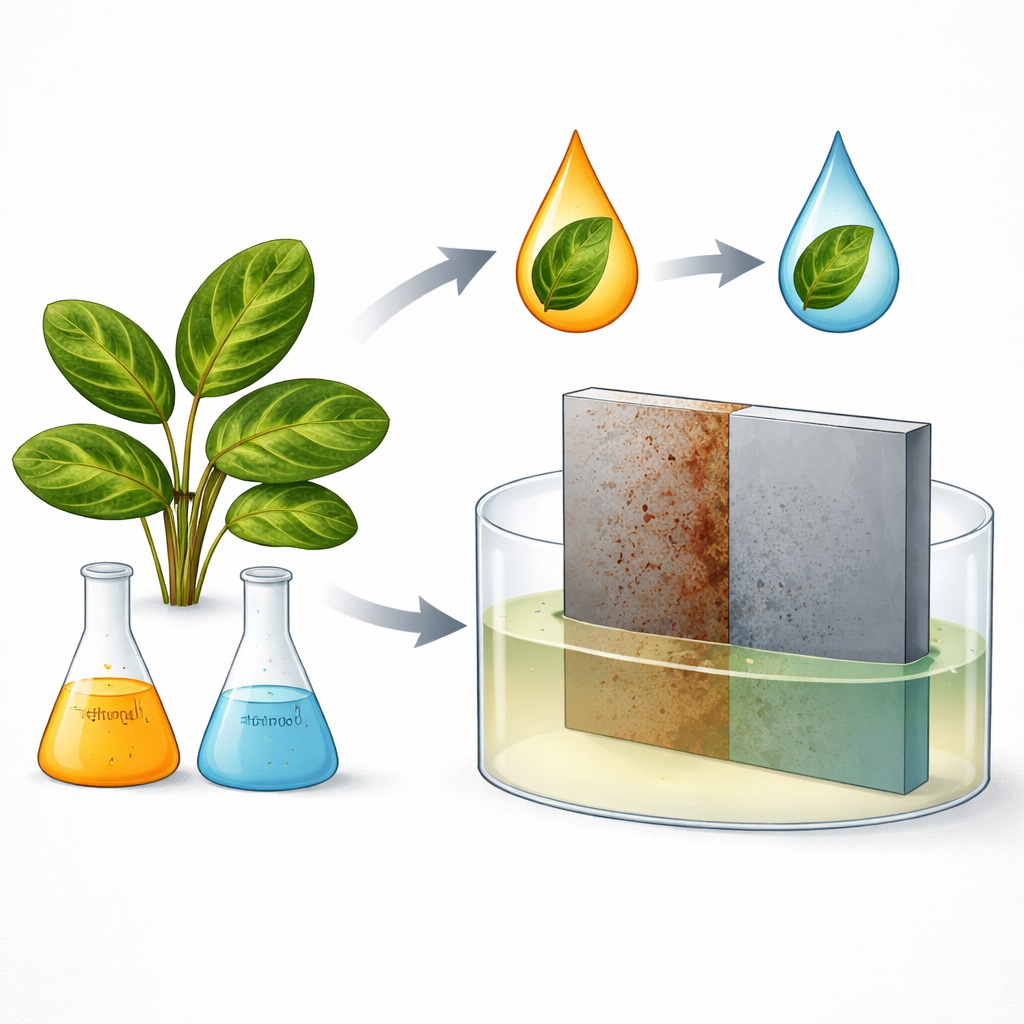
Plants as gentle bodyguards for metal
Industry often relies on powerful synthetic chemicals to keep steel from corroding in acidic liquids such as hydrochloric acid. These additives can be effective but are frequently toxic, costly, or difficult to dispose of safely. Plant-based alternatives, rich in natural compounds, offer a greener route. Sweet prayer plant, found in West Africa, is already known to contain a mix of biologically active molecules. The researchers set out to test whether extracts from its leaves could cling to the surface of mild steel and act as a shield, slowing the attack of acid while being renewable and more environmentally friendly.
Two simple liquids, two very different extracts
To pull useful chemicals from the leaves, the team used two common solvents: ethanol, which mixes well with water and attracts polar compounds, and n-hexane, which is oily and favors non-polar substances. These produced two extracts, labeled TDLEE (ethanol-based) and TDLHE (hexane-based). The ethanol extract yielded more material overall, suggesting that most of the leaf’s active ingredients prefer a more polar environment. Both extracts were then mixed into a strong hydrochloric acid solution, the kind of medium that can aggressively eat away at mild steel, to see how well they could slow corrosion.
Watching steel fight back in acid
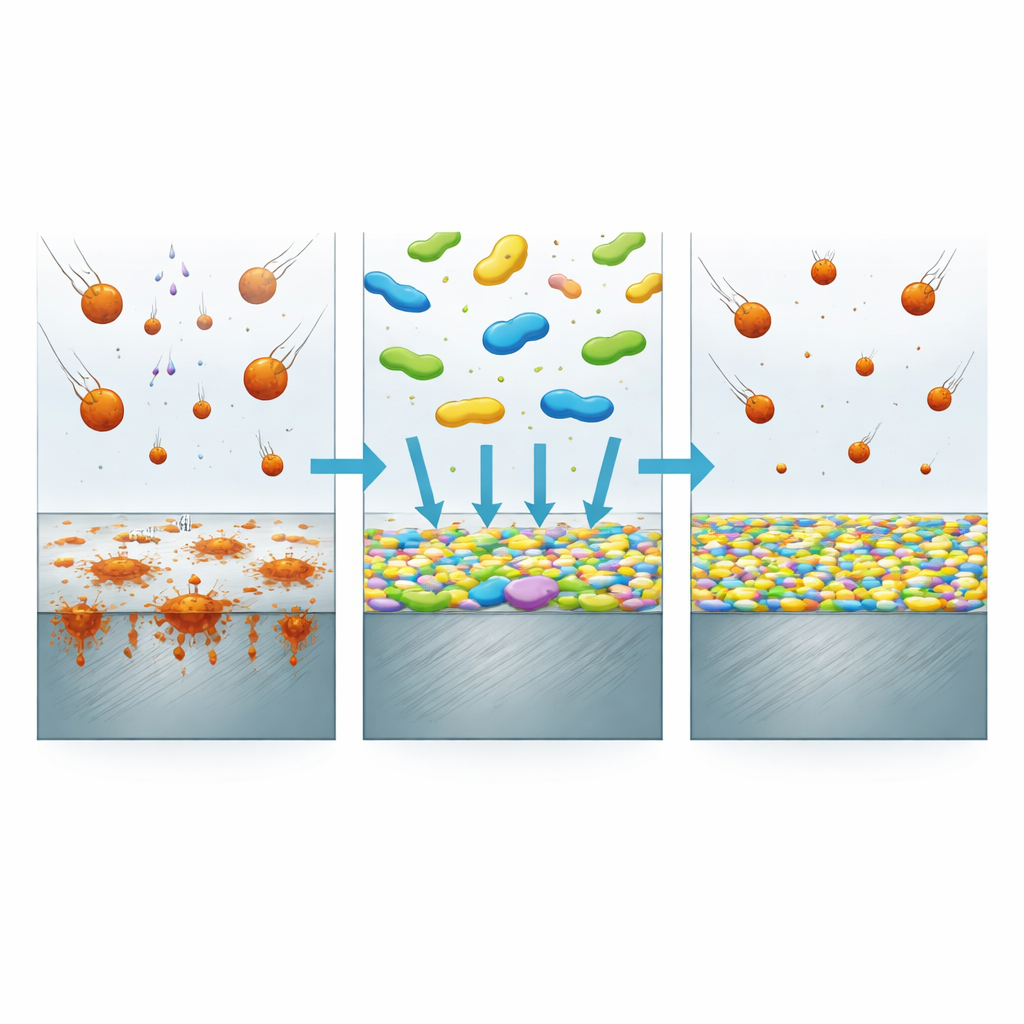
Using a combination of techniques, the scientists tracked how quickly the steel dissolved and how the surface changed. They measured electrical signals as the metal corroded, weighed samples before and after soaking, and examined surfaces under an electron microscope. As the concentration of either leaf extract increased, the steel corroded more slowly and the protection efficiency rose—especially for the ethanol extract. At room temperature, a relatively high dose of the ethanol-based TDLEE cut corrosion by about three-quarters, while the hexane-based TDLHE achieved roughly half that level under similar conditions. Images showed that treated steel surfaces were smoother and less pitted, indicating that a thin, protective film of plant-derived molecules had formed.
Temperature, timing, and how the protective film behaves
Real-world equipment often runs hot, so the team examined how temperature and exposure time affected protection. Over several days, both extracts continued to build up on the steel, and the inhibition improved with time, particularly for the ethanol extract. But when the temperature was raised, the two extracts behaved differently. For the ethanol-based TDLEE, protection weakened at higher temperatures, hinting that some of its protective molecules detached from the metal surface. In contrast, the hexane-based TDLHE became slightly more effective as the solution warmed, suggesting a more temperature-stable film. Calculations of energy and disorder in the reaction supported the idea that both extracts adsorb spontaneously onto steel, but with distinct strengths and sensitivities.
What this means for greener protection of everyday steel
The study concludes that sweet prayer leaves can indeed serve as a sustainable source of corrosion inhibitors for mild steel in strong acid, with the ethanol extract giving the best overall protection and the hexane extract showing better stability at elevated temperatures. For a non-specialist, the key message is that simple plant extracts can form microscopic coats on metal, slowing rust without relying solely on harsh synthetic chemicals. While more work is needed to isolate the most effective ingredients and adapt them for large-scale use, this research highlights how a common rainforest plant could help protect vital infrastructure in a cleaner, safer way.
Citation: Adebayo, M.A., Aigbogun, J.A., Oluwafemi, K.A. et al. Extracts of sweet prayer leaf as corrosion inhibitors of mild steel in acidic medium: effects of extractants’ properties. Sci Rep 16, 8939 (2026). https://doi.org/10.1038/s41598-026-40232-z
Keywords: green corrosion inhibitors, mild steel, plant extracts, acidic environments, sweet prayer leaf