Clear Sky Science · en
Integration and mechanical and water absorption characteristics of treated natural fiber-titanium nanoparticles embedded polyester composites
Stronger, Lighter Parts for Everyday Machines
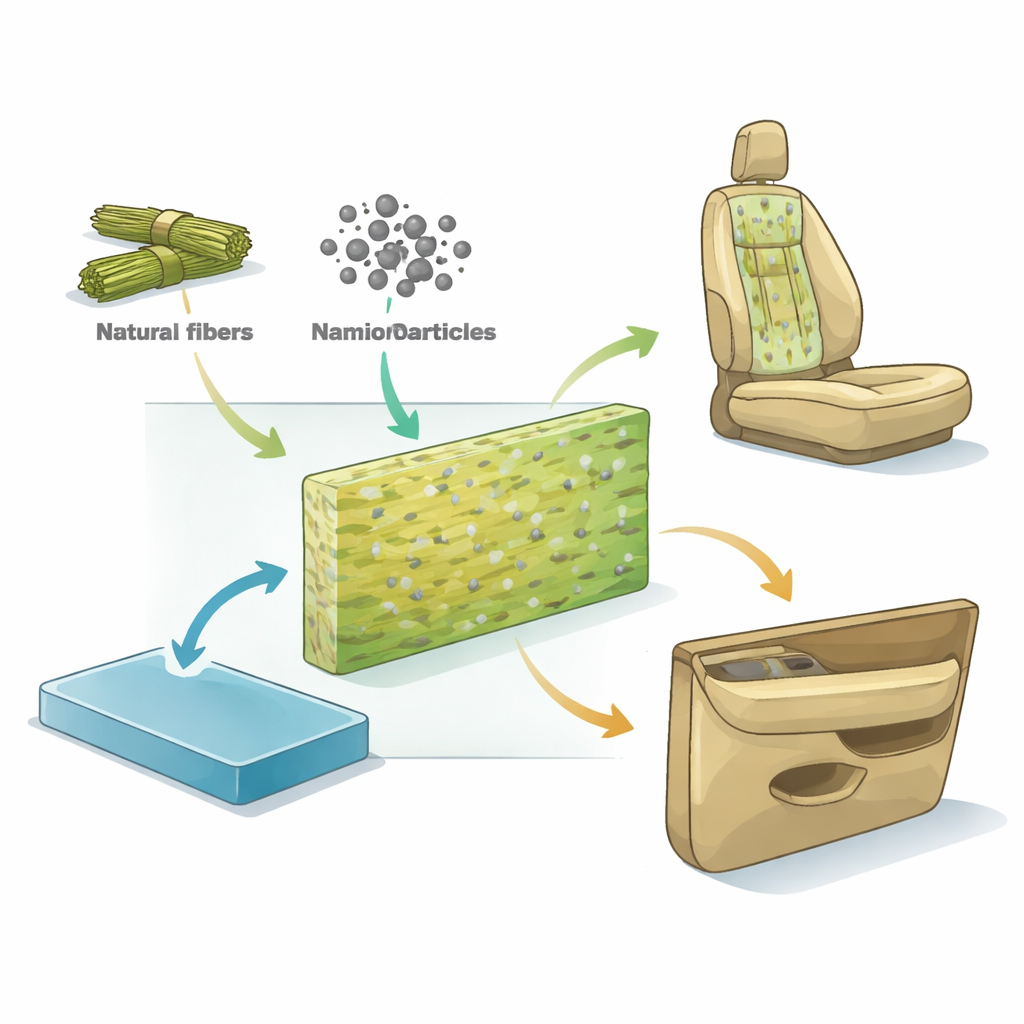
From car seats to interior panels, many everyday products rely on plastic parts that must be light, strong, and able to shrug off heat and moisture. This study explores a new way to build such parts by blending a common plastic with natural plant fibers from the neem tree and tiny metal particles. The result is a material that could help make automotive interiors and similar components tougher, more durable, and a bit kinder to the environment.
Blending Plants, Plastic, and Tiny Metal Grains
The heart of the work is a “hybrid” material: a polyester plastic strengthened with short fibers from the neem tree and ultrasmall titanium particles. Polyester is already widely used in industry, but on its own it can be limited in toughness. Natural fibers, such as those from neem, offer low weight and renewability but tend to attract water and bond poorly with plastics. The researchers set out to overcome these drawbacks by carefully treating the fibers and then adding titanium particles only 50 billionths of a meter across, aiming to build a tightly connected internal structure that carries loads efficiently.
Cleaning and Packing the Fibers for Better Bonding
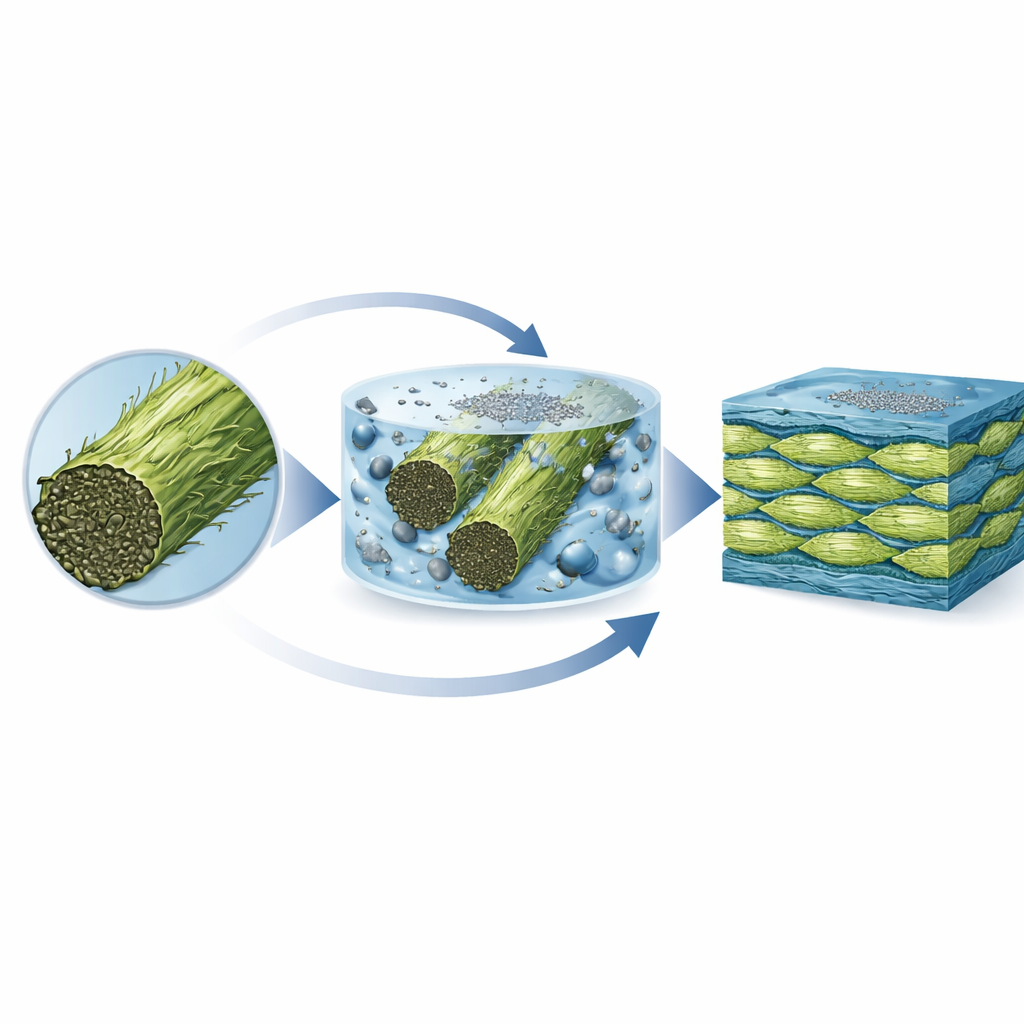
To prepare the neem fibers, the team first soaked plant stems in water and then treated them with an alkaline solution, followed by a mild acid wash and drying. This multi-step cleaning removes natural gums and surface waxes and roughens the fiber surface, giving the plastic more to “grab onto.” The fibers, cut into short pieces, were mixed with liquid polyester at a fixed amount—16 percent by weight—while titanium nanoparticles were added at different levels from zero up to 6 percent. The mixture was then pressed in a hot mold under high pressure, forcing the plastic, fibers, and particles into close contact as the composite solidified into flat plates ready for mechanical testing.
How the New Mix Handles Force and Impact
The researchers compared plain polyester, polyester with only neem fibers, and polyester with both neem fibers and increasing amounts of titanium particles. They stretched, bent, and struck the samples, and measured how hard their surfaces were. Adding fibers alone gave modest gains in strength and stiffness. But once titanium nanoparticles were included, the improvements became striking. With 6 percent titanium, the composite’s resistance to pulling forces rose to nearly 90 megapascals, more than a quarter higher than the plastic by itself. Its resistance to bending and surface indentation also climbed sharply, and its ability to absorb the shock of an impact increased by almost 80 percent. Microscopy images revealed why: the tiny metal grains filled spaces around the fibers and linked tightly to the plastic, spreading stress more evenly and blocking cracks as they tried to grow.
Keeping Water Out and Heat at Bay
Natural fibers usually soak up water, which can weaken parts used in damp or humid environments. Here, the treated neem fibers did absorb more moisture than bare polyester, but the titanium particles helped close off tiny channels that water would use to seep inside. Over two weeks of soaking, composites with higher titanium content showed noticeably lower water uptake than fiber-only versions. At the same time, tests that heated the material up to 600 °C showed that the presence of neem fibers and especially titanium raised the temperature at which most of the material started to break down. This means the new composite can tolerate higher service temperatures before losing its strength.
From Lab Panels to Real-World Parts
Altogether, the study shows that combining treated neem fibers with a small dose of titanium nanoparticles can turn a familiar plastic into a much tougher, harder, and more heat- and moisture-resistant material, while still keeping it relatively light. The authors highlight one recipe in particular—16 percent neem fiber and 6 percent titanium—as offering the best balance of strength and durability, suitable for car cabinets, seat frames, and similar interior structures. For non-specialists, the key idea is that careful tuning of what goes into a plastic, down to the level of plant fiber treatment and nanoparticle loading, can unlock large gains in performance and open the door to more sustainable, long-lasting products.
Citation: Aruna, M., Nagarajan, N., Rathore, S. et al. Integration and mechanical and water absorption characteristics of treated natural fiber-titanium nanoparticles embedded polyester composites. Sci Rep 16, 9153 (2026). https://doi.org/10.1038/s41598-026-40227-w
Keywords: polyester composites, natural fiber reinforcement, titanium nanoparticles, automotive materials, moisture-resistant plastics