Clear Sky Science · en
Altered trace and toxic element profiles in breast tissue: a case-control study of cancer risk
Why metals in our bodies matter
Most of us think about breast cancer in terms of genes, hormones, and lifestyle. This study asks a different question: could tiny amounts of metals that quietly build up in our bodies over time also help tip the balance toward cancer? By carefully measuring these substances directly in breast tissue from women with and without breast cancer, the researchers explore how our everyday environment may leave a chemical fingerprint inside the breast.
Looking inside breast tissue
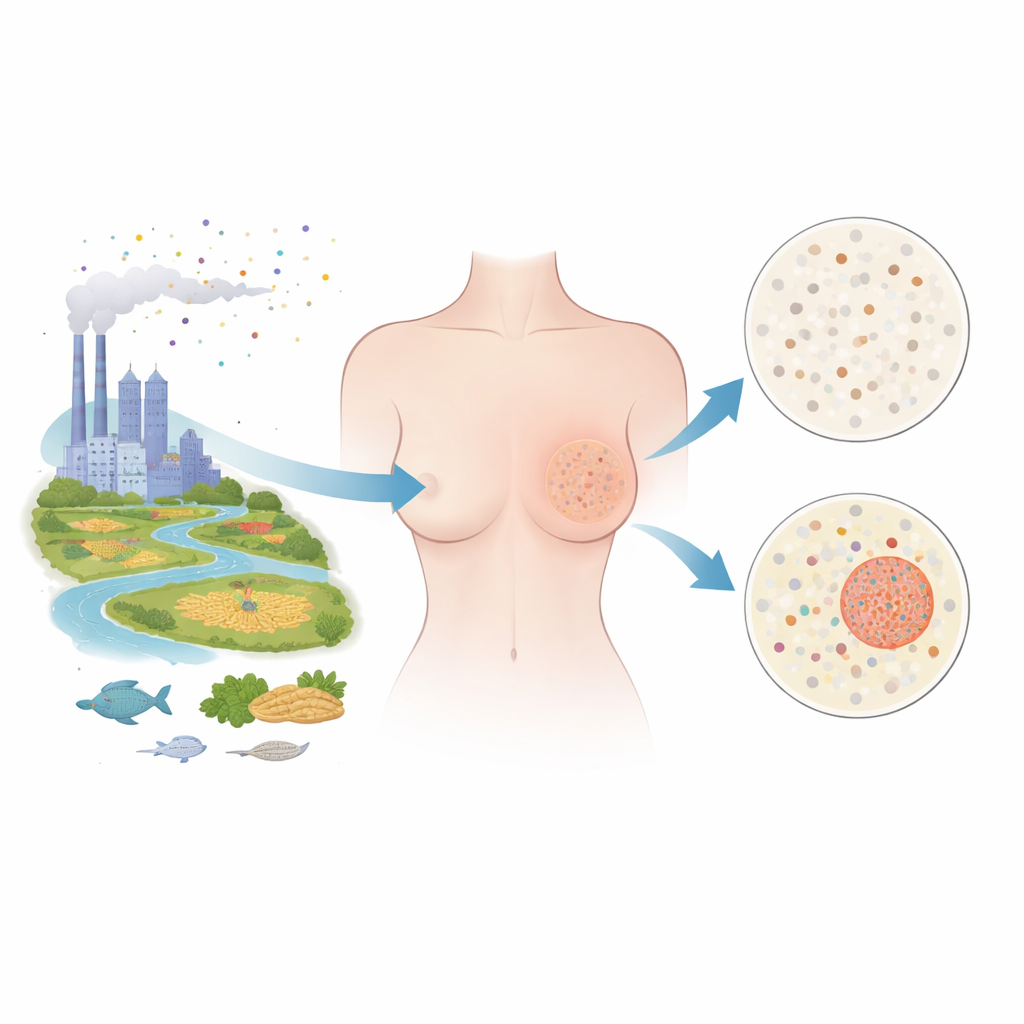
The team studied breast tissue from 43 women newly diagnosed with breast cancer in Isfahan, Iran, and compared it to tissue from 40 healthy women undergoing cosmetic breast surgery. For each cancer patient, they analyzed both the tumor itself and nearby non-tumor tissue. This three-way comparison let them separate broad differences between women with and without cancer from more local changes right around a tumor. They focused on a mix of “essential” elements the body needs, like iron, zinc, and copper, and “potentially toxic” ones, such as cadmium and nickel, that can come from polluted air, water, food, cookware, and consumer products.
Measuring the hidden chemical mix
To see how much of each element was present, the scientists digested tiny pieces of dried breast tissue in acid and analyzed them with a very sensitive technique called mass spectrometry. This allowed them to detect even billionths of a gram of metals in a gram of tissue. They then used statistical methods to compare average levels across cancerous tissue, nearby normal-looking tissue from the same breast, and healthy breast tissue from women without cancer. They also looked at how different elements tended to rise and fall together, building a picture of how the overall chemical environment of the breast changes with disease.
What was different in cancerous breasts
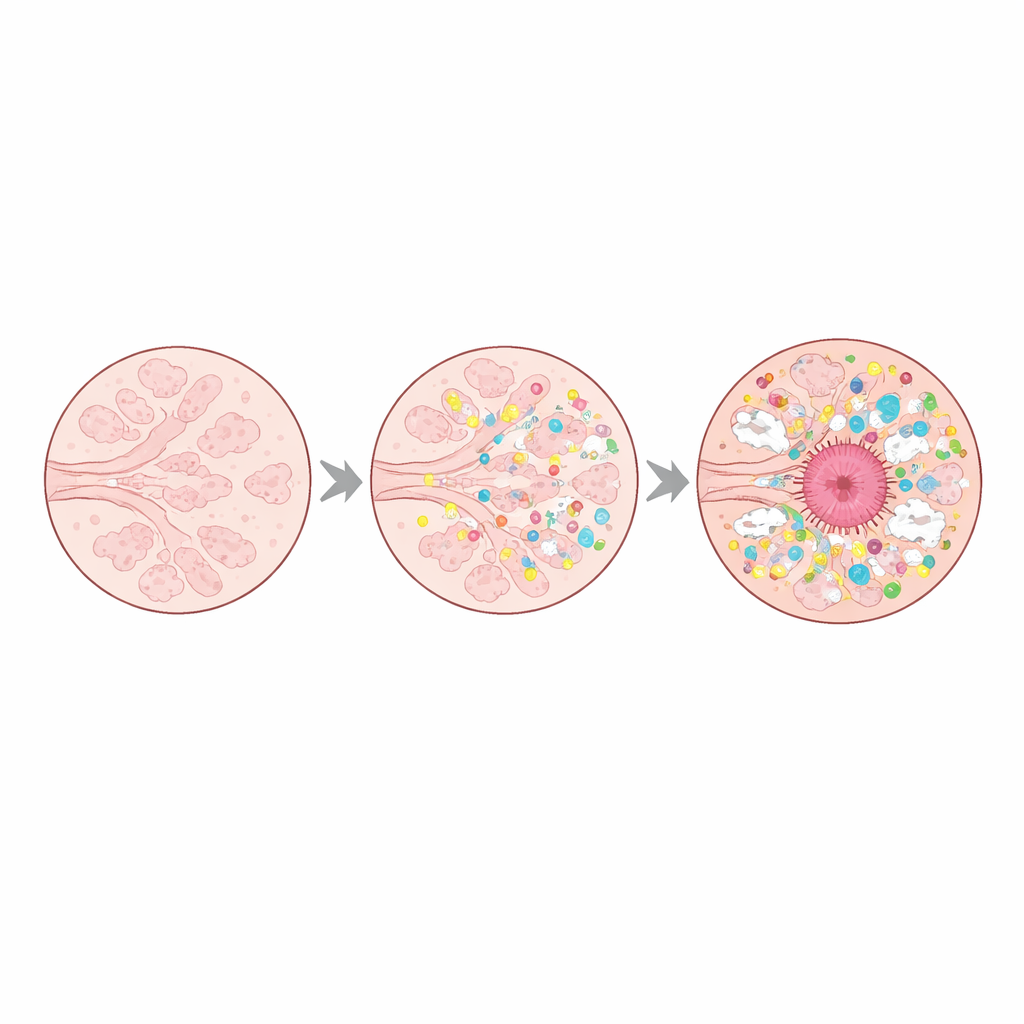
The clearest pattern was that several elements were consistently higher in cancerous tissue than in healthy breast tissue. Tumors contained more cadmium and nickel, both recognized as cancer-causing metals, as well as higher amounts of zinc, copper, iron, calcium, and phosphorus. For example, cadmium in tumors averaged about seven times the level found in healthy women, and nickel was roughly five times higher. Calcium and phosphorus, key building blocks of mineral deposits, were also markedly elevated, fitting with the well-known presence of small calcified spots often seen on mammograms of breast cancers. Importantly, when the researchers compared tumors to the nearby non-tumor tissue from the same woman, the tumor usually showed a stronger build-up of several elements, suggesting that the cancer itself may concentrate or trap these substances.
Patterns of metals acting together
Beyond single elements, the study found that many metals appeared to move in lockstep. Certain pairs, such as cadmium with calcium, and lead with phosphorus, tended to rise together, pointing to shared sources, shared storage sites in tissue, or shared effects on cell biology. Using a technique called principal component analysis, the authors showed that healthy breast tissue had a relatively orderly and balanced pattern of elements, while both tumors and their surrounding tissue showed a more scattered, disorganized pattern. This loss of chemical balance in tissue bordering the tumor hints that the breast environment may be changing even before cancer is fully formed, and that multiple metals may act together rather than in isolation.
What this means for everyday life
To a non-specialist, the message is not that metals alone “cause” breast cancer, but that long-term exposure to certain environmental elements appears to leave a distinct imprint in cancerous breast tissue. The study shows that tumors are enriched in both toxic metals like cadmium and nickel and essential elements like iron, zinc, and copper, and that calcium-rich mineral deposits are closely tied to cancerous change. These findings support the idea that what we breathe, drink, eat, and put on our bodies can slowly shape the chemical landscape of our tissues. Understanding and eventually reducing harmful exposures, while tracking these elemental signatures as possible warning signs, could become part of more complete strategies to prevent and detect breast cancer earlier.
Citation: Farrokhzadeh, H., Tarrahi, M.J., Baradaran, A. et al. Altered trace and toxic element profiles in breast tissue: a case-control study of cancer risk. Sci Rep 16, 9405 (2026). https://doi.org/10.1038/s41598-026-40214-1
Keywords: breast cancer, heavy metals, environmental exposure, trace elements, calcification