Clear Sky Science · en
Clusterin reverses epitheliopathy, reduces inflammation, and restores goblet cells and corneal nerves in a mouse model of autoimmune dry eye
Why this matters for sore, gritty eyes
Many people—especially those with autoimmune conditions like Sjögren’s disease—live with chronic dry, burning, or gritty eyes that blur vision and resist standard treatments. This study explores whether a natural tear protein called clusterin can be turned into an eyedrop that not only soothes the surface, but actually helps rebuild the eye’s protective layer, restore tiny nerves, and calm the underlying inflammation that keeps the cycle of discomfort going.
A protective protein already in your tears
The front of the eye is covered by a clear layer that must stay smooth, moist, and richly supplied with nerves to protect vision. In autoimmune dry eye, the tear glands are damaged, the surface dries and breaks down, and nerves are lost or altered, leading to pain, light sensitivity, and poor healing. Clusterin is a protein naturally present in tears and on moist body surfaces. Earlier work showed that it can “seal” acute damage on the eye’s surface and block certain destructive enzymes. In patients and animals with dry eye, clusterin levels in tears tend to fall, raising the possibility that topping it up might protect and repair the eye.

Testing clusterin eyedrops in a severe dry eye model
To see if clusterin could help in a chronic, autoimmune setting, the researchers used mice that spontaneously develop a Sjögren’s-like dry eye. These animals show many of the same problems as patients: a leaky corneal surface, inflamed tissues, loss of mucus-producing goblet cells in the conjunctiva, and reduced nerve density in the cornea. For three weeks, the team placed different eyedrops on both eyes twice a day: a simple salt solution (control), low- or high-dose recombinant human clusterin, clusterin purified from human plasma, or dexamethasone, a steroid commonly used to quell eye inflammation. They regularly scored surface damage using a fluorescent dye that seeps into microscopic defects in the corneal layer.
Sealing the surface and regrowing tiny nerves
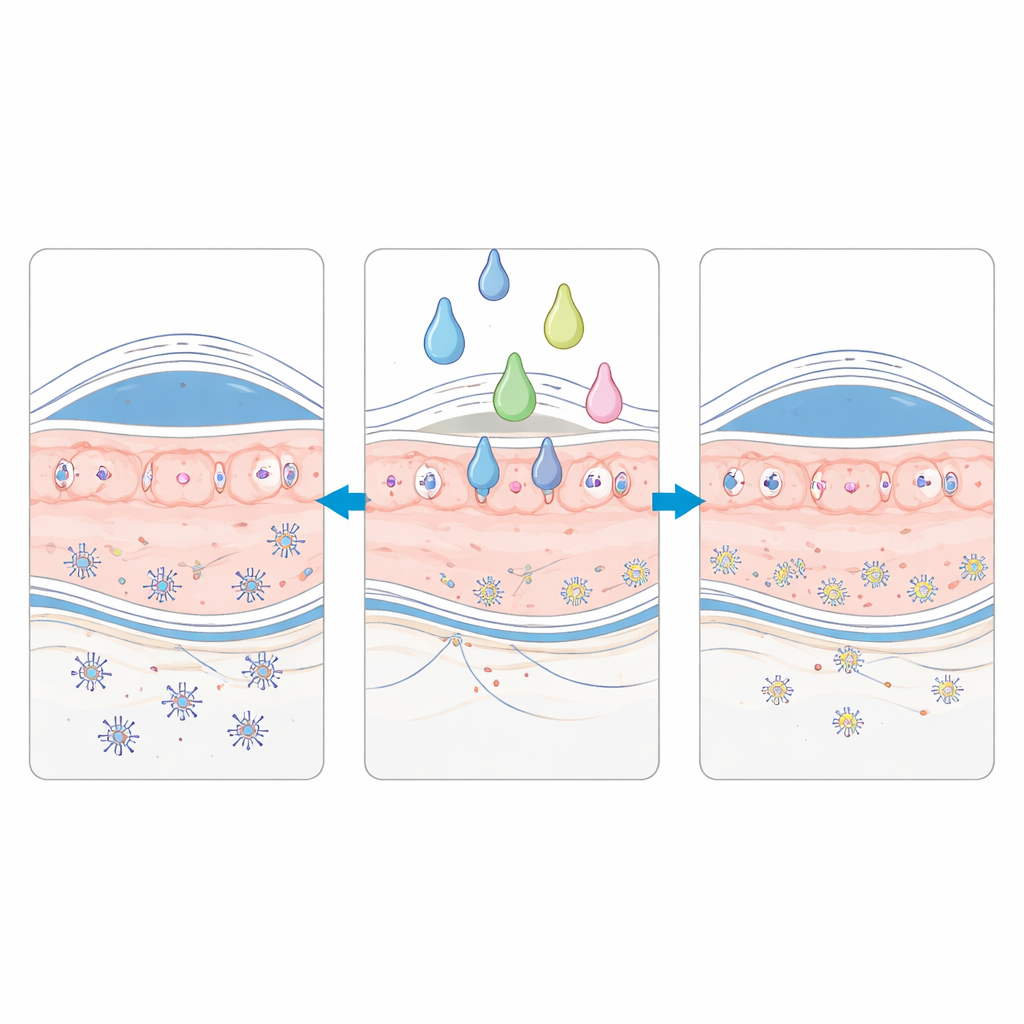
High-dose clusterin, whether made in the lab or purified from plasma, clearly improved the corneal barrier. While untreated eyes continued to worsen, clusterin-treated eyes showed less dye uptake within a week, with steady gains over the three-week course—on par with, or better than, steroid treatment. Detailed imaging revealed why this mattered: mice with autoimmune dry eye had fewer and more disorganized nerves, especially near the edge of the cornea, mirroring findings in human Sjögren’s patients. Clusterin eyedrops boosted nerve density in these regions and increased the number of nerve endings that reached into the surface layer, in some cases outperforming steroids. The improvement was strongest in the peripheral cornea, consistent with nerve regrowth starting from the edge and moving inward.
Restoring moisture cells and calming inflammation
Beyond nerves and surface sealing, clusterin also helped rebuild the eye’s moisture-support system. In the conjunctiva—the thin lining that houses mucus-producing goblet cells—autoimmune dry eye drastically reduces these cells, which are essential for a stable tear film. Clusterin treatment increased goblet cell numbers, similar to steroids. Molecular analyses showed that clusterin lowered levels of key inflammatory signals, such as TNF-alpha and interferon-gamma, in the conjunctiva. In the cornea, it reduced the presence of ADAM17, a protein that helps release active TNF-alpha and can amplify inflammation. These changes support a broad calming of the inflammatory environment that drives ongoing damage.
What this could mean for people with dry eye
Taken together, the findings suggest that clusterin eyedrops do more than mask symptoms: they help seal microscopic defects, foster regrowth of protective corneal nerves, restore mucus-producing goblet cells, and dial down inflammation—all without the well-known side effects of long-term steroid use. Although these results come from a mouse model and need to be confirmed in human trials, they point to clusterin as a promising new biological treatment for a range of persistent eye-surface problems, from autoimmune dry eye to nerve-related corneal disorders, where current therapies often fall short.
Citation: Franz, J., Ng, T.F., Gupta, S. et al. Clusterin reverses epitheliopathy, reduces inflammation, and restores goblet cells and corneal nerves in a mouse model of autoimmune dry eye. Sci Rep 16, 9135 (2026). https://doi.org/10.1038/s41598-026-40211-4
Keywords: autoimmune dry eye, Sjögren’s syndrome, clusterin eyedrops, corneal nerves, ocular surface inflammation