Clear Sky Science · en
ZnO/WO3 composite for efficient photocatalytic degradation of methylene blue dye under solar light
Why cleaner colored water matters
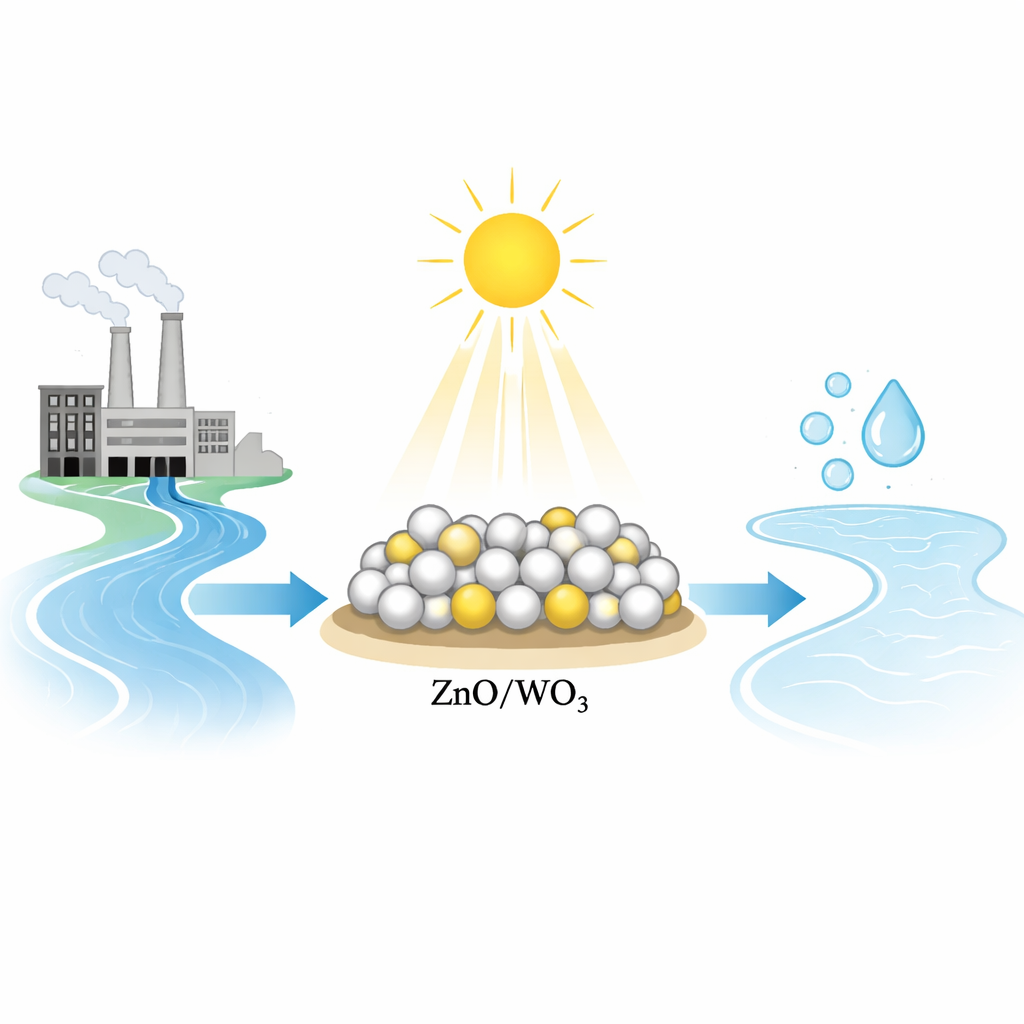
From denim jeans to bright T‑shirts, the colors in our clothes often come with a hidden cost: the dyes used to make them can linger in rivers and lakes long after the fabrics leave the factory. One of the most common of these colorants, methylene blue, is difficult to remove once it enters wastewater and can harm both people and aquatic life. This study explores a sunlight‑driven way to break down methylene blue using a specially engineered material made from two common metal oxides, aiming to turn contaminated blue water back into something close to clear, harmless water.
A simple idea for tough dyes
Textile factories use huge amounts of water, and a noticeable share of the dyes they apply ends up in that water instead of on the fabric. Conventional cleanup methods—such as filtering, clumping particles together, or relying on microbes—can work, but they are often slow, sensitive to water chemistry, and not efficient enough for stubborn dyes like methylene blue. An appealing alternative is photocatalysis, where a solid material absorbs light and uses that energy to trigger chemical reactions that tear organic molecules apart, ideally leaving only carbon dioxide and water behind. To be truly practical, such a material should be cheap, stable, and work well under ordinary sunlight rather than only under intense ultraviolet lamps.
Building a better light‑driven cleaner
The researchers focused on tungsten oxide (WO3), a yellowish compound already known to respond to visible light, and zinc oxide (ZnO), a white material often used in sunscreens. Each works as a photocatalyst on its own, but both also suffer from a common problem: once light creates charged particles inside them, these charges tend to quickly recombine and lose their energy as heat instead of driving useful chemistry. The team’s strategy was to grow tiny amounts of ZnO directly on the surface of WO3 using a hydrothermal treatment, producing composites that contained 5, 10, or 25 percent ZnO by weight. By carefully examining the resulting particles with electron microscopes, X‑ray diffraction, surface area measurements, and surface chemistry probes, they showed that the 5 percent mixture produced especially small crystals with rough, porous surfaces and a large internal pore volume, all features that favor contact with dye molecules and movement of charges.
Putting the composite to the test
To see how well these materials could clean water, the scientists prepared a dilute solution of methylene blue and exposed it to a solar simulator—a lamp that mimics the spectrum and intensity of sunlight. They added a small, fixed amount of hydrogen peroxide to help capture electrons and generate highly reactive radicals, then compared bare WO3, bare ZnO, and the three ZnO/WO3 mixtures. After one hour of simulated sunlight, the standout performer was the composite containing 5 percent ZnO, which removed about 93.8 percent of the dye, clearly surpassing both of the individual oxides and the mixtures with higher ZnO content. Calculations of the reaction rate confirmed that this optimized composite sped up dye breakdown several‑fold compared with light alone or with light plus hydrogen peroxide but no solid catalyst.
How the hidden chemistry unfolds
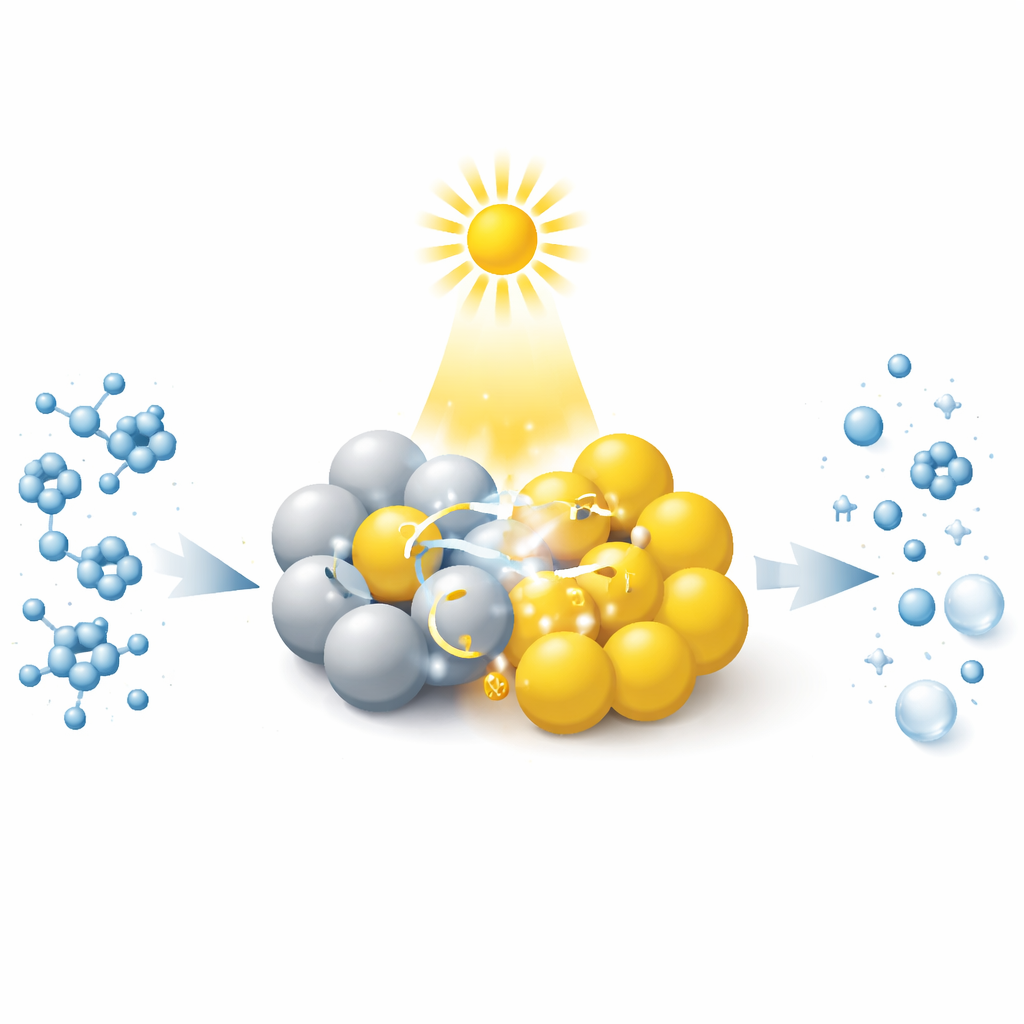
Digging deeper into the mechanism, the authors used known energy levels of ZnO and WO3 to show that, when combined, they form a “stepwise” structure that naturally shuttles light‑generated electrons and holes in opposite directions across the interface. In this arrangement, electrons tend to collect in the tungsten oxide region, where they react with hydrogen peroxide to form hydroxyl radicals, while the positive holes accumulate on the zinc oxide side and can also help generate these radicals or attack dye molecules directly. Additional experiments that selectively “trapped” different reactive species revealed that hydroxyl radicals do most of the work in destroying methylene blue, with a smaller but real contribution from positive holes and oxygen‑based radicals. The team also found that slightly alkaline water and moderate catalyst doses gave the best performance, and that common ions found in natural and industrial waters—such as chloride, nitrate, and carbonate—did not seriously hinder the process under realistic concentrations.
Promise and next steps for real‑world cleanup
For non‑specialists, the key takeaway is that a carefully tuned combination of two inexpensive, well‑known materials can harness sunlight to strip a persistent blue dye from water with high efficiency and relatively low material use. The 5 percent ZnO/WO3 composite stands out because its structure and surface create ideal conditions for light absorption, charge separation, and radical formation—all central to breaking the dye molecules apart. Although the catalyst gradually loses some power after repeated use, likely due to slow damage or buildup of by‑products on its surface, the authors suggest that a thin protective coating could extend its life. Overall, the work points toward practical, solar‑driven treatment systems that could help textile plants and similar industries clean up colored wastewater before it reaches rivers and seas.
Citation: Kanafin, Y.N., Rustembekkyzy, K., Seiilbek, A. et al. ZnO/WO3 composite for efficient photocatalytic degradation of methylene blue dye under solar light. Sci Rep 16, 8702 (2026). https://doi.org/10.1038/s41598-026-40207-0
Keywords: wastewater treatment, photocatalysis, methylene blue, zinc oxide, tungsten oxide