Clear Sky Science · en
Association of frailty and disability in community dwelling older adults: a cross sectional study
Why this matters for everyday life
Living longer is becoming more common in Saudi Arabia, but longer life does not always mean healthier years. This study looks at how a condition called frailty—when the body becomes weaker and less able to cope with everyday stress—relates to disability, or needing help with basic daily tasks like bathing, dressing, and moving around. Understanding this link can help families, communities, and health services act earlier to keep older adults independent for as long as possible.
Growing older in a changing society
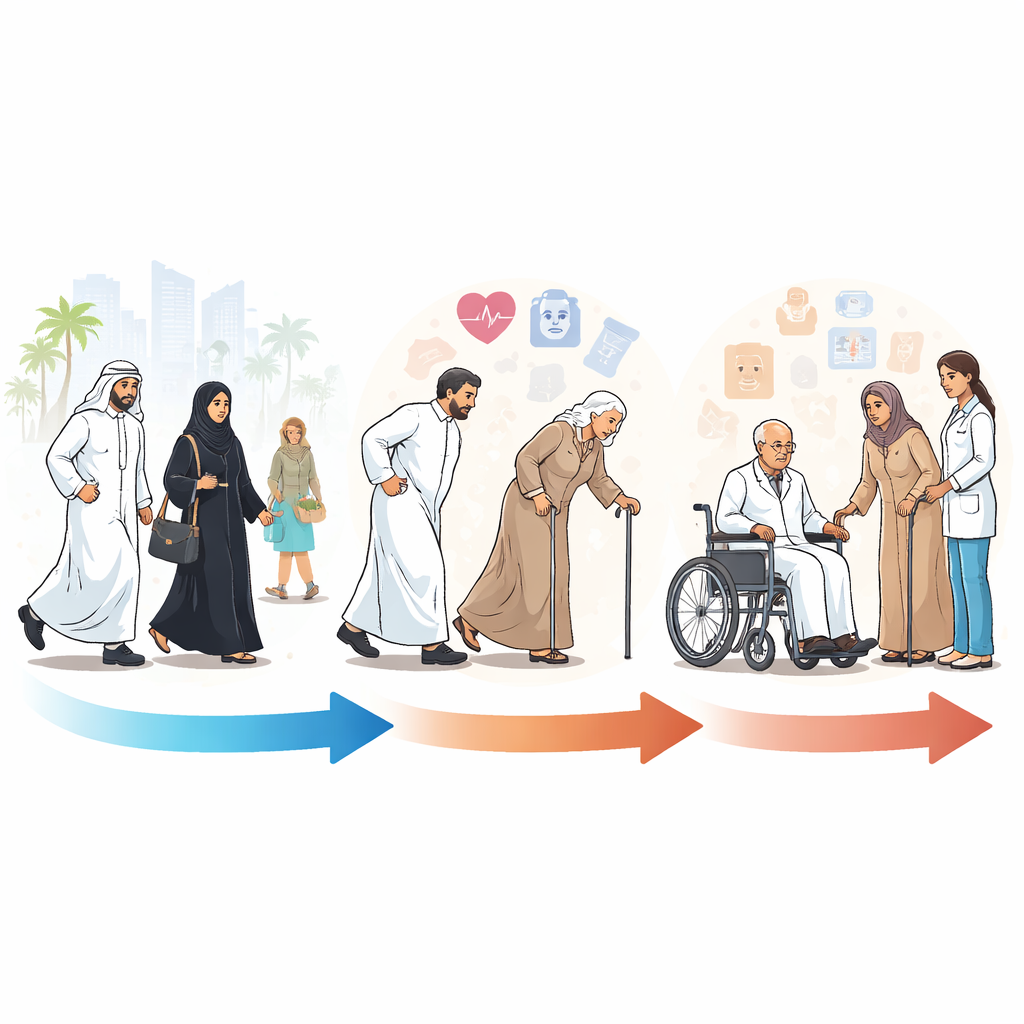
Saudi Arabia is facing a fast-growing older population, with the share of older adults expected to nearly double in the coming decades. As people age, problems such as diabetes, high blood pressure, arthritis, and reduced activity become more common. These conditions can slowly drain a person’s strength and energy. The researchers wanted to know how strongly frailty is tied to disability among adults living in the community, not in hospitals or care homes, and they included people from age 50 upward to capture changes that might start before traditional retirement age.
Who was studied and how
The research team recruited 324 adults aged 50 to 92 years from public places in the Riyadh region, such as malls, mosques, and social gatherings. Everyone completed questionnaires and a basic health assessment. Frailty was measured with a short five-question tool that asks about climbing stairs, feeling tired, having several chronic illnesses, walking a moderate distance, and recent weight loss. People were grouped as robust, pre-frail, or frail based on their scores. Disability was assessed with a standard scale that evaluates six basic daily activities: bathing, dressing, toileting, moving around, continence, and feeding. Participants who were not fully independent in all six activities were classified as having a disability.
What the study found
The average age of participants was about 66 years. Women and people with more than one chronic disease were more likely to have a disability. Overall, about one in three participants had some level of disability. When the researchers compared groups, they found that people in the pre-frail and frail categories were much more likely to be disabled than those who were robust, even after taking into account age, sex, body weight, and the number of chronic conditions. Pre-frail adults had roughly double the odds of disability, and frail adults had about four times the odds. Interestingly, more people with disability were in the pre-frail group than in the frail group, likely because very frail people with severe disability were harder to reach in community settings.
Why these results matter for health care
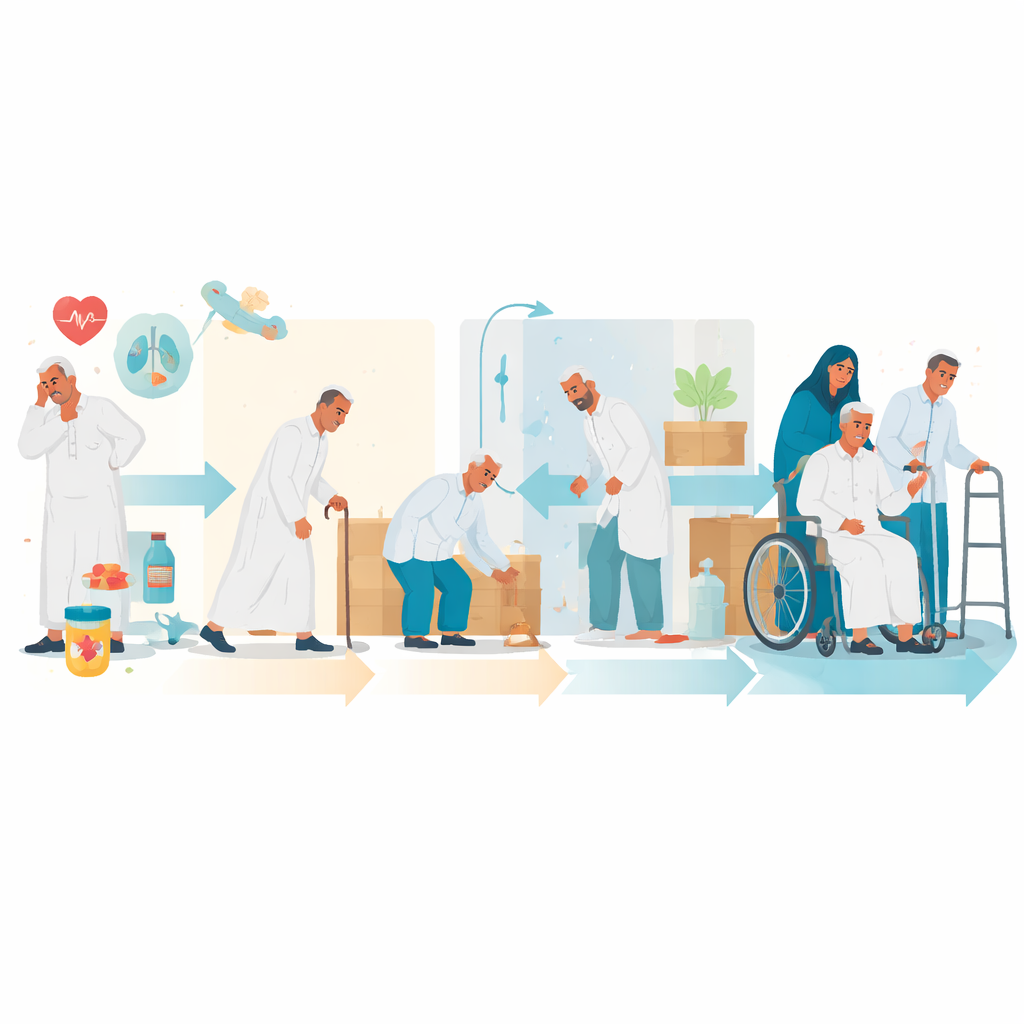
The findings suggest that frailty and disability are tightly linked and often appear together, reinforcing evidence from many other countries. Because the study included people as young as 50, it highlights an important window of opportunity: catching pre-frailty early may allow doctors, families, and communities to intervene before serious disability takes hold. The authors argue that routine screening for frailty in clinics and community programs could help health professionals target exercise, nutrition support, and better management of chronic diseases to those most at risk. This is especially important in Saudi Arabia, where many older adults live with multiple long-term health problems.
What this means for families and the future
For individuals and families, the message is that small signs of slowing down—such as difficulty with stairs, feeling tired most of the time, or walking more slowly—should not be dismissed as a “normal” part of aging. These may be early warnings that, without action, disability is more likely in the near future. For policy makers and health planners, the study provides local evidence that investing in early detection and prevention of frailty could reduce disability, ease pressure on health services, and support healthier aging. While this cross-sectional study cannot prove cause and effect, it clearly shows that frailty and disability travel together, pointing to the need for long-term research and practical programs aimed at keeping older adults strong, mobile, and independent.
Citation: Alqahtani, B.A., Alhwoaimel, N.A., Alshehri, M.M. et al. Association of frailty and disability in community dwelling older adults: a cross sectional study. Sci Rep 16, 8435 (2026). https://doi.org/10.1038/s41598-026-40188-0
Keywords: frailty, disability, older adults, Saudi Arabia, healthy aging